
Knowing where to start with learning more about this whole DID thing can be daunting. So here are some resources that have helped me in various ways to understand a bit more. Hopefully some of these will be helpful for people with DID & allies alike.
If you’re interested because you think this all may apply to you – I would suggest trying to find a good trauma & dissociation competent & confident therapist to talk things through with, in addition to doing your own research.
My own experience was that trying to ‘just work it out by myself first‘ only got me so far – it was valuable for having somewhere to start the conversation, but I don’t know that I’d have ever got past a certain point without that external mirroring, guidance & support.
====
YouTube
Pretty much any interview with Dr Jamie Marich:
For example:
I recommend the book Dissociation Made Simple (by Jamie), below, which gives a bit of context. Basically, Dr Jamie is a professional therapist who trains other therapists in dissociation – and is ‘out’ as multiple themselves. We’ve found their work & hearing them talk pretty inspirational, so worth a watch.
—-
Cinema Therapy: What Moon Knight got right about DID
Cinema Therapy is a show where licensed therapist Jonathan Decker (Jonno) and Alan Seawright (‘professional filmmaker who needs therapy’) discuss depictions of mental health in TV and cinema. They’ve done loads of episodes that are worth watching – this one just so happens to be the thing I watched and went, “Oh shit, my life suddenly makes so much more sense.”
I recommend Moon Knight as a show, below, and would heartily recommend anyone check it out before watching this if you care about spoilers. I actually watched this video first, and the show later – enjoyed them both enormously, didn’t feel like it diminished my enjoyment at all.
—-
Cinema Therapy: What Split got wrong about DID
There’s also a CT episode they did around the same time, “What Split got wrong about DID”, and… you can check that out if you want. I’m not linking it here, because I found it pretty upsetting (because Split is a movie that leans into the, “dangerous psychopath alter” fictional trope – not because of Jonno and Alan’s commentary).
Jono gets a couple of things wrong here – he says rapid switching isn’t a thing (it is), and that co-consciousness isn’t possible (it is, and it’s generally an integral aspect of finding a place of functional multiplicity).
They do give props to James McAvoy’s acting, and gotta say, he does do some pretty impressive portrayals of switching / shifting between parts in therapy scenes. And ‘ group chats’ at home alone. A weird one – can’t in all good conscience recommend because of the overall tone & ‘monstrous other’ portrayal of DID, but there’s some stuff in here that’s worthwhile, at least with CT’s commentary.
[Edit: Ok, I re-watched the CT episode out of curiosity, and Jono gets tons wrong here – just stick to the Moon Knight episode xD]
—-
The CTAD clinic:
https://www.youtube.com/@thectadclinic
Dr Mike Young, director of one of the only three centres that treat complex dissociation in the UK, talks about all things DID, OSDD, and what’s going on at the duckpond at his clinic’s centre in Cheshire. Mike is precious & wonderful, and his face lights up in interviews whenever he starts talking about how much he loves working with people with DID.
====
Books
Dissociation Made Simple, by Dr Jamie Marich
This book is great. If you read one book on dissociation, let it be this one. Jamie is an OSDD (Other Specified Dissociative Disorder) system, as well as an EMDR trainer & therapist, specialising in training other EMDR professionals how to work with dissociation safely (i.e., without overwhelming their clients into running away & never seeing another therapist again). Practical, no-nonsense, and I vibe with Jamie so hard on so many things – their candidness about the profession & the reaction to their decision to ‘come out’ as a system is beautiful & inspirational.
—-
Trauma & Dissociation Informed Internal Family Systems, by Joanne Twombly
This one’s a clinician handbook, so approach with a little caution if you’re looking for self/selves help. It’s great though, and helped me make sense of some of why IFS made me feel so squiffy (by which I mean I’d start reading a chapter of No Bad Parts, & then lose hours or days of time…). It talks about how to resolve some of those issues, and does a great job of it.
—-
Special mentions of ones to approach with caution
The Haunted Self:
First published in 2006, this is the book that is still regarded by many as foundational in our modern understanding of complex dissociation. It laid out the Theory of Structural Dissociation – the model that’s often the go-to for understanding parts in PTSD, C-PTSD, OSDD, DID, etc. It’s good, but it’s very technical, has been superseded, and, like many people with lived experience of multiplicity, I fucking hate the terms Apparently Normal Part and Emotional Part xD
I dived into the book when my therapist & I first started talking about, “Yeah, maybe it’s DID”, and when I told my therapist he was like, “Oh no… I mean, that’s great! But it is a lot considering everything you’re going through right now…” I insisted & persisted slogging through it, and asked to use it’s terminology instead of the much more human friendly IFS.
He obliged, and tried to teach me how to manage my system using the language of structural dissociation. I got confused, annoyed & scared by about 30 mins of it. My enthusiasm wilted – my therapist was right, again – maybe it was time to try IFS for parts work again, but listening to him this time without racing off on my own at home & having a panic attack…
—-
No Bad Parts & anything Internal Family Systems (IFS):
Only really a light word of caution for anyone who thinks trauma & dissociation might be something to consider for themselves. IFS is a wonderful, inspirational approach to parts work, based on the (evidence backed) idea that ‘everybody has parts’. In turn, it’s written assuming you don’t have DID – so there are likely to be bits that may not make sense at first if you do, and they can be extra frustrating if you’re a persistent but dissociative fucker like yours truly.
With the right support though (a T&D specialising therapist, ideally), it’s worthwhile & helpful, and far more human being friendly than the Theory of Structural Dissociation. And they’re right, in my experience – there are no bad parts.
====
Media that makes us finger snap
These aren’t, for the most part, strictly portrayals of DID, but rather great stories and characters that – for me personally, feel like they evoke aspects of the experience of multiplicity/’structural dissociation’ in some major way.
Moon Knight (Disney+):
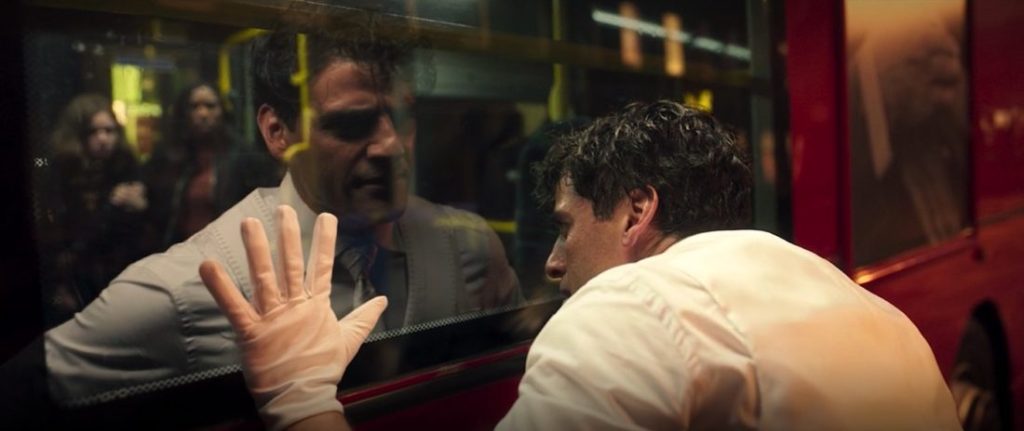
TV show of the comic book superhero. This one is actually based on DID, and I love it. The Cinema Therapy episode on, “What Moon Knight got right about DID” pretty much introduced me to what this thing I’d been experiencing for so long is called. Oscar Isaac’s portrayal is incredible – I love Steven & Mark. And their story is just *chef’s kiss*. Couple of my parts had been there already by the time we saw this, so yeah – heartstrings were tugged.
Also mirrors, man. They get the thing with f*cking mirrors.
—-
Identiteaze (Nebula):
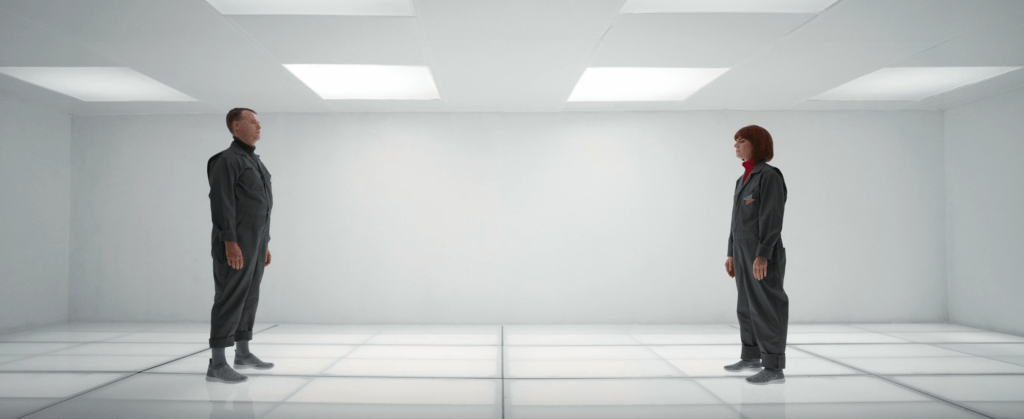
45 min standalone drama by Jessie Gender. Two people wake up in a blank room together, no obvious way out, no idea who the other is… and turns out no idea who they are, either.
This one was a rollercoaster of feelings for me, aspects of my inner world felt very laid bare… and yeah – this thing fucking slaps. The creator has said that any plural vibes are very much intended xD
—-
Cyberpunk 2077 (Video game, PC, Xbox, Playstation):
It’s about a chip in your brain with the engram of another person, who used to be living and breathing, but now only lives on in your head. But Johnny Silverhand is the spitting image of Jesse, at some points in our life a persecutor-protector (now a protector-leaning part of me) – and they vibe hard. Hell, Johnny even runs off with V’s body to have some fun and… yeah, no spoilers.
We love Johnny. He’s a dick, just like J-man 😉 He even looks the way we do when Jesse is the one choosing how we dress – aviators, loose long hair, black tank, jeans, boots… beard… (we’re largely transfemme these days, but hey… life’s more fun when we embrace all of us…)
For me, this story felt like going on an awesome adventure with a life-long friend.
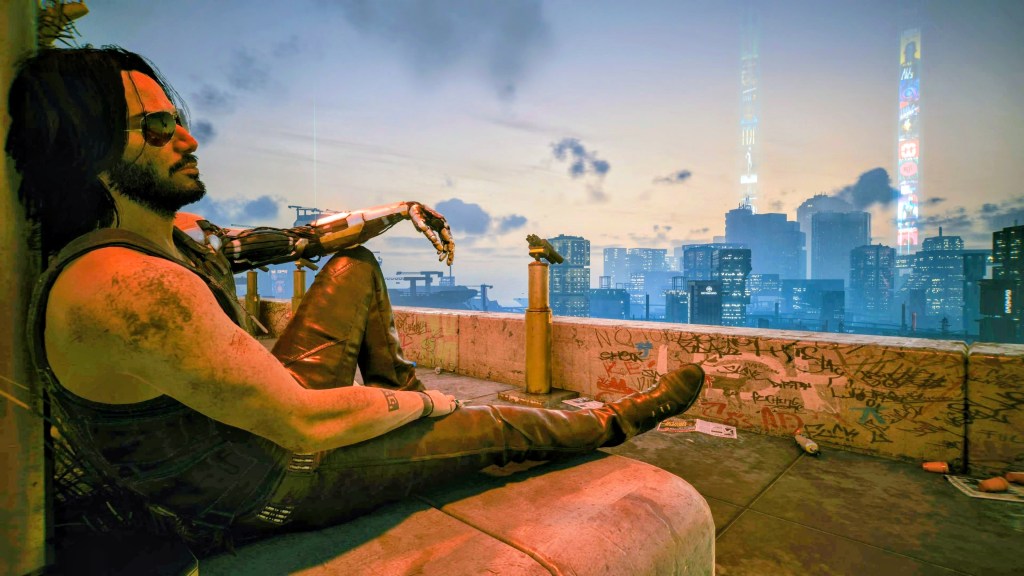
Oh, it’s also an amazing game with a ton of amazing characters ^^ The Phantom Liberty DLC is incredible, and also highly recommended.
Trigger warning: There are some scenes early-ish on that might be challenging for anyone with self-harming / suicidal parts.
—-
The Alters (Video game, PC Xbox, Playstation – currently included free with Xbox Live)
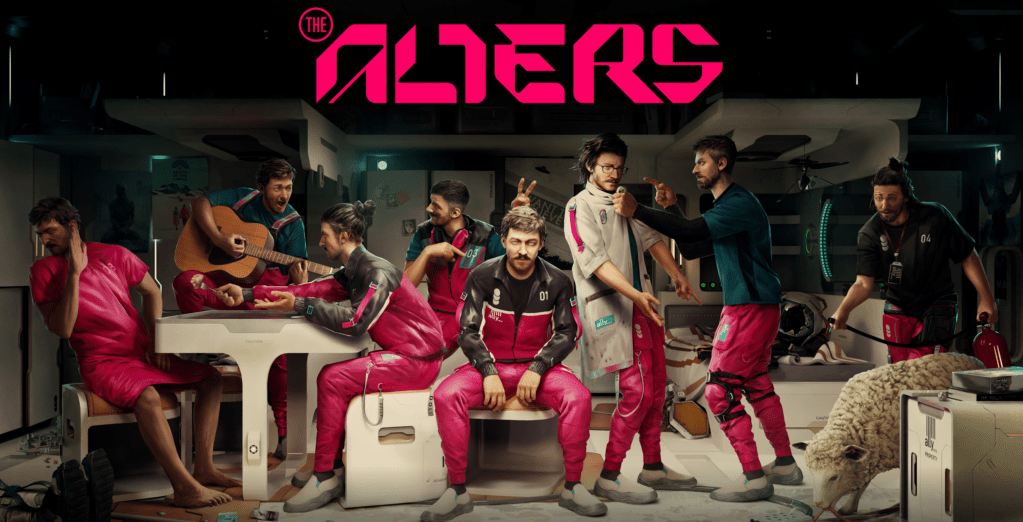
The story is one of a single survivor of a catastrophic malfunction during the landing of a space mission to an uninhabited planet. Through some science-fiction-is-magic shenanigans, and a healthy dose of unobtainium, you clone versions of yourself with altered memories – choosing a point in your life to branch off, with their life since that alternate choice simulated by the ship’s quantum computer.
So… very much not literal DID. But being alone on this hostile planet, your base filled with versions of yourself with this shared past, but their own personalities, identities, memories that are their own, and different ways of viewing the memories you do share… the ‘original’ Jan talking to command on behalf of the crew…
… it sure captures a vibe.
The writers apparently did some consultation work with people with / working with DID when writing the alters as characters & some of the story beats, and it shows.
Also just a really fun game, I loved it. There’s even a surprise musical number that had me smiling ear-to-ear (not to mention some implied alter-on-alter action in the aftermath – inner world romances are a thing for *coughs* some people, don’t think too hard about it xD)
—-
Severance (Apple TV):

Recommended to me by one of the few friends I’d told about DID at at the time. FYI, we get ‘dissociation’ from a Latin word meaning, “to sever / divide”.
It’s a great show, about a group of people who’ve undergone the ‘severance’ procedure; a chip in their head ‘spatially dictates’ their memories – their ‘outie’ remembers everything other than what happens while they’re at work on the ‘severed floor’ of Lumin industries; their ‘innie’ only remembers what happens from when they woke up on the conference table, and what happens on the severed floor after that…
Does amnesia & identity in DID work like that? Eh, it certainly feels like it sometimes – it’s often not that neat and tidy, but dissociative amnesia isn’t always easy to track (“I can’t remember what I can’t remember”). With some parts, it’s more like, ‘I have my role, you have yours – lets just stick to what we know’, and they stay pretty separate – until, perhaps, something shakes things up & their ‘worlds collide’.
Either way, I made like 14 pages of notes between episodes on all the things that were like, “Hahaha, yup xD”.
The season 2 finale is where it gets real for us. No spoilers, but during a session with my therapist, I was talking about internal communication & trust, and went, “Oh yeah! I just finished S2 of Severance, I can see why you said I’d probably dig it in particular…” *he nods enthusiastically* “Yes – yup, I couldn’t help thinking of you & your fam while I was watching it the other week…”
If you’re up to date on the show, or don’t care about spoilers and watched the clip above anyway – I can’t help following it up with this excerpt of one of many great videos from Dr Mike Young, director the CTAD clinic:
Trigger warning: Again, there are scenes in season 1 that might be difficult for anyone with self-harming / suicidal parts.
 Three Kids in a Trench Coat
Leave a comment