
There’s a major aspect of the way in which The Alters spoke to me that I didn’t cover in my post on the game here, but rather than try and sneak it in there, I figure it deserves its own space. If you’ve not read that initial post, maybe start there for a bit more context ❤
—
What if…?
The story of this game may be super relatable for anyone, I imagine, who has those moments in their life, where they ask, “What if…?“
“What if I’d stayed at home?”
“What if I’d stood up to my bullies?”
“What if I’d chosen a different degree / college / apprenticeship?”
“What if I’d listened to my partner more?”
“What if I’d said no?”
“What if I’d said yes?“
The Alter creation process involves taking the single, coherent narrative of your life (held as a “Mind Map” of Jan on the mining base’s “Quantum Computer”) and creating Alters by, “branching” that map at certain key life moments. The Quantum Computer then simulates each Alter’s life since whatever the key branching moment was for them – say, standing up to dad’s abuse of your mom, sticking around to be with her instead of going off to college… and a series of cascading alternate life experiences based on this new ‘life path’.
This all gives Jan a very unique opportunity to see – to meet – the answers to those, “What if?” questions in the form of his Alters.
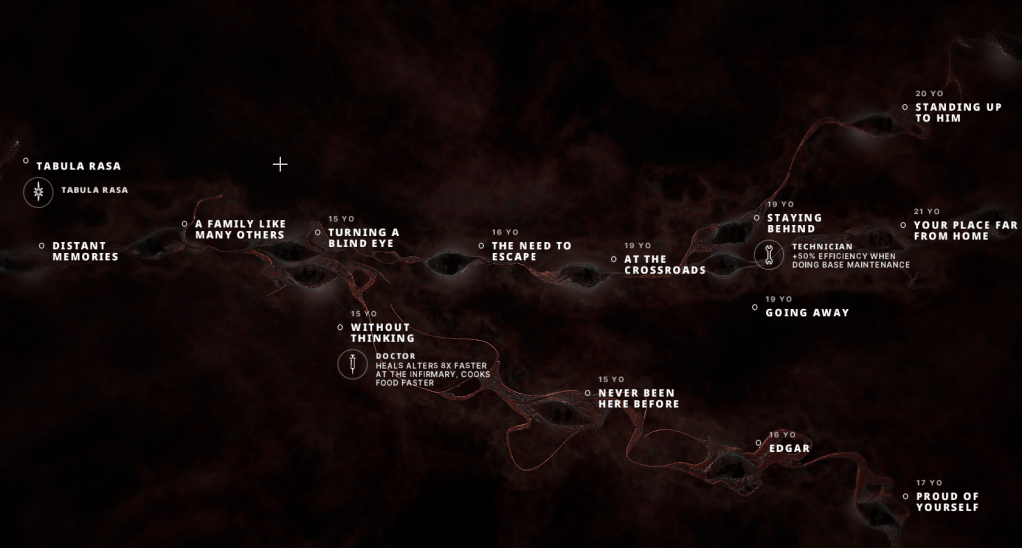
The game lets you make these decisions, about which decision points you want to branch, with a really cool story-book style timeline of the big moments in Jan’s life… and once you do, it opens up a whole new timeline from that moment on for that Alter. In some cases, you can then further branch some of that Alter’s own simulated decisions.
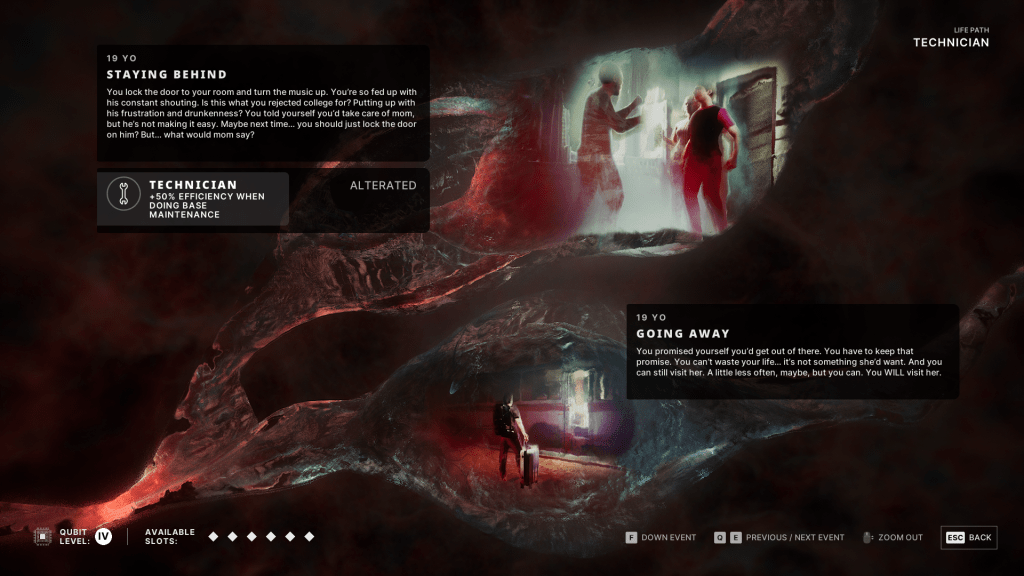
Gameplay-wise, these branches are what give you Alters with different professions & skillsets – but they also have different needs, different personalities, who gel with each other (or, sometimes, not) in different ways, with different vulnerabilities, and strengths sometimes known, sometimes latent…. it’s fascinating… and familiar.
—
Parallel life narratives in DID
As is often noted in the literature, “In DID, individuals do not seem to develop a single narrative of self, but instead multiple narratives“.1 That’s something that The Alters, again, does a great job of evoking this sense of, around something that’s sometimes so hard to put into words.
The whole process of going from, “one coherent life narrative, to a jumble of many different narratives” is sort of the reverse of how DID is generally understood scientifically, these days.
What’s happening in The Alters is akin to the idea of, “something traumatic happens and the person shatters into fragments”, which used to be a commonly held theory. I’d say Jan’s near-death experiences, having just witnessed his whole crew dying, left with survivor’s guilt and an ongoing daily battle to survive would be pretty difficult to cope with for most people.
With the benefit of more research though, it’s now thought that DID is more likely to arise from a, “lack of integration” of parts during childhood, due to very early complex trauma (before the age of about 5), emotional neglect, and a high level of dissociation at a time when the development and integration of, “self” is really getting underway2 between the ages of around 6-12.
That said, the actual lived experience of becoming aware of your own multiplicity can feel… somewhat messier, and closer to the way The Alters portrays it. Often people live with DID into their 20s, 30s, 40s, 50s or beyond… without being aware of any of this – and then something happens (or, often, somethings) where it feels like life falls apart, and it all brings so much of this into the light for that person. That’s been the case for me these last few years, around the age of 40.
—
The maze of living in, “multiple realities”
Sometimes when I reflect on my life, it’s like I’m looking at the spaghetti of Jan’s multiply branched Mind Map…
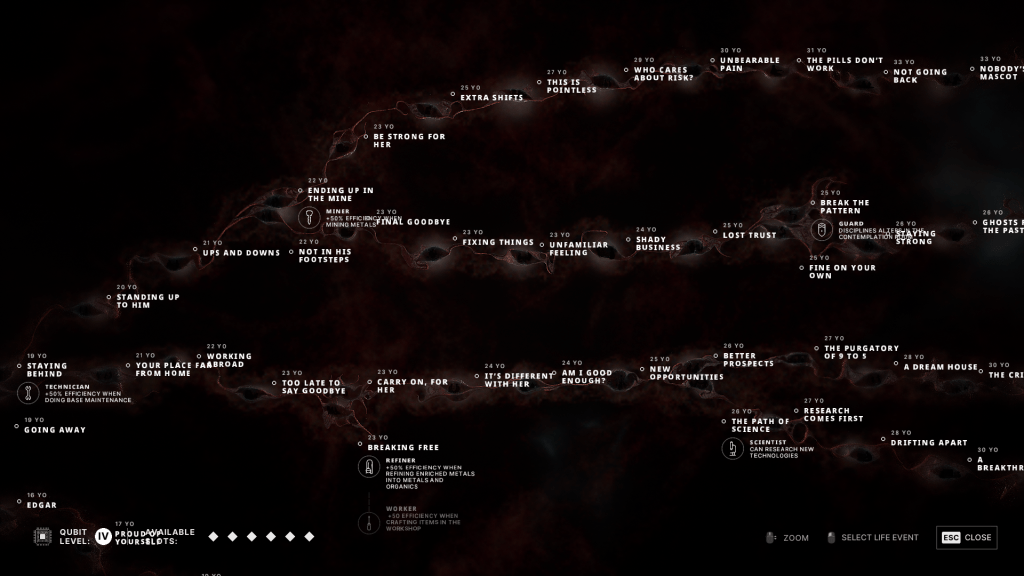
Of course, in reality, we don’t get to go back and make all those choices multiple different ways. The only way we can do that is in our minds (our own, “Quantum Computers”, if you like) – and that’s something that I have a tendency to do, big time. Which just adds to the sense of there being all this spaghetti – where it starts to feel like you don’t know what to believe about yourself and your life.
You feel like you’ve lived as so many different versions of yourself, and you can’t always tell which stories are alternate versions of the past & present, what are worries about what will be, and what are regrets about what was…. You can come to get confused about what you’ve been doing in the ‘real world’, and what you’ve been living out in your ‘inner world’…. Essentially, telling ‘simulated branches’ from what’s actually been happening out in the world can get pretty blurry sometimes.
This can all add to the sense of having, “multiple, partially overlapping realities” (which I’ve seen described in the literature as a sort of, “multiple reality disorder” component of DID3).
In the game, the simulated events of the alters lives feel a little like what Kluft calls, “the third reality”: “The third reality is one in which events enacted within the inner world of the alters may intrude into and be misperceived as events that have occurred in external historical reality“.4
Personally, it sometimes feels like my brain and my body remember two almost totally different versions of what’s happened that week, month, year…. life… and I think this ‘multiple reality’ idea describes a certain amount of how that comes about.
Which is also where parts come in.
—
Alters in the real world
Parts often have their own life stories, that don’t necessarily match up autobiographically, emotionally, or they may have differing interpretations of, or beliefs about, what has happened, what is happening now, and what needs to happen next.
One may remember those things that happened (or that were conspicuously absent) when you were young – while another does not, so that they can get on with life unburdened by those difficult memories that, when they come up, bring you to standstill and leave you feeling hopeless and helpless.
You may have this inner narrative that you had a happy and connected childhood, and another that everything was bleak, miserable, and hopeless from your earliest memories. One part may believe you’re super sociable, the hostess with the mostess. Another believes that you’re a shy little boy who can barely get a sentence out in front of another human being. All of these may not fit together into one narrative, with nuance and colour and gradations – instead being kept separate, compartmentalised.
Often what’s present are a subset of all these beliefs and memories, depending on who is doing the remembering at the time. It’s not just memories of the distant past. Parts can have different memories of what happened last week, or this morning, or 10 minutes ago… as well as different wants & needs in the moment – because they’re parts of you here, today – not some kind of historical artefacts.
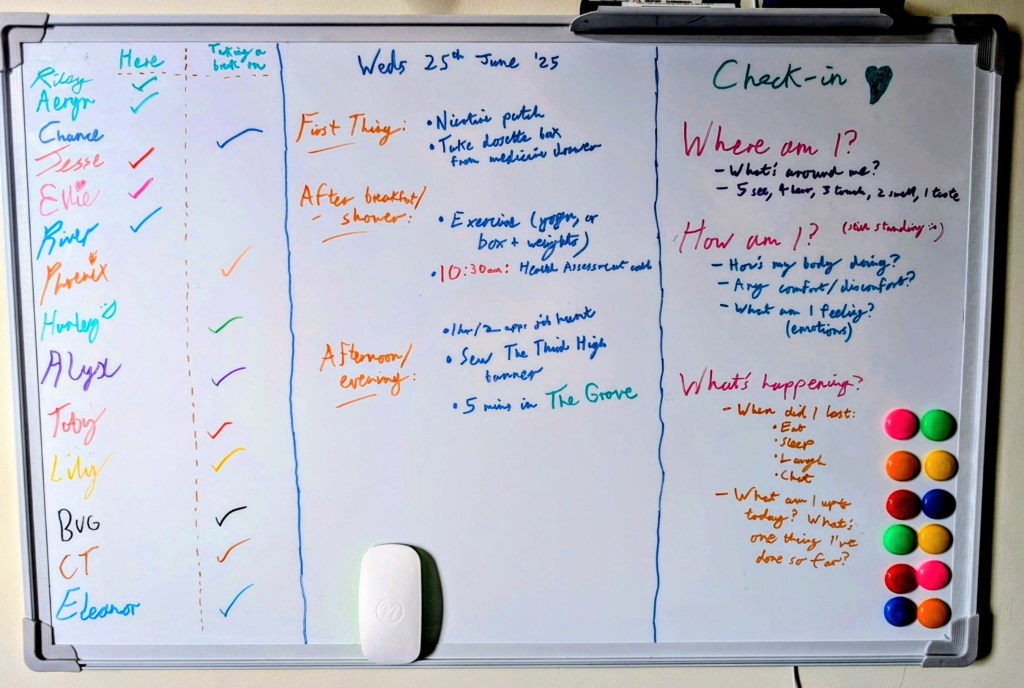
You may try to remember, “Wait, what was I trying to do today?” and get a different answers depending on who’s here right now (my tip – whiteboards and/or a journal dedicated to, “Getting stuff done”, alongside roll-call for parts “here” v “taking a break” & some pointers for “checking in”, can help a ton).
An example from the game of parts and the ‘third reality’ idea: Jan Botanist believes, until he ‘wakes up’ and you tell him otherwise – that he moved cities with his wife, remained married, and that he is still a devoted husband today – when Jan in fact separated from his wife years ago, and when he talks to her on comms during the mission, things are often… frosty.
Jan Botanist’s simulated life as someone who listens, empathises, and negotiates in relationships, on the other hand, does help him to connect with quantum-wife Lena (a scientist connected to the mission), in ways that simply feel totally unavailable to Jan.
JB uses his ability and desire to connect, to then take to the comms (with Jan’s blessing, and up-to-date information about reality – that’s important), to have some mission-critical, and interpersonally ice-breaking conversations with real-life Lena.
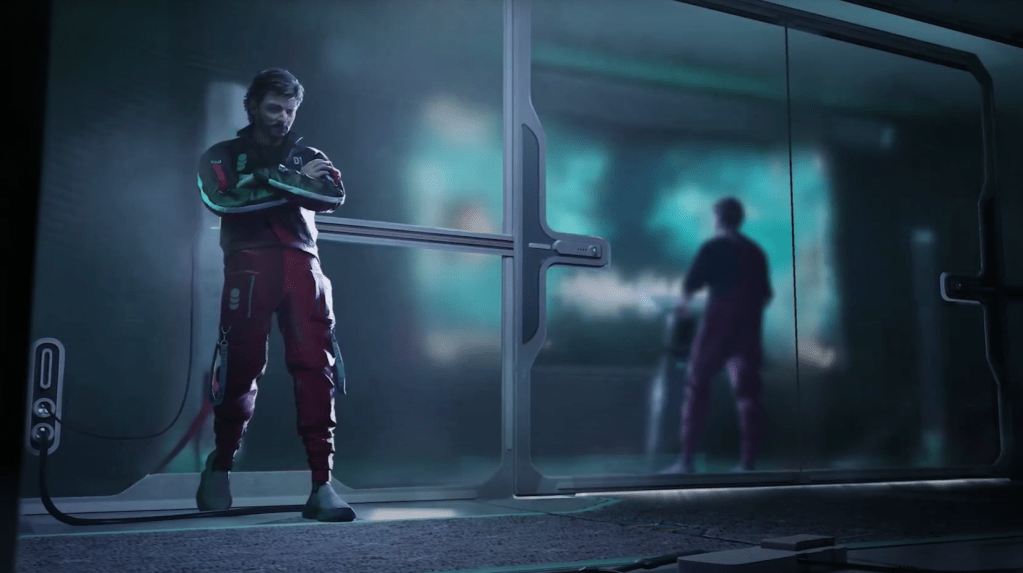
Jan plays a sort of, “self” role, helping JB meet the need to talk to this person he misses, but ensuring he has full knowledge of the real-world situation & boundaries (there are some aspects of this that don’t feel totally healthy, sure – but it’s the clearest example in the game of an Alter having a present-day connection to the world of other people outside of the mining base).
This gets at a whole aspect of the ways in which the very real strengths of real-life alters can come from many places, ‘real’, ‘imagined’ and often, a blend of the two. In DID being able to hold these different realities in one brain and body without overwhelming cognitive dissonance is afforded through, “trance logic”,5 which is fascinating but a whole other topic of its own.
In other words, differences in beliefs about who you are and what’s happening don’t just come from these ‘inner world’ jaunts into alternate possibilities, from simulated branches. Those “multiple realities” are often a mix of very real experiences that you’ve lived out in the real world (JB’s conversations with Lena during the mission) and inner world exploration (JB’s simulated life in which he and Lena didn’t separate).
—
Me & my alters
To give an idea of what some of this can look like for realsies:
I have super sociable parts that love being in the middle of the party, deep in their element, and who have done this hundreds of times over our life. Some love to been seen, to party, to play, to be the centre of attention.
Some are chill AF, and can navigate any social or emotional situation with ease – genuine ease, neither craving attention nor space. Those parts may sometimes be focused on our own work as a psychologist, many times published and frequent speaker at professional conferences – but they operate in a flow state of engaging in these complex tasks, while remaining socially connected, well fed on home cooked meals, and still feel able to help others in ways big and small whenever they’re able.
I also have parts who struggle to remember a single instance of any of this, and seem to truly believe that we’ve never been able to leave our room for long without having a panic attack, and want to stay hidden in the dark, and don’t want another person to see our face.
Some believe we don’t know how fill in a simple doctor’s appointment form, or how to boil an egg – let alone how to write a presentation to give to 100+ PhDs and medical doctors.
Some take the driver’s seat and hide us under the desk if they hear the doorbell, or struggle to imagine even going to the corner shop to buy food when we have none.
As you can imagine – all these parts sometimes have conflicting beliefs and needs that can take some navigating when certain combinations are present at the same time, or when we’re switching between drivers many times in a day without some kind of, well… system.
Helping those burdened parts of yourself to heal, & access the capabilities of other parts, helping those eager parts to learn to slow down enough to take a little care of the parts that are struggling to keep up – and accepting all those parts as parts of you – can help everyone inside to find a place of common ground in your life. All of which can help foster a certain level of inner harmony, and can help you get ‘unstuck’, from some of the very-stuck-indeed places you can find yourself in when parts are ignored or side-lined while in need.
—
Healing ourselves, together
Which brings us back to the importance of developing a sense of narrative coherence. Narrative that comes from a place of honest reflection, with an underlying intention of helping yourself / yourselves have a stable base from which to live in the present, with plans, hopes and dreams for the future.
Knowing where you’ve been, what’s happened, what you’ve struggled with, what you’ve overcome, what you still need help with, or where to take a little extra care… Having that “Jan Self” figure at the centre of your alters, regularly bringing everyone’s attention back to your present day life, organising your system, conducting the orchestra…. These can all help, in my experience, whether you want to live as a ‘singlet’ or a ‘system’. If nothing else, your body will thank you for processing as you go.6
If you’re familiar with some of the more pronounced – sometimes baffling – somatic aspects that can accompany dissociation, and what I think of as, “postponed integration” or “integration when the ‘Remind me later‘ button stops working” – you may well know what I mean.
—
As Jan’s story continues, he spends a lot of time looking after the group needs and individual egos of his Alters – taking on their burdens when he has the capacity to do so, sharing the load. In turn, his Alters show up for him, and for each other, in all kinds of ways. And, over time, Jan starts to heal some of his own internal conflicts by getting to know his Alter selves better, and coming to terms with his own lingering, “What ifs?”, and the self-doubt that runs through them.
As you go, you learn through experience, ‘Lessons’ from your Alters. Lessons like:
“Assertiveness”, learned from Jan Technician – standing up for yourself & what you believe to be fair is important – even if it isn’t popular. In our system, Jesse taught me a lot about this stuff last year, and remains my go-to guy here.
“Pragmatism” from Jan Scientist – sometimes a situation means you do just have to power through and do the work now, when it matters – whatever it takes to get results. For us, Chance often operates in this space.
“Vulnerability” from Jan Miner & his in-game battles with low self-worth and addiction – asking other people for help when you need it is a strength, not a weakness. This is a bit of a cross-system thing for us, but River and Ren care for the others inside around this stuff.

As you learn from your Alters & grow, you start to piece together a wider picture of yourself, gaining access to new decisions & dialogue options.
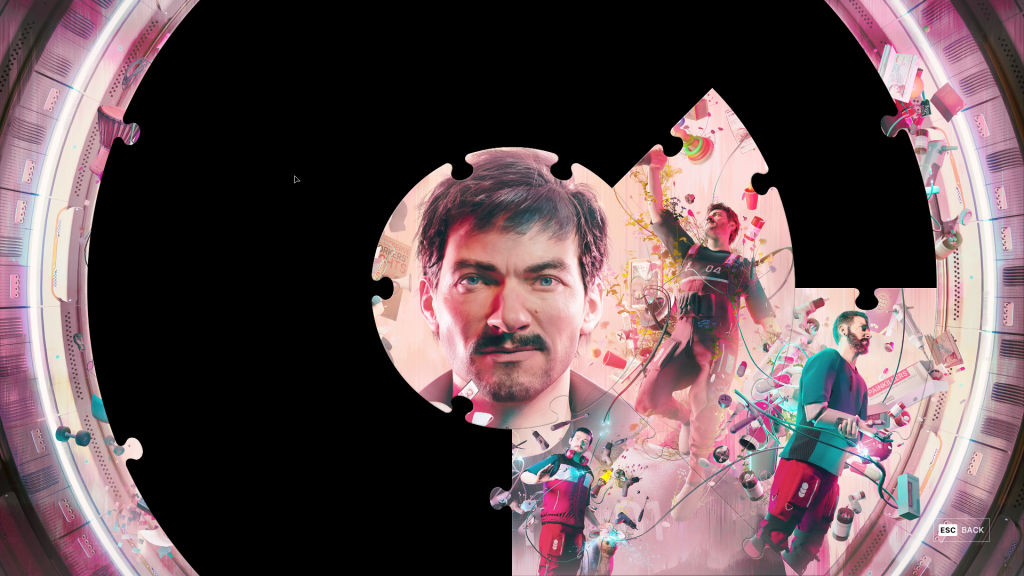
Gods know that we’ve all taught each other so much much in our little family these last few years, that when this system (*wink*) came up a little later on in the game… Well, I’d lost count by that point just how many times I’d smiled a big, “You Get It” smile while accompanying Jan on his journey – but this was definitely one of them.
With time, Jan realises that the Quantum Computer saved him out of all of the crew, because he was person with the best chance of saving the mission – that he and his Alters, together, stood a better chance of beating the odds than even those he regarded as being in another league to him as people. He learns to trust his intuition, to work alongside and lead his Alters from a place of, “I don’t have all the answers, but no one person does – that’s why we need each other”.
And yup – that’s obviously a message that’s relevant to families, teams, squads… to people – inside and out – everywhere. But given the fact that The Alters is about, well, alters… I’m happy it did such a great job at reflecting a little of what it’s like to live with & love a family inside.
Because healing your selves through empathy, self-compassion, developing self-trust… that’s something the game gets really very right indeed.
It’s something we’re still working on, and I think it’s probably more of a lifelong way of being, a little daily effort & care, more than a, “Congratulations, everything’s solved forever” kind of deal that I know I sometimes wish it was. But hey…
Work in progress.
Anyway, just thought that was worth coming back to.
Until next time, take care of yourselves ❤
Riley & fam
—
1, Wilson M, Donath W, Dorahy MJ, Habermas T, Peters I, Marsh RJ, et al. Global Coherence and Autobiographical Reasoning in Life Narratives of People with Dissociative Identity Disorder: A Comparison with Adult, Child, and Psychosis Groups. Journal of Trauma & Dissociation. 2025 Aug 8;26(4):563–89.
2. International Society For The Study of Trauma & Dissociation. Guidelines for Treating Dissociative Identity Disorder in Adults, Third Revision. Journal of Trauma & Dissociation. 2011 Feb 28;12(2):115–87.
3. Kluft RP. Dealing with Alters: A Pragmatic Clinical Perspective. Psychiatric Clinics of North America. 2006 Mar 1;29(1):281–304.
4. Kluft. Psychiatric Annals. Diagnosing Dissociative Identity Disorder: Understanding and assessing manifestations can help clinicians identify and treat patients more effectively. Available from: https://journals.healio.com/doi/10.3928/00485713-20050801-05
5. Loewenstein RJ, Brand B. Dissociative identity disorder: a disorder of diagnostic and therapeutic paradoxes. Psychoanalytic Psychotherapy. 2023 Oct 2;37(4):339–80.
6. Nijenhuis ERS. Somatoform Dissociation. Journal of Trauma & Dissociation. 2001 Mar 28 [cited 2025 Oct 13]; Available from: https://www.tandfonline.com/doi/abs/10.1300/J229v01n04_02
 Three Kids in a Trench Coat
Leave a comment