
Research is awesome.
We’ve worked in the field of psychology & health research for over 15 years.
Well, now we’re getting involved in a slightly different way – by participating in a study being led by researchers at the Institute of Psychiatry, King’s College London (KCL). It’s on sense of self and self-related processing in DID – a topic that over the last year in particular has been… highly salient, shall we say.
We give a brief outline of the study below – and talk about something (I gather) a lot of DID systems have a complicated relationship with; diagnosis.
What’s the study?
The study is called PREDICTSELF, and is currently running in the UK at the Institute of Psychiatry, Psychology & Neuroscience (IoPPN) at KCL. It’s already started, and is running for up to another year of recruitment, and then another year or so of analysis & reporting etc. The Health Research Authority have a brief summary here, along with confirmation that the study was approved by an NHS Research Ethics Committee (REC) last Feb.
I was super interested in taking part right away when I saw this video on the CTAD clinic YouTube channel advertising it. In it, Dr Mike Lloyd, the clinic director, interviews the two lead researchers – it’s worth a watch.
As we live in London, the researchers seem passionate about the topic & supporting people with DID (as are we)… sense of self has been a really big challenge for us this last year… and the fact we’ve been a Visiting Lecturer at KCL for a decade, it felt like the universe was nudging us along.
All in all, an easy decision – time for a fam outing!
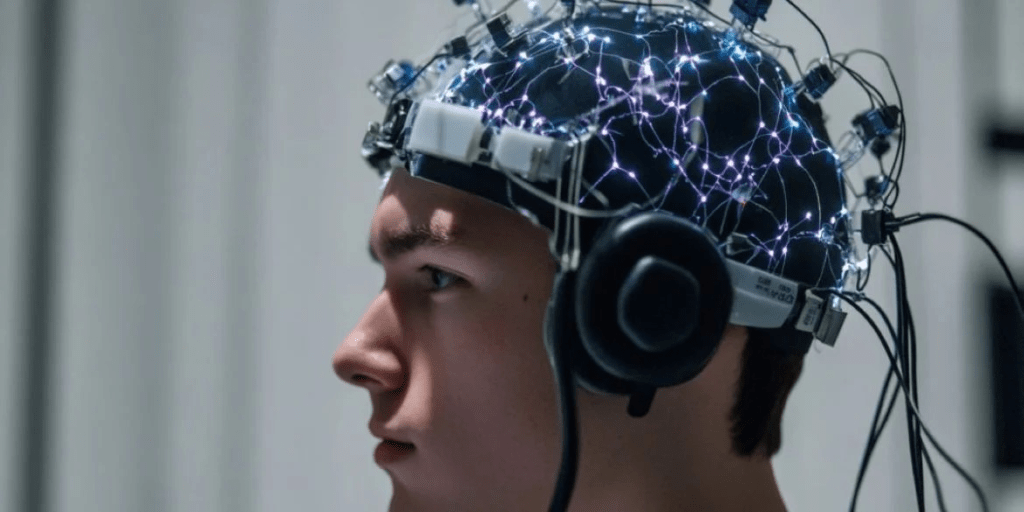
The study itself involves answering various questions and completing some experimental tasks at the IoPPN labs, some of them while wearing a sexy electroencephalography (EEG) cap (below). The researchers, wisely, don’t want to give everything away about the exact tasks or hypotheses for each. I could probably figure most of it out in advance (I’ve designed a lot of clinical research, and, as you may be able to tell, also think about DID a lot). But – I’d rather help them out by just waiting & finding out by doing.
I do know at least one of the tasks involves photos of us, and also (I assume) photos of a friend. They asked us to submit 15 photos (from the last 8 years, face clearly visible) of ourself(ves), and to have a close friend send 15 of themselves, too. We have plenty of photos, but it took a little while because most of us wanted to have at least one photo in there ^^

The aim is investigate the sense of self in DID. For the sake of the study, they’re doing the same procedures with two other groups of participants; people with PTSD (without DID), and people from the general population without clinical levels of trauma or dissociation.
It always takes a while for results from participation to be collated, analysed, and translated into findings & journal publications. But, after the study is complete, you’ll be able to read all about it – along with some (hopefully!) juicy results helping us understand a little bit more about sense of self & processing self-related information in DID.
I’ll probably have a lot to talk about when that happens!
Before we begin… Screening & diagnosis
This is also a good opportunity to talk about the… sometimes lively… topic of diagnosis in DID…
The researchers have already talked to my trauma & dissociation specialising therapist, who I’ve been working with for the last 2 years – and he’s very supportive of me participating. However, he also works transdiagnostically (as many Psychologists do, in contrast with Psychiatrists), so despite working to the ISSTD guidelines on DID together, & the fact there’s no way anyone could get to know us so well in a day – I need to go through the joyful process of diagnosis, for research rigour. It’s a fair cop.
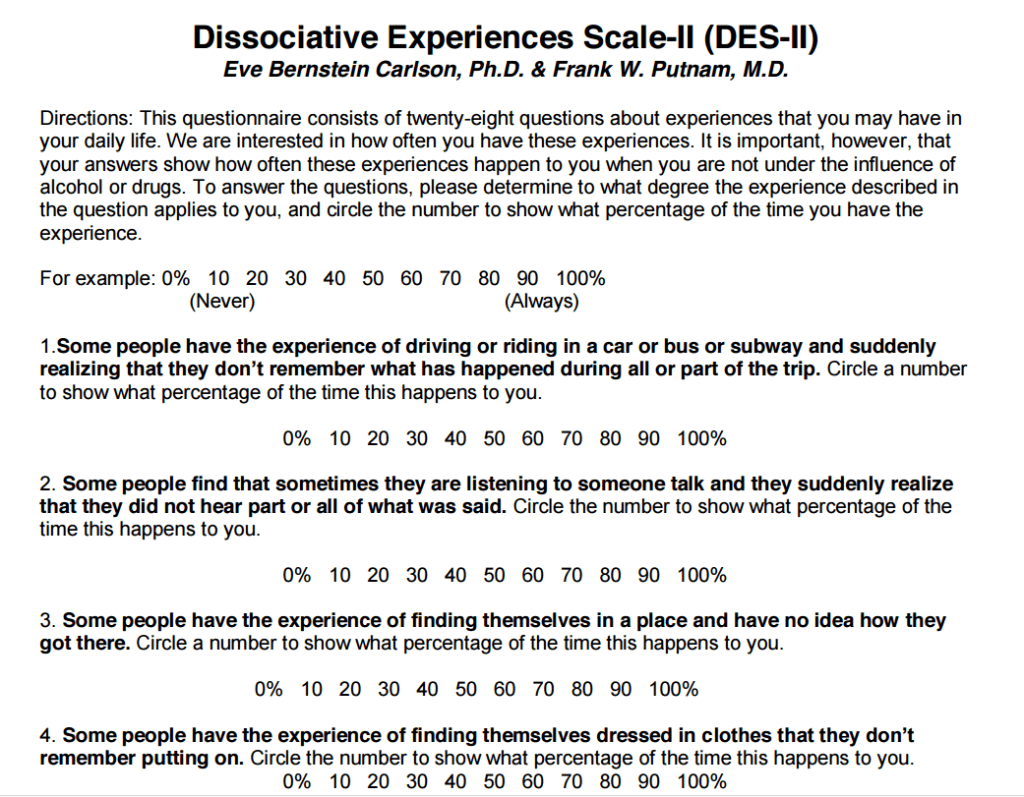
So… I’ve read the information sheets, signed the consent, sent the photos (& a close friend has kindly done the same)… and, ahead of the 4-hour in-person SCID-D interview – I’ve completed the Dissociative Experiences Scale (DES) II.
The DES-II is a 28-item screening measure, that maps to the 5 major DSM ‘types’ of dissociative experience (along with a couple of items on ‘everyday’ non-clinical dissociation, like highway hypnosis & zoning out during the odd conversation). The 5 types are:
- Depersonalisation (e.g. I don’t feel real, I feel disconnected from my body)
- Derealisation (the world doesn’t feel real, other people don’t feel real)
- Dissociative Amnesia (losing time; not being able to remember significant people, events. or how you got somewhere)
- Identity Confusion (my sense of identity is blurry, I don’t know who I am)
- Identity Alteration (I feel like there is more than one person inside; I feel like different people)
Each item has a simple 1-sentence statement, and asks you rate each for proportion of the time (0% of the time to 100% of the time) that applies to you.
=======
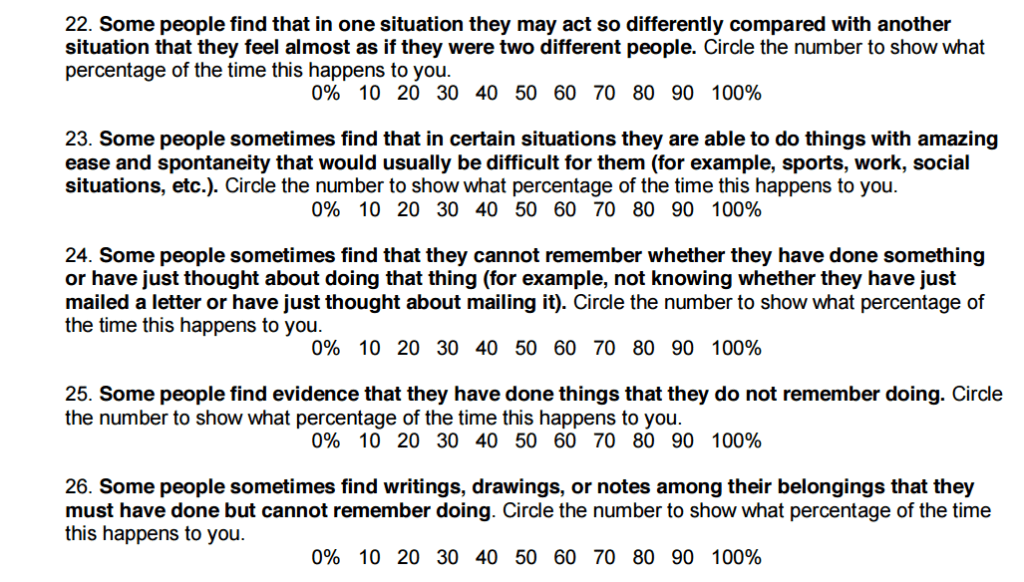
If you don’t consider yourself dissociative & answered a few of those positively – don’t worry. Like I say, there are a few, “everyday” experiences in there, and averaging at least ‘30% of the time’ across all items is indicative that it may be worth further assessment for DID.
Like I say, it’s a screening tool, meaning it’s intended to give an indication, not a diagnosis.
Diagnosis is assessed through a 4 hour interview, in this case with the lead Clinical Psychologist on the study, using the Structured Clinical Interview for DSM Dissociative Disorders (SCID-D). We’ve got that to look forward to next month.
That involves many, many questions, and follow-up probing from the clinician, on those challenges above & more, along with assessing broader mental health & functioning.
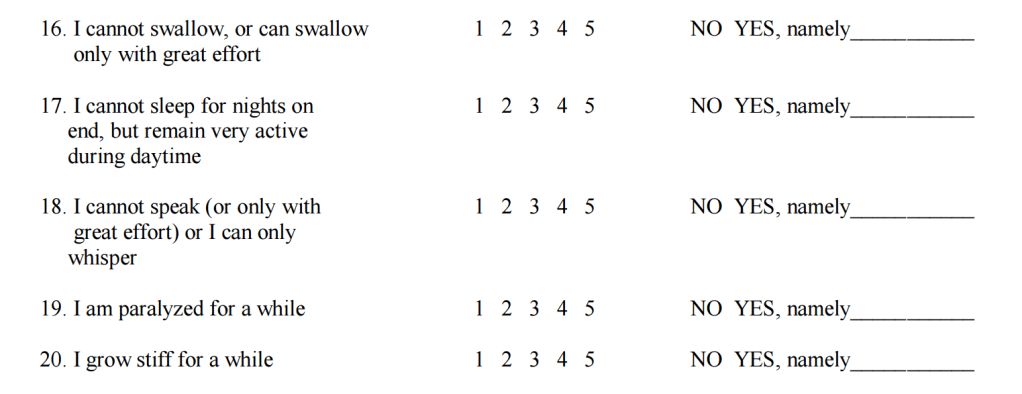
It also involves questions on somatoform symptoms of dissociation – things like groin & digestive pain, changes in perceptions of the size & colour of surroundings, numbness, paralysis, finding yourself unable to speak, and being unable to sleep at night while remaining active in the day.
Sound irrelevant? – Well, the Somatoform Dissociation Questionnaire-20 (SDQ-20) might as well have a, “Yes to all” option for us (more or less). The items included are commonly experienced alongside dissociation. Anyone who says DID is, “all in your head” is being very optimistic – honestly, it’s the body stuff that causes us more dysfunction than anything else.
Given I’ve been working with my T&D specialist therapist for 2 years now, he’s spoken with my parts, with and without me, taught me how to call parts forward & remain with them… he’s (extremely capably, patiently & kindly) humbled me when parts have come forward to challenge his knowledge & skills (and I’ve come back to the room with a sense of, “Oh no… not again…” – fortunately we got over that phase eventually, after enough integration to realise, “Holy shit – he’s been working with all of us this whole time?!”).
He’s helped me be less ashamed of the lost time & amnesia, and welcomes all of my parts in words & actions. He helps us to look after each other. We trust him with things we never thought we’d trust anyone with.
So the idea of covering all that face to face with a new person in an interview setting is a lot.
I mentioned a lot of systems apparently have a complicated relationship with diagnosis – and that’s certainly been true for us at points in the past, particularly the first year.
Talking about dissociation can be triggering, especially when you’re answering questions face-to-face (rather than writing about it at your own pace – hi!) Add to that that some parts may think diagnosis is very important, while others want to remain undisturbed… while others still don’t believe they have DID, parts, or trauma at all… (with all parts just taking different approaches to trying to keep us safe…)
It can all get very noisy, as you try to just answer as best you can.
To end on a lighthearted note – one 218-item screening tool (the MID- and I know… 218 questions) has the statement, “More than one part of you has been reacting to these questions.” – 214 questions in. We had a good laugh at that one, at least ^^

Anyway – research rigour demands standardisation – so this is just something we have to grin & bear, as honestly & openly as we can, while looking after ourselves & each other.
We’re more used to talking about this stuff now… and writing this blog has partly helped with that. It’ll all be worth it – and if anyone’s learnt anything helpful about the screening & diagnosis process reading this – then it already is.
Until next time – take care of yourselves, kiddos ❤
Riley & fam
 Three Kids in a Trench Coat
Leave a comment