It’s a joke obviously, but as system with my own solo Behavioural Science freelance business, all I could think was:
“Yeah, it’s always tough when team meetings start with a telling off….” xD
That’s not just a joke – at least four of us are regularly involved in the business; between the research/systematic reviewing, intervention design, writing, handling client calls & relationships, finances, taking breaks, etc – takes a team to do it all!
It’s mostly Chance, Aeryn, Ellie, & a little help from lil’ Harley (they really love making friends <3). Sometimes a little input from Phoenix if we’re presenting. Jesse if we feel like we’re getting shafted, but that relationship usually needs a bit of self-management to remain business appropriate 😉
There’s a major aspect of the way in which The Alters spoke to me that I didn’t cover in my post on the game here, but rather than try and sneak it in there, I figure it deserves its own space. If you’ve not read that initial post, maybe start there for a bit more context ❤
—
What if…?
The story of this game may be super relatable for anyone, I imagine, who has those moments in their life, where they ask, “What if…?“
“What if I’d stayed at home?”
“What if I’d stood up to my bullies?”
“What if I’d chosen a different degree / college / apprenticeship?”
“What if I’d listened to my partner more?”
“What if I’d said no?”
“What if I’d said yes?“
The Alter creation process involves taking the single, coherent narrative of your life (held as a “Mind Map” of Jan on the mining base’s “Quantum Computer”) and creating Alters by, “branching” that map at certain key life moments. The Quantum Computer then simulates each Alter’s life since whatever the key branching moment was for them – say, standing up to dad’s abuse of your mom, sticking around to be with her instead of going off to college… and a series of cascading alternate life experiences based on this new ‘life path’.
This all gives Jan a very unique opportunity to see – to meet – the answers to those, “What if?” questions in the form of his Alters.
Jan’s early life experiences, and earliest two branch points – creating the Alters Jan Doctor and Jan Technician
The game lets you make these decisions, about which decision points you want to branch, with a really cool story-book style timeline of the big moments in Jan’s life… and once you do, it opens up a whole new timeline from that moment on for that Alter. In some cases, you can then further branch some of that Alter’s own simulated decisions.
The “zoomed-in” storybook style of the QC Mind Map interface – here showing the branch point separating Jan and Jan Technician
Gameplay-wise, these branches are what give you Alters with different professions & skillsets – but they also have different needs, different personalities, who gel with each other (or, sometimes, not) in different ways, with different vulnerabilities, and strengths sometimes known, sometimes latent…. it’s fascinating… and familiar.
—
Parallel life narratives in DID
As is often noted in the literature, “In DID, individuals do not seem to develop a single narrative of self, but instead multiple narratives“.1 That’s something that The Alters, again, does a great job of evoking this sense of, around something that’s sometimes so hard to put into words.
The whole process of going from, “one coherent life narrative, to a jumble of many different narratives” is sort of the reverse of how DID is generally understood scientifically, these days.
What’s happening in The Alters is akin to the idea of, “something traumatic happens and the person shatters into fragments”, which used to be a commonly held theory. I’d say Jan’s near-death experiences, having just witnessed his whole crew dying, left with survivor’s guilt and an ongoing daily battle to survive would be pretty difficult to cope with for most people.
With the benefit of more research though, it’s now thought that DID is more likely to arise from a, “lack of integration” of parts during childhood, due to very early complex trauma (before the age of about 5), emotional neglect, and a high level of dissociation at a time when the development and integration of, “self” is really getting underway2 between the ages of around 6-12.
That said, the actual lived experience of becoming aware of your own multiplicity can feel… somewhat messier, and closer to the way The Alters portrays it. Often people live with DID into their 20s, 30s, 40s, 50s or beyond… without being aware of any of this – and then something happens (or, often, somethings) where it feels like life falls apart, and it all brings so much of this into the light for that person. That’s been the case for me these last few years, around the age of 40.
—
The maze of living in, “multiple realities”
Sometimes when I reflect on my life, it’s like I’m looking at the spaghetti of Jan’s multiply branched Mind Map…
Jan’s Mind Map, held by the Quantum Computer, after branching The Technician, The Miner, The Doctor, and The Scientist. Mmm – delicious spaghetti.
Of course, in reality, we don’t get to go back and make all those choices multiple different ways. The only way we can do that is in our minds (our own, “Quantum Computers”, if you like) – and that’s something that I have a tendency to do, big time. Which just adds to the sense of there being all this spaghetti – where it starts to feel like you don’t know what to believe about yourself and your life.
You feel like you’ve lived as so many different versions of yourself, and you can’t always tell which stories are alternate versions of the past & present, what are worries about what will be, and what are regrets about what was…. You can come to get confused about what you’ve been doing in the ‘real world’, and what you’ve been living out in your ‘inner world’…. Essentially, telling ‘simulated branches’ from what’s actually been happening out in the world can get pretty blurry sometimes.
This can all add to the sense of having, “multiple, partially overlapping realities” (which I’ve seen described in the literature as a sort of, “multiple reality disorder” component of DID3).
In the game, the simulated events of the alters lives feel a little like what Kluft calls, “the third reality”: “The third reality is one in which events enacted within the inner world of the alters may intrude into and be misperceived as events that have occurred in external historical reality“.4
Personally, it sometimes feels like my brain and my body remember two almost totally different versions of what’s happened that week, month, year…. life… and I think this ‘multiple reality’ idea describes a certain amount of how that comes about.
Which is also where parts come in.
—
Alters in the real world
Parts often have their own life stories, that don’t necessarily match up autobiographically, emotionally, or they may have differing interpretations of, or beliefs about, what has happened, what is happening now, and what needs to happen next.
One may remember those things that happened (or that were conspicuously absent) when you were young – while another does not, so that they can get on with life unburdened by those difficult memories that, when they come up, bring you to standstill and leave you feeling hopeless and helpless.
You may have this inner narrative that you had a happy and connected childhood, and another that everything was bleak, miserable, and hopeless from your earliest memories. One part may believe you’re super sociable, the hostess with the mostess. Another believes that you’re a shy little boy who can barely get a sentence out in front of another human being. All of these may not fit together into one narrative, with nuance and colour and gradations – instead being kept separate, compartmentalised.
Often what’s present are a subset of all these beliefs and memories, depending on who is doing the rememberingat the time. It’s not just memories of the distant past. Parts can have different memories of what happened last week, or this morning, or 10 minutes ago… as well as different wants & needs in the moment – because they’re parts of you here, today – not some kind of historical artefacts.
You may try to remember, “Wait, what was I trying to do today?” and get a different answers depending on who’s here right now (my tip – whiteboards and/or a journal dedicated to, “Getting stuff done”, alongside roll-call for parts “here” v “taking a break” & some pointers for “checking in”, can help a ton).
An example of one of the many, many uses of our whiteboards at home
An example from the game of parts and the ‘third reality’ idea: Jan Botanist believes, until he ‘wakes up’ and you tell him otherwise – that he moved cities with his wife, remained married, and that he is still a devoted husband today – when Jan in fact separated from his wife years ago, and when he talks to her on comms during the mission, things are often… frosty.
Jan Botanist’s simulated life as someone who listens, empathises, and negotiates in relationships, on the other hand, does help him to connect with quantum-wife Lena (a scientist connected to the mission), in ways that simply feel totally unavailable to Jan.
JB uses his ability and desire to connect, to then take to the comms (with Jan’s blessing, and up-to-date information about reality – that’s important), to have some mission-critical, and interpersonally ice-breaking conversations with real-life Lena.
Jan Botanist talks to Jan’s ex-wife Lena over the comm-link, while Jan waits outside. Wondering what your alter’s been talking about without you, Jan? I feel you buddy. I feel you.
Jan plays a sort of, “self” role, helping JB meet the need to talk to this person he misses, but ensuring he has full knowledge of the real-world situation & boundaries (there are some aspects of this that don’t feel totally healthy, sure – but it’s the clearest example in the game of an Alter having a present-day connection to the world of other people outside of the mining base).
This gets at a whole aspect of the ways in which the very real strengths of real-life alters can come from many places, ‘real’, ‘imagined’ and often, a blend of the two. In DID being able to hold these different realities in one brain and body without overwhelming cognitive dissonance is afforded through, “trance logic”,5 which is fascinating but a whole other topic of its own.
In other words, differences in beliefs about who you are and what’s happening don’t just come from these ‘inner world’ jaunts into alternate possibilities, from simulated branches. Those “multiple realities” are often a mix of very real experiences that you’ve lived out in the real world (JB’s conversations with Lena during the mission) and inner world exploration (JB’s simulated life in which he and Lena didn’t separate).
—
Me & my alters
To give an idea of what some of this can look like for realsies:
I have super sociable parts that love being in the middle of the party, deep in their element, and who have done this hundreds of times over our life. Some love to been seen, to party, to play, to be the centre of attention.
Some are chill AF, and can navigate any social or emotional situation with ease – genuine ease, neither craving attention nor space. Those parts may sometimes be focused on our own work as a psychologist, many times published and frequent speaker at professional conferences – but they operate in a flow state of engaging in these complex tasks, while remaining socially connected, well fed on home cooked meals, and still feel able to help others in ways big and small whenever they’re able.
I also have parts who struggle to remember a single instance of any of this, and seem to truly believe that we’ve never been able to leave our room for long without having a panic attack, and want to stay hidden in the dark, and don’t want another person to see our face.
Some believe we don’t know how fill in a simple doctor’s appointment form, or how to boil an egg – let alone how to write a presentation to give to 100+ PhDs and medical doctors.
Some take the driver’s seat and hide us under the desk if they hear the doorbell, or struggle to imagine even going to the corner shop to buy food when we have none.
As you can imagine – all these parts sometimes have conflicting beliefs and needs that can take some navigating when certain combinations are present at the same time, or when we’re switching between drivers many times in a day without some kind of, well… system.
Helping those burdened parts of yourself to heal, & access the capabilities of other parts, helping those eager parts to learn to slow down enough to take a little care of the parts that are struggling to keep up – and accepting all those parts as parts of you – can help everyone inside to find a place of common ground in your life. All of which can help foster a certain level of inner harmony, and can help you get ‘unstuck’, from some of the very-stuck-indeed places you can find yourself in when parts are ignored or side-lined while in need.
—
Healing ourselves, together
Which brings us back to the importance of developing a sense of narrative coherence. Narrative that comes from a place of honest reflection, with an underlying intention of helping yourself / yourselves have a stable base from which to live in the present, with plans, hopes and dreams for the future.
Knowing where you’ve been, what’s happened, what you’ve struggled with, what you’ve overcome, what you still need help with, or where to take a little extra care… Having that “Jan Self” figure at the centre of your alters, regularly bringing everyone’s attention back to your present day life, organising your system, conducting the orchestra…. These can all help, in my experience, whether you want to live as a ‘singlet’ or a ‘system’. If nothing else, your body will thank you for processing as you go.6
Postponed integration if it were a phone OS…
If you’re familiar with some of the more pronounced – sometimes baffling – somatic aspects that can accompany dissociation, and what I think of as, “postponed integration” or “integration when the ‘Remind me later‘ button stops working” – you may well know what I mean.
—
As Jan’s story continues, he spends a lot of time looking after the group needs and individual egos of his Alters – taking on their burdens when he has the capacity to do so, sharing the load. In turn, his Alters show up for him, and for each other, in all kinds of ways. And, over time, Jan starts to heal some of his own internal conflicts by getting to know his Alter selves better, and coming to terms with his own lingering, “What ifs?”, and the self-doubt that runs through them.
As you go, you learn through experience, ‘Lessons’ from your Alters. Lessons like:
“Assertiveness”, learned from Jan Technician – standing up for yourself & what you believe to be fair is important – even if it isn’t popular. In our system, Jesse taught me a lot about this stuff last year, and remains my go-to guy here.
“Pragmatism” from Jan Scientist – sometimes a situation means you do just have to power through and do the work now, when it matters – whatever it takes to get results. For us, Chance often operates in this space.
“Vulnerability” from Jan Miner & his in-game battles with low self-worth and addiction – asking other people for help when you need it is a strength, not a weakness. This is a bit of a cross-system thing for us, but River and Ren care for the others inside around this stuff.
Jesse, Chance, Ren & River
As you learn from your Alters & grow, you start to piece together a wider picture of yourself, gaining access to new decisions & dialogue options.
The start of Jan’s, “unburdened parts” system map.
Gods know that we’ve all taught each other so much much in our little family these last few years, that when this system (*wink*) came up a little later on in the game… Well, I’d lost count by that point just how many times I’d smiled a big, “You Get It” smile while accompanying Jan on his journey – but this was definitely one of them.
With time, Jan realises that the Quantum Computer saved him out of all of the crew, because he was person with the best chance of saving the mission – that he and his Alters, together, stood a better chance of beating the odds than even those he regarded as being in another league to him as people. He learns to trust his intuition, to work alongside and lead his Alters from a place of, “I don’t have all the answers, but no one person does – that’s why we need each other”.
And yup – that’s obviously a message that’s relevant to families, teams, squads… to people – inside and out – everywhere. But given the fact that The Alters is about, well, alters… I’m happy it did such a great job at reflecting a little of what it’s like to live with & love a family inside.
Because healing your selves through empathy, self-compassion, developing self-trust… that’s something the game gets really very right indeed.
It’s something we’re still working on, and I think it’s probably more of a lifelong way of being, a little daily effort & care, more than a, “Congratulations, everything’s solved forever” kind of deal that I know I sometimes wish it was. But hey…
Work in progress.
Anyway, just thought that was worth coming back to.
Until next time, take care of yourselves ❤
Riley & fam
—
1, Wilson M, Donath W, Dorahy MJ, Habermas T, Peters I, Marsh RJ, et al. Global Coherence and Autobiographical Reasoning in Life Narratives of People with Dissociative Identity Disorder: A Comparison with Adult, Child, and Psychosis Groups. Journal of Trauma & Dissociation. 2025 Aug 8;26(4):563–89.
2. International Society For The Study of Trauma & Dissociation. Guidelines for Treating Dissociative Identity Disorder in Adults, Third Revision. Journal of Trauma & Dissociation. 2011 Feb 28;12(2):115–87.
3. Kluft RP. Dealing with Alters: A Pragmatic Clinical Perspective. Psychiatric Clinics of North America. 2006 Mar 1;29(1):281–304.
4. Kluft. Psychiatric Annals. Diagnosing Dissociative Identity Disorder: Understanding and assessing manifestations can help clinicians identify and treat patients more effectively. Available from: https://journals.healio.com/doi/10.3928/00485713-20050801-05
5. Loewenstein RJ, Brand B. Dissociative identity disorder: a disorder of diagnostic and therapeutic paradoxes. Psychoanalytic Psychotherapy. 2023 Oct 2;37(4):339–80.
Lately, there have been some fantastic video games that spoke to aspects of my inner world, and that each evoked aspects of inner worlds in some really fantastic & vibrant ways.
Over the next few posts, I’ll be exploring resonant themes explored in a few of them. Themes like: alters craving independence & recognition as individuals in society; are parts masks or what’s behind the mask?; what do little/younger parts hear inside when we talk; and what happens when the host of an inner world wants to pull the plug while there are still others inside?
The three games I’ll talk about are The Alters, A Shady Part of Me, and Clair Obscur: Expedition 33.
—
The kind of place I like to visit, in my mind and in the real world, when I need a break with the rest of my fam
—
Um… what *is* an inner world, anyway?
The ‘inner world’, in DID terms, is used to refer to a shared mental space where parts/alters can co-exist, communicate, have safe spaces, and live when not ‘at the front’. For example, mine is a huge woodland grove, filled with clearings, cabins, camps, rivers, a soaring peak, and at the centre, the Heartfire, where everyone can gather and hang out / discuss system issues & important decisions, that sort of thing. Everyone has their own place here, and the people they like to be closest to. The littles have a safe space (the Funderdome…), and there’s a bench on a little island in the middle of a lake for anyone who just needs some space.
It’s cool. We made it ourselves, and we love it. Also, I can look in and see where everyone’s at and what they’re up to when doing things like system roll-call as a way of checking-in.
Inner world visualisation techniques are commonly used therapeutically in DID, for the reasons above. They also seem to come pretty intuitively to many people who dissociate, and trance states inherent in dissociation make them particularly effective.1, 2
No two systems are alike, and no two inner worlds the same – and video games offer a chance to explore so much about what it’s like to have these places where parts of yourself can be together & interact.
So, let’s start with…
—
The Alters
The Alters is a third-person action survival & base building game released earlier this year on PC, Xbox, and PS5.
Just look at these handsome lads. Only thing that would make it feel more relatable would be if some (but not all) of them were transfemme.Maybe there’ll be a sequel? *crosses fingers*
You are Jan Dolski, a lone survivor of a space mission who crashes on a hostile planet where the sun’s lethal radiation forces him to live on a giant, mobile base, trying to outrun the sunrise.
To survive, Jan uses a special material called Rapidium to create “Alters” – alternate versions of himself with different skills and life paths, with their own relationships with him… and each other. The premise of cloned versions of a person – but whose identities branched off at various points in your life – is a really interesting way of approaching the idea of ‘multiple selves’.
Jan & his rag-tag crew of Alters explore the planet, build up their base, have some major tiffs (and wild boy’s nights…), and race against the sun to rendezvous with an incoming rescue team… who believe you’re the only survivor down here. Yeah, about that…
—
Sounds a bit DID-y to me…
That’s because the Alter creation process, the Alters as characters, and some of the story beats, were written with DID as the main inspiration from the start. Here’s Game Director Tomasz Kisilewicz in an interview back in 2022, shortly after The Alters was announced:3
The psychological elements of the story. The process of creating the alters is a purely fictional sci-fi concept, but the real-world medical cases of multiple personalities such as dissociative identity disorder served as an important point of reference on how to portray different personalities that are coming out of the same person. It is important that alters not only share the same body but also a large part of their life paths, and thus their personality. So we look at real-world multiple personality cases to best portray both the similarities and differences between them.
Yeah, when I looked up the development of the game after finishing it, none of this surprised me. It’s a really cool thing 11 Bit Studios have made here, and I highly recommend it.
So let’s take a look at some of the ways the game handles this “science-fiction is magic” depiction of multiplicity…
—
The mining base as an ‘inner world’ representation
The space the game gives Jan & his Alters to co-exist in is really cool – elegant in its simplicity. It’s simply a side-on view of this huge, circular mobile base,…
Here’s what it looks like early on:
—
The mining base. You can fit it with everything a growing system needs, from dorm rooms to a place to play beer pong and watch terrible horror movies together
—
This side-on base view, where you add new dorm rooms as new Alters emerge, and create spaces for them to be together & meet their needs, is great. Video games are a great source of inner world visualisation ideas – Multiplicity & Me talks about inner worlds using The Sims, here:
—
—
If there’s something to discuss, Jan can gather everyone in the kitchen and talk things through. If you’re curious how that might go – another vid from Jess, where she hired some actors to illustrate what inner headspaces were like for her:
—
—
Finding family inside & seeking independence
Jan & his Alters learn and grow together, live like a family, work as a team… but something that comes up time and again over the story is the idea of, “We know that if we make it back to earth we won’t be allowed to live our lives as people; we’ll have served our purpose and will be disposed of, or turned into science lab experiments.”
Fuck that.
Throughout the game, I was ride or die for my guys. I was not gonna let anyone mess with them, and I didn’t want special treatment for being, “the original”. You want us to manufacture some woodworking tools so you can carve a wooden duck, Jan Miner? You’ve got it, buddy! What’s that Jan Technician? You want me to use the Fabricator to make you a guitar, so we can have a rad love-in sing-along together? Oh I gotchu there, fam.
The Act 1 -> Act 2 musical number – you heard me. This video is from my playthrough; so my team of Alters, my choice of lyrics for Jan – this scene makes me so, so happy every time I watch it ❤
Right before the return trip to earth, Jan Botanist asked me to swap places with him, so he would be, “the” Jan Dolski. I accepted. I stowed away with my Alters, to go live with them. JB could deal with the press, the trial, our ex-wife… I wanted to go live on a beach, have sing-alongs, play beer pong, and watch terrible horror movies with our little family.
I imagine if he read all this, my therapist would probably sigh and go, “Yeah… that sounds like Riley alright” xD
—
Deciding for the whole when you’re divided inside
In Act 2, you find out your alters are sick. Like, really sick. They’re all going to die of sci-fi brain cancer, as a result of their rapid growth with altered memories.
You’re presented with two options; grow a Tabula Rasa clone of yourself, a ‘blank Alter’ if you like… and harvest enough of their brain tissue to create a cure for the others – killing them in the process. Some of your Alters are horrified. I did not feel good about it. The idea of using the same process I’d just used to create my guys…. some of whom already resent being created ‘as tools’ for my survival… then killing them in front of their eyes. The ethics were dubious, and the optics even worse…
Another option is possible if you seek it out. A chip in the brain that supresses the uncontrolled growth. However, this option means that the corporation that sent you on this merry trip would find out about everyone, maybe be able to track them…
It was a hard choice. I spoke to everyone, we had all-hands meetings in the kitchen, arguing about the best approach. I gave them the go-ahead for this to be fully their decision – they held a family meeting in the kitchen, voted on which approach to go for… and it was a tie. Damnit.
There was no way around it. I was going to have to decide the fate of my Alters.
This kind of round-table discussion is something that’s pretty common in DID therapy, from what I can gather. I know I’ve used it a number of times. Sometimes when you’re finding yourself going back and forth on your choices in your day to day life in the world, you just need to go inside, get together and say, “Ok guys, I know there are a lot of strong opinions about this, and we’re going in circles on the outside… so family meeting time….”
This is often the case with decisions that affect the body in DID. Think about something like, oh I don’t know, the decision to support transitioning gender through HRT and surgery. There are irreversible changes you’re making to your body, that affect everyone – but maybe not everyone inside is on the same page. Well, welcome to my world back in 2023 – and how I discovered I was plural before I knew what dissociation, multiplicity, or DID were… before I had language for any of this. We talked things out & found a way forward, but this stuff still comes up with all kinds of decisions today.
Anyway…
Back in the game – I chose the chip option. We cured everyone. No more imminent death. Phew. But half of my Alters were pissed at the idea of potentially being on a corporate leash, their brains further tampered with, or who knows what. I was so torn about the whole thing,
Oh dear… looks like Chance & Jesse have fallen out again…. *sigh* When they’re not fucking, they’re fighting….
I nearly save-scummed and loaded and changed my mind. But fuck it, stick to your guns, Riley. We’ll work things out, we always do.
Then, suddenly, I got hit in the head really hard. By my first Alter & closest friend out here, Jan Technician. The world faded.
This feels a lot like a Jesse switch.
Fuck.
—
The Alter rebellion
Jan wakes up, to Jan Scientist’s heartwarming bedside manner (I love him, but he’s a dick, sometimes…) Turns out three of my Alters knocked me out, took a truck that Jan Technician had fixed up, and made their own way out into the barren wasteland of this planet. We’re still trying to outrun the sunrise. Magnetic storms abound. Our navigation is fried, and nearly half our crew, including the person who knows how to fix shit around here, have gone AWOL.
Jesus, this game knows how to do tension. This is almost as chaotic as me on a Monday morning.
This ‘rising tension, then blacking out and waking up, finding you’ve split into two camps, and the other has been doing shit without you‘, is what ‘switching’ is like for me. I don’t know – I don’t understand that bit very well still, and it’s better to focus on looking after everyone in the first place, rather than worrying about the possibility of switching. Still, sometimes it just… happens, y’know?
Long story short, you find a way to track your guys, and catch up to them. They’ve holed up and started making a base in a mountainside, to try and weather the sunrise. They don’t want your help.
Well, tough. Turns out they don’t have enough supplies to make it through another week, let alone weather the impending doom waiting for them… I give them supplies. Help them out while we live, divided, in two groups. Two sub-systems, if you like…
Eventually, through a combination of acts of good faith, shared needs, and the irresistible call of bromantic reconciliation, we reunite in our base and make the final preparations for the rescue ship.
There are more twists and turns before we make it out of here, but we’re together again.
Phew. Love you guys.
I’ve had enough Alter rebellions of my own to know how that feeling of missing a big part of your inner family goes. Reuniting takes work, and a lot of swallowing your pride, to be able to make space to say, “I can’t force you to come back – but there’s a place for you here if you choose it.”
—
The life and works of Jan Scientist
The rebellion was a good example of what happens when a decision that impacts the body is rejected or disliked by a faction of the whole.
But sometimes, alters want more than to be part of a harmonious family. Sometimes they want the world to see them as an individual.
Of all the Alters I journeyed with, one valued independence from the rest of us the most – Jan Scientist.
—
Perhaps the most abrasive, and brilliant of your Alters, Jan Scientist…
—
Towards the end of the game, he has just finished reconstructing & completing his “ground-breaking research that could change the world”. This man is never short on confidence in his ability & achievements – and he’s come through for us so many times, I fully believe him when he says this work is going to matter to the world.
Still, something’s off. He’s quiet, distracted. That’s not like him. I ask him what’s up:
Turns out – he wants to feel like he matters, too.
—
Jan Scientist: “It’s just that I thought I’d be more happy about completing that old research of mine, but the more I think about it, the less reasons I have to celebrate. What now? What I mean is, it’s a big success, but so what? Even if I do make it back alive, no one will ever know who’s behind it.”
Jan: “Why not? We can tell them.”
Jan Scientist: “Tell them what? Surely you don’t think anyone will let me be a part of society like a normal human being. Publicly, I won’t even exist.”
Jan: “But you will exist as Jan Dolski…”
Jan Scientist: “No. In this world, you are Jan Dolski.”
Jan: “Does it really make such a difference? I mean, we’re both Jan Dolski”
Jan Scientist: “It makes a difference to me. Look at us! We are two completely different people.”
Jan: “More like two completely different quantum states of the same person. Of all my Alters, you should be most aware of that.”
Jan Scientist: “I was aware of that when I woke up. But then my existence started moving forward in time and I ceased to be an abstract being suspended in a single moment. I became a physical body progressing on an individual real life path. You see, I don’t need the world to remember my name.
I want it to acknowledge my distinctive existence.”
—
It’s kind of a heartbreaking thing to hear. Some of my inner fam feel the same way sometimes.
For us, it’s not so much about names, but just wanting to be seen… witnessed… accepted… loved… for who we each are. We’re an “Us” made of “I’s”, I guess. We all know we’re parts of a whole, that we share a body and a brain, and that we’re in this together – I don’t think we’d want it any other way. We come as a squad – but sometimes we also like our individual contributions to be recognised, inside and out.
There’s so much more I could say – but I think that’s as good a place as any to call it for The Alters.
Edit: I totally lied, because turns out I had a lot more to say – so I continue exploring my love for The Alters in a follow-up post here.
1. Fraser GA. Fraser’s “Dissociative Table Technique” Revisited, Revised: A Strategy for Working with Ego States in Dissociative Disorders and Ego-State Therapy. Journal of Trauma & Dissociation. 2003 Sept 1;4(4):5–28.
2. Twombly J. Trauma and Dissociation Informed Internal Family Systems: How to Successfully Treat C-PTSD, and Dissociative Disorders. 2022.
Explained by ducks is a wonderful YouTube channel, with lots of super-short overviews of mental health stuff. For when you want the absolute basics, waterfowl style, with a positive and affirming vibe.
Informative. Not long. Still a good duck.
So here’s DID, as explained by ducks, in 1 minute:
—
The comments section is full of love, and it’s heart-warming 🙂
Sometimes I just need to be reassured that I’m still a good duck.
Talking about DID can be kind of a heavy subject sometimes… but hey, livin’ la vida plural can also be a pretty fun way of experiencing the world, too!
So today? Today I just want to share some lighter-hearted stuff.
—
—
To kick off, here’s a couple of jokes I like:
Moon Knight, episode 2: After Mark (Oscar Isaac) destroys the bathrooms of the museum Steven (Oscar Isaac) works in, HR talks to him & offers him mental health support:
Lol xD
Steven is precious & we love him dearly.
—
—
Parts can have different skills that aren’t shared by everyone – artistic skills & musical talent, for example. That can include languages. So the idea of sitting down with a friend & sharing, “Parts of me are telling me off in a language I don’t understand!” is both absurd and instantly relatable.
Mine sing, chatter, and occasionally swear in French or Mandarin, and it can take me a hot minute to figure out what they’re saying xD
Gender is something that comes up with us a bunch. I’m genderfluid, but lean transfemme, and have been on HRT for a bit over 2 years now.
When one of the boys is fronting, sometimes they have a moment of, “wtf…? Oh right, I remember… we’ve got tits now…”
Sometimes it’s a point of contention, but more often than not, they usually have a good laugh with it. Jesse & Chance like to complement each other on their magnificent bosoms, do some modelling for one another, etc.
A metaphor that gets used a lot is ‘driving’. Such and such is, ‘driving’ currently, so-and-so is in the ‘passenger seat’. X,y, and z are in the back giving directions or asking, ‘are we there yet’.
When we’ve spun off the road somewhat, sometimes we carry on the driving metaphors.
We sometimes refer to a driving part going back inside suddenly as, ‘jumping out of the driver’s seat without handing over the wheel’ and doing ourselves a mischief as a result as, ‘crashing the Ford Fiesta’.
I don’t remember why exactly we decided we’re a Ford Fiesta, but I know we found it funny at the time. I think it was the mental image of 12/13 of us piling into a Ford Fiesta and going on road trips, some of us hanging out the windows or on the roof rack, having barnies and, “Mom, it’s my turn on the Gameboy!” type moments.
Actually, I think it’s one of the reasons I love the video game The Alters’ splash screen so much:
—
—
It also reminds me of how, when I first started therapy and a month or two in, just after I’d met my first ‘little’ part, my therapist introduced the idea of creating a ‘safe space’ inside, where everyone could have their own room, as well as a communal living area.
He asked how many bedrooms I thought we’d need in this inner safe space. I shrugged and went, “I don’t know, maybe 4?” He grinned and said, “Four? Ok… well… maybe we’ll need to build an extension at some point…”
I’ve never directly asked, but I’m pretty sure the b*&$*rd knew he’d already met more than four of us, but didn’t want to be too leading about any of it xD
Oh, on The Alters – I love the voice credits for like, 80% of the characters in the game:
—
There are lots of silly conversations we have, when we journal, when we leave art on the whiteboard for each other.
Here’s one though: We were encouraged to come up with, “de-fusion” statements – simple, preferably silly, sentences for responding to those unhelpful beliefs that sneak up on us – like the feeling we always need to stay busy, or the idea that we’re worthless if we’re not being of service to others.
For hyperalertness, & the belief that we can’t afford to ever fuck up or relax or everything will fall apart:
I’ll share more journal / whiteboard stuff another day, stuff that we agree it’s not too personal at least…
Some of it get kinda steamy, idk, don’t ask me. Somewhere between Jesse, Chance, & Phoenix in particular, it all gets a bit weird. In a really good way.
There’s a lot of tongue in cheek eye-rolling, but we’re good with that. As long as everyone’s having fun.
I just watched Thunderbolts*, and straight after, the Cinema Therapy episode on it. I highly recommend both.
—
—
Jono & Alan don’t really know what to make, diagnostically, of one of the main characters, Bob, but it seems like a mix of bipolar & C-PTSD with a healthy side of dissociation (there’s a good overview of ‘bipolar dissociation’ here1). The big big mood swings of bipolar aren’t super familiar to me. But the compartmentalised emotions, the fuzzy memories between them. The deep, deep void of loneliness & shame, that you don’t know how to fill, and look for the answers at the bottom of bottle after bottle, of booze, of pills. “You always make everything worse”. That’s familiar.
Dissociative Identity Disorder (DID) arises in response to early life complex trauma, and the accommodations we make for it when it remains unhealed in our systems.
The word ‘trauma’ simply means, ‘wound’. The ‘complex’ is a neat way of saying, “there’s been so much of it, for so long, half the time you can’t tell the wounds from what’s going on around you”. That’s not a clinical definition. That’s my interpretation of it.
Essentially the roots are in attachment wounds and aspects of emotional neglect, whether or not they include violence, abuse and/or ‘betrayal’. What happens to a person who’s suffered through this? They’re burdened with feelings that shouldn’t be theirs to carry. Those feelings almost always include:
Shame
and
Loneliness.
Sometimes the whole, “DID” label / self-concept can be unhelpful because you start focusing on the divisions, the gaps; ideas like, ‘alters’, ‘switching’, ‘amnesia’. It can be easy to lose sight of the simple fact: Those are all survival adaptations; dissociation is not a dirty word, and plurality is actually kinda rad – it’s the trauma we need to heal
What Thunderbolts* does such a good job of portraying, and what Jono & Alan pick up on in the CT episode, are talking about what’s really needed for healing to happen. How no-one can contain all that by themselves. How we need to let it out, be seen and held by others, even when we’re not at our shiniest. How when you’re hurting from so many wounds you can’t see a way out – you don’t need people to know what the right thing to say is.
You just need to not go through it alone.
‘Shadow work’ is a fancy way of saying, ‘Learning to embrace all parts of yourself, even the parts you’re ashamed of. And being vulnerable enough around other people to let them show you that – even when they know all of you? They will still love you, too.’
No-one is an island, no matter how deeply you feel that to be true. We need each other to heal, together, and to live lives that are worth a damn to us. We need each other.
It’s a great film, and a great episode of CT. You should check both out.
Take care of yourselves,
Riley & fam❤️
—
1. The CTAD Clinic. Very few people have heard of Bipolar Dissociation – what is it? [Internet]. 2024 [cited 2025 Oct 11]. Available from: https://www.youtube.com/watch?v=Y0ZWZ-fOXyc
Especially when I stick around while it’s happening.
I restarted a few weeks ago, after a 6 month break. Sessions 1 and 2 I don’t really remember. I think I cried a lot. Or got panicked and overwhelmed and checked out a lot. I don’t remember what we talked about. Mostly that everything’s hard at the moment, probably.
Therapy is a time when different parts come out a lot (therapist makes sure of that, I think), and so when I’m checking out a lot, and overall integration / teamwork is low, that means a lot of amnesia.
My therapist was away last week, and after our last session, a lot of feelings were showing up, and I didn’t know what to do with them. So we all went back to what we’d been doing for a lot of the last 6 months: split up. Do our own things. Think fast, try to outrun the dissonance.
That tends to lead to a lot of arguments inside. The part that self harms doesn’t want to know that the part that tries to look after our body disapproves. The part that makes elaborate plans on the whiteboard shows up every so often wanting to know why no-one’s following their plans – but no-one wants to have to explain themselves for taking care of their own corner of things, and not following a laundry list of shit they never agreed to.
With only one body, a common response to all of this is shutdown, freeze. Faced with feeling like anything I do only makes things worse, my body decides that lockdown is the only option. Limbs get paralysed, my back doesn’t know what my front’s doing and vice versa. Pain and paralysis are the norm.
—
Be here now
This last week, I’ve been trying to do what my therapist and I talked about (or at least, what the follow-up email said we talked about): Just a couple of times a day, 5 mins or so of listening to EMDR bilateral beats, be present in my surroundings and my body. Be here now.
This type of mindful embodiedness tends to inherently bring us closer into contact with one another. There’s a whole thing with parts of the mind and parts of the body being inherently linked that gets squiffy in structural dissociation (or is that linkage a feature of SD? IDK).
Either way, when we become more present, we come into contact inside – even if we’re not really talking or playing well together right now.
And that plays out in the body.
Sometimes there are convulsions. Sometimes wretching (on one side of my body only, like my left half is trying to throw up but my right hand side DGAF). Sometimes it’s just emotionally overwhelming in minutes.
But I’ve been doing it – we’ve been doing it. And just a little each day often kickstarts these processes that are kind of the opposite of dissociation.
So today in therapy, I was ‘here’ a lot more of the time. Right now, that’s the weird experience. Being here for it.
—
So what does DID therapy look like?
(when you can remember it)
DID therapy happens, in theory, in a 3-phase structure, over months, and often years:
1. Stabilization:
Working with trauma is hard, it’s important that you and your therapist are on the same page about ‘who’s here’, who’s likely to show up during EMDR (Eye Movement Desensitization & Reprocessing), as too many big surprise appearances during a fairly vulnerable time can be retraumatizing.
2. Trauma exploration, witnessing, & unburdening
Parts come forward and share their stories, what happened, what burdens they’ve been carrying, often for years (say, 30 or more in many cases…). The therapist shows curiosity and compassion about behaviours that may be baffling and cause a lot of internal strife for the person. The person starts to realise that their parts have been doing what they’ve been doing to keep them safe, and to come into a place of compassion for their parts and in turn, themselves.
EMDR is one way of really being with the pain of a part, without becoming overwhelmed, and reprocessing memories in ways that access the strengths of other parts that have been growing & learning in the present – reducing the sense of helplessness & self-blame that are such a big elements of the ‘stuckness’ of traumatic memories & re-experiencing.
3. Integration & system re-orientation.
In reality, ‘integration’ is a process that’s happening all the time (for everyone, not just people with DID). Incorporating memories, experiences, identity, etc, into an overall narrative and sense of a coherent self.
It’s just that, after trauma processing / reprocessing, there’s often a lot going on inside, system reorganisation that happens organically, and this phase is kind of a ‘helping hand’ at making sense of life now things feel different. Perhaps some parts no longer feel the need to do the jobs they used to (say, self-harm, running away from safe situations that felt dangerous, or pushing away people in your life who you now see as trying to be supportive, where emotional flashbacks previously meant that connection felt like being controlled, or like the setup for abandonment).
That’s great – but often it means that you’ll find yourself in a lot of new situations, unfamiliar territory, and with an overall shifting sense of identity. This phase tries to help you make sense of it all and learn new skills that previously you never learned, because dissociation just kept you away from situations that, for many people, have been a normal part of life this whole time.
If you’re interested in reading more, the International Society for the Study of Trauma & Dissociation guidelines on DID treatment1 are widely considered the ‘gold standard’ – and IMO they’re sensible, and sufficiently flexible to individual differences, to make a lot sense. You can check them out here.
—
It’s almost never a single, linear process. There’s a lot of moving through each phase & ‘levelling up’; which frequently puts you back in the need for stabilization before you move onto deeper wounds that were just too dissociated to even be aware of before. It’s sort of like a cycle, or more like an upward spiral. You feel like you’re back at square 1 a lot, but with a little reflection, you often find out that, “holy shit – I’ve come a long way since I last felt like I was here…”
In reality, there’s often a bit of all of these happening all of the time.
Today was one of those, “doing a bit of each” days.
—
Talking to my therapist was full of weird moments. I stopped to break down crying at one point – just totally broke down, fully present with my own deep well of sadness for the first time in ages… had to totally stop, close my eyes, just hold myself… but as soon as I was done it felt like the feelings, and he, were very far away. Oh well.On we go.
I had to stop at another point due to intense confusion while trying to remember bits of the last week. I described it as being like, “multiple realities colliding”. Like my brain and my body had totally different memories of the last 7 days. When parts start talking inside again, often there’s a bit of reconciliation that needs to happen. Integration isn’t just being aware the others are there, it’s sharing memories and starting to work as a team again.
Apparently we have to go really slowly.
I hate going slowly.
—
In every colour, a part of her
To give you a bit of an idea of how we talk about parts, and the ways in which metaphors and resonant media can help explain inner experiences:
Many parts are, at times, non-verbal, and the idea of, “talking inside” is often metaphorical. So art is often a really good way of helping them communicate when words aren’t available.
We talked about art I’d drawn recently, that I sent him pre-session. Particularly about a piece I’d drawn referencing the video game Clair Obscur: Expedition 33. To my surprise, I was able to tell him exactly what I’d drawn and why – to talk about grief, death, and the inner spark of fight & hope certain parts have been showing in the face of a bleak reality I feel like *I* have given up on.
I’ve included it below – if you’ve played the game, you might be able to figure out what’s going on. If not, it should be too obscure (*wink*) to be a spoiler at this point.
—
—
I talked about the soundtrack, particular Une Vie a t’Aimer and how lines like ‘pleurer en couleur‘ (crying in colour), ‘en chaque couleur un part de lui‘ (in every colour, a part of him) and Victor Borba’s wailing get me in a really visceral way.
I talked about how the game has a lot of themes about grief & hiding from it in imagined worlds, loosing sight of what you & those around you need to go on with ‘real life’. How at times the story touched nerves I have about suicide being a choice that would end the lives of all of us, not just the one making that choice.
Let’s just say the story has so many themes that connected with me in deeply personal ways.
It was a good way of getting into being able to talk about us again.
See, DID tends to involve a rich and intense inner world. That’s definitely true for me. It’s something that, in recent years, let me be an (I’m told) incredible Dungeon Master in D&D. It’s something that helped me survive as a small and often lonely kid (despite having family & friends around me a lot of the time). A lot of My Core Shit is around something called, “childhood emotional neglect”, and often my inner world is the only place I feel safe, well… feeling. I often choose to be there rather than the ‘real world’ in a heartbeat.
My parts sort of live together both in this inner world, & the ‘real world’ (because they are me & I am them). They hold a lot of my different feelings (and, relatedly, needs), separate from one another. ‘Compartmentalised’. When we journal, whiteboard, or make art to talk to each other (something we have to do when we’re struggling to communicate inside), we often write/draw in different colours.
For example:
Ellie is pink; she’s pretty down to earth, social, fun, just wants to get on with having a normal teenage life; friends, get weird with boys (and girls), chill silliness, dancing – playful.
Chance is royal blue – calm, collected, thoughtful, compassionate; a grown-up psychologist with a lot of time for everyone else’s needs. He handles a lot of work type stuff, and connecting with other people in our life when they’re hurting.
Jesse is red, and recognises anger in ways I struggle with – uses it go, “Hey, something’s not right here – time to stand up for myself”. He’s often kinda juvenile, sarcastic, he’s a dick sometimes, a lot of fun when he’s not mad, and I love him to bits (aww shucks! – J) We’ve had the most fallings out by far. But I’ve come to appreciate everything he’s done for me all the more every time.
Alyx, purple, holds a lot of fear & flight. They’re sensitive but so, so thoughtful & caring. They’re also probably the shiest of us.
Harley, light green a lot of joy & wonder, going towards. Playful, loves comfort, warm blankies & snuggles. Plushies are friends. Also calls the bear on our shower curtain, “pervert bear” & has conversations with them while we pee. IDK – they’re not wrong, you’d know what they mean if you saw the curtain.
Aeryn, forest green, soulful connection with each other inside, the peace of being in a quiet woodland – just being.
Phoenix, blazing orange, pride and presence – being seen.
I could go on.
My parts aren’t feelings, they just have those they tend towards. When people say DID is like having ‘other people inside’, they’re not kidding – everyone inside is different, and they’re all rad. My therapist and I sometimes reflect together on the perhaps slightly weird situation where, rather than wanting to ‘get rid’ of my parts, as some people with DID struggle with; I think mine are rad and that “I” suck. Yeah – shit’s complicated, yo xD (Mark S rules, Mark Scout drools, etc – Severance reference).
In the session we went round, I gave updates on how a few of us had been feeling, what had been going on for us. Sessions like this (when I’m present) tend to take the form of me talking on behalf of each of us, rather than, “switching” between parts & their first person perspectives constantly.* When I’m not there… well, I don’t remember much, if any of it, I just know switching/shifting a lot tends to bring on a lot of headaches & sleepiness after. It’s all good – it takes a lot of trust for us to be together with another person, and sometimes you need those parts-y sessions, being held one by one, to get back here.
So yeah, we’re getting the band back together. Integration. Communication. Teamwork. Family.
The header image for this site is a wallhanging that’s brought me back to myself, and been the background for us finding one another again so many times these last couple of years. When we’re working together, and feelings can co-exist, and shift naturally – it feels like the entire world goes from monochrome to glorious technicolour.
* It’s like in the game The Alters, when Jan is telling command via video link how his cloned alters are doing alone together in a space base… it reminds me of strongly of these kinds of therapy session xD
Knowing where to start with learning more about this whole DID thing can be daunting. So here are some resources that have helped me in various ways to understand a bit more. Hopefully some of these will be helpful for people with DID & allies alike.
If you’re interested because you think this all may apply to you – I would suggest trying to find a good trauma & dissociation competent & confident therapist to talk things through with, in addition to doing your own research.
My own experience was that trying to ‘just work it out by myself first‘ only got me so far – it was valuable for having somewhere to start the conversation, but I don’t know that I’d have ever got past a certain point without that external mirroring, guidance & support.
====
YouTube
Pretty much any interview with Dr Jamie Marich:
For example:
I recommend the book Dissociation Made Simple (by Jamie), below, which gives a bit of context. Basically, Dr Jamie is a professional therapist who trains other therapists in dissociation – and is ‘out’ as multiple themselves. We’ve found their work & hearing them talk pretty inspirational, so worth a watch.
—-
Cinema Therapy: What Moon Knight got right about DID
Cinema Therapy is a show where licensed therapist Jonathan Decker (Jonno) and Alan Seawright (‘professional filmmaker who needs therapy’) discuss depictions of mental health in TV and cinema. They’ve done loads of episodes that are worth watching – this one just so happens to be the thing I watched and went, “Oh shit, my life suddenly makes so much more sense.”
I recommend Moon Knight as a show, below, and would heartily recommend anyone check it out before watching this if you care about spoilers. I actually watched this video first, and the show later – enjoyed them both enormously, didn’t feel like it diminished my enjoyment at all.
—-
Cinema Therapy: What Split got wrong about DID
There’s also a CT episode they did around the same time, “What Split got wrong about DID”, and… you can check that out if you want. I’m not linking it here, because I found it pretty upsetting (because Split is a movie that leans into the, “dangerous psychopath alter” fictional trope – not because of Jonno and Alan’s commentary).
Jono gets a couple of things wrong here – he says rapid switching isn’t a thing (it is), and that co-consciousness isn’t possible (it is, and it’s generally an integral aspect of finding a place of functional multiplicity).
They do give props to James McAvoy’s acting, and gotta say, he does do some pretty impressive portrayals of switching / shifting between parts in therapy scenes. And ‘ group chats’ at home alone. A weird one – can’t in all good conscience recommend because of the overall tone & ‘monstrous other’ portrayal of DID, but there’s some stuff in here that’s worthwhile, at least with CT’s commentary.
[Edit: Ok, I re-watched the CT episode out of curiosity, and Jono gets tons wrong here – just stick to the Moon Knight episode xD]
Dr Mike Young, director of one of the only three centres that treat complex dissociation in the UK, talks about all things DID, OSDD, and what’s going on at the duckpond at his clinic’s centre in Cheshire. Mike is precious & wonderful, and his face lights up in interviews whenever he starts talking about how much he loves working with people with DID.
====
Books
Dissociation Made Simple, by Dr Jamie Marich
This book is great. If you read one book on dissociation, let it be this one. Jamie is an OSDD (Other Specified Dissociative Disorder) system, as well as an EMDR trainer & therapist, specialising in training other EMDR professionals how to work with dissociation safely (i.e., without overwhelming their clients into running away & never seeing another therapist again). Practical, no-nonsense, and I vibe with Jamie so hard on so many things – their candidness about the profession & the reaction to their decision to ‘come out’ as a system is beautiful & inspirational.
—-
Trauma & Dissociation Informed Internal Family Systems, by Joanne Twombly
This one’s a clinician handbook, so approach with a little caution if you’re looking for self/selves help. It’s great though, and helped me make sense of some of why IFS made me feel so squiffy (by which I mean I’d start reading a chapter of No Bad Parts, & then lose hours or days of time…). It talks about how to resolve some of those issues, and does a great job of it.
—-
Special mentions of ones to approach with caution
The Haunted Self:
First published in 2006, this is the book that is still regarded by many as foundational in our modern understanding of complex dissociation. It laid out the Theory of Structural Dissociation – the model that’s often the go-to for understanding parts in PTSD, C-PTSD, OSDD, DID, etc. It’s good, but it’s very technical, has been superseded, and, like many people with lived experience of multiplicity, I fucking hate the terms Apparently Normal Part and Emotional Part xD
I dived into the book when my therapist & I first started talking about, “Yeah, maybe it’s DID”, and when I told my therapist he was like, “Oh no… I mean, that’s great! But it is a lot considering everything you’re going through right now…” I insisted & persisted slogging through it, and asked to use it’s terminology instead of the much more human friendly IFS.
He obliged, and tried to teach me how to manage my system using the language of structural dissociation. I got confused, annoyed & scared by about 30 mins of it. My enthusiasm wilted – my therapist was right, again – maybe it was time to try IFS for parts work again, but listening to him this time without racing off on my own at home & having a panic attack…
—-
No Bad Parts & anything Internal Family Systems (IFS):
Only really a light word of caution for anyone who thinks trauma & dissociation might be something to consider for themselves. IFS is a wonderful, inspirational approach to parts work, based on the (evidence backed) idea that ‘everybody has parts’. In turn, it’s written assuming you don’t have DID – so there are likely to be bits that may not make sense at first if you do, and theycan be extra frustrating if you’re a persistent but dissociative fucker like yours truly.
With the right support though (a T&D specialising therapist, ideally), it’s worthwhile & helpful, and far more human being friendly than the Theory of Structural Dissociation. And they’re right, in my experience – there are no bad parts.
====
Media that makes us finger snap
These aren’t, for the most part, strictly portrayals of DID, but rather great stories and characters that – for me personally, feel like they evoke aspects of the experience of multiplicity/’structural dissociation’ in some major way.
Moon Knight (Disney+):
TV show of the comic book superhero. This one is actually based on DID, and I love it. The Cinema Therapy episode on, “What Moon Knight got right about DID” pretty much introduced me to what this thing I’d been experiencing for so long is called. Oscar Isaac’s portrayal is incredible – I love Steven & Mark. And their story is just *chef’s kiss*. Couple of my parts had been there already by the time we saw this, so yeah – heartstrings were tugged.
Also mirrors, man. They get the thing with f*cking mirrors.
—-
Identiteaze (Nebula):
45 min standalone drama by Jessie Gender. Two people wake up in a blank room together, no obvious way out, no idea who the other is… and turns out no idea who they are, either.
This one was a rollercoaster of feelings for me, aspects of my inner world felt very laid bare… and yeah – this thing fucking slaps. The creator has said that any plural vibes are very much intended xD
It’s about a chip in your brain with the engram of another person, who used to be living and breathing, but now only lives on in your head. But Johnny Silverhand is the spitting image of Jesse, at some points in our life a persecutor-protector (now a protector-leaning part of me) – and they vibe hard. Hell, Johnny even runs off with V’s body to have some fun and… yeah, no spoilers.
We love Johnny. He’s a dick, just like J-man 😉 He even looks the way we do when Jesse is the one choosing how we dress – aviators, loose long hair, black tank, jeans, boots… beard… (we’re largely transfemme these days, but hey… life’s more fun when we embrace all of us…)
For me, this story felt like going on an awesome adventure with a life-long friend.
Oh, it’s also an amazing game with a ton of amazing characters ^^ The Phantom Liberty DLC is incredible, and also highly recommended.
Trigger warning: There are some scenes early-ish on that might be challenging for anyone with self-harming / suicidal parts.
—-
The Alters (Video game, PC Xbox, Playstation – currently included free with Xbox Live)
The story is one of a single survivor of a catastrophic malfunction during the landing of a space mission to an uninhabited planet. Through some science-fiction-is-magic shenanigans, and a healthy dose of unobtainium, you clone versions of yourself with altered memories – choosing a point in your life to branch off, with their life since that alternate choice simulated by the ship’s quantum computer.
So… very much not literal DID. But being alone on this hostile planet, your base filled with versions of yourself with this shared past, but their own personalities, identities, memories that are their own, and different ways of viewing the memories you do share… the ‘original’ Jan talking to command on behalf of the crew…
… it sure captures a vibe.
The writers apparently did some consultation work with people with / working with DID when writing the alters as characters & some of the story beats, and it shows.
Also just a really fun game, I loved it. There’s even a surprise musical number that had me smiling ear-to-ear (not to mention some implied alter-on-alter action in the aftermath – inner world romances are a thing for *coughs* some people, don’t think too hard about it xD)
—-
Severance (Apple TV):
Recommended to me by one of the few friends I’d told about DID at at the time. FYI, we get ‘dissociation’ from a Latin word meaning, “to sever / divide”.
It’s a great show, about a group of people who’ve undergone the ‘severance’ procedure; a chip in their head ‘spatially dictates’ their memories – their ‘outie’ remembers everything other than what happens while they’re at work on the ‘severed floor’ of Lumin industries; their ‘innie’ only remembers what happens from when they woke up on the conference table, and what happens on the severed floor after that…
Does amnesia & identity in DID work like that? Eh, it certainly feels like it sometimes – it’s often not that neat and tidy, but dissociative amnesia isn’t always easy to track (“I can’t remember what I can’t remember”). With some parts, it’s more like, ‘I have my role, you have yours – lets just stick to what we know’, and they stay pretty separate – until, perhaps, something shakes things up & their ‘worlds collide’.
Either way, I made like 14 pages of notes between episodes on all the things that were like, “Hahaha, yup xD”.
The season 2 finale is where it gets real for us. No spoilers, but during a session with my therapist, I was talking about internal communication & trust, and went, “Oh yeah! I just finished S2 of Severance, I can see why you said I’d probably dig it in particular…” *he nods enthusiastically* “Yes – yup, I couldn’t help thinking of you & your fam while I was watching it the other week…”
If you’re up to date on the show, or don’t care about spoilers and watched the clip above anyway – I can’t help following it up with this excerpt of one of many great videos from Dr Mike Young, director the CTAD clinic:
Trigger warning: Again, there are scenes in season 1 that might be difficult for anyone with self-harming / suicidal parts.
Dissociative Identity Disorder, or DID, is a mental health condition regarded by both by healthcare professionals and, often, many of those of us living with it, as being part of the weird stuff. Fortunately, I like weird stuff, so I’m ok with approaching the subject with a degree of, “Well, fuck it – let’s get weird and see where this goes…”
DID is an adaptation that comes about as a result of a very normal human survival response to difficult experiences very early in life: dissociation. Disconnection. Severance (great TV show btw). Disconnecting from awareness of what’s happening around you, disconnection from awareness of yourself, your feelings, your needs. When this keeps happens a lot as you grow up (because you’re being overwhelmed a lot and relief doesn’t come from the outside, and/or because separating from certain needs seems like the only way to stay in attachment with your caregivers), it can become habitual.
Your nervous system can, from a very young age, learn that the only way to stay safely in connection with those you depend on (we’re talking before the age of ~6 years old), is divide how you respond to each caregiver in some really fundamental ways, to avoid complete inner chaos and confusion from deeply conflicting experiences of what it takes to stay in attachment. Which shouldn’t be your job, at that age.
When this does happen, parts of you that would normally form an integrated whole self, instead grow up kinda ‘separate’ to one another. Like there are walls in the way. Separation between memories, sense of identity, elements of personality, that kinda thing. Less like multiple personalities, more like multiple selves, or ‘self states’ – many (if not all) of these parts have their own unique sense of, “I”. But we use ‘parts’ because, ultimately, however you look it at, we’re talking about parts of one whole person.
And once it becomes a skill you have, it can keep happening. The ball starts rolling before ~6yo, but can become how you adapt to new challenges and difficult situations as they arise, through adolescence, into adulthood. This sort of ‘compartmentalisation of aspects of the self’ becomes the norm.
Some parts might hold difficult memories (‘Exile’ parts, to use the Internal Family Systems term), away from parts that had to ‘just get on with life’ (‘Manager’ parts). Some parts make an appearance when there’s a risk of a containment breach, and the parts holding the difficult memories start getting activated. These ‘Firefighter’ parts tend to be really fast, decisive, and go nuclear right away if it means immediately reducing distress & keeping the separation in tact. There may be parts constantly scanning for potential trouble and steering clear, avoiding mines and keeping to clear waters – even if that means sticking to some very narrow channels indeed. It’s a system run by the simple instinct: survive. As re-experiencing trauma feels like a survival threat, that means keeping a lot of separation between any parts that might destabilise the others.1
The result? Feeling like you’re not quite a real person, at a profound level, but not knowing why – and the sense that there’s dark stuff ‘over there’ – but we don’t look over there. Because when anything brings us closer to over there, weird shit happens and we can’t explain why, and often we can’t even tell what it was that happened. Best to just move on and file that under, “I don’t know exactly what happened, or why, but I know I’ll never let it happen again.” You can imagine how that goes. (“Groundhog Day”. I’ll leave it at that),
In DID, parts can be entire aspects of the self that are kept separate for a long time. There might be parts that handle going to work, parts that handle social, parts that handle triggering situations. “I remember these things, and care about these things” then something shifts inside, “I remember these [other] things, and care about these [other] things”. Some parts have this thick, “amnestic barrier” between them, unaware of ‘the others’. Some less so, but still feel separate or like they don’t quite belong to the rest of you, or like the wall is more of a fog. That all comes with a certain, “I don’t know who the fuck I am”.
That is, say, until your late 30s, when for whatever reason, the walls start to come down, the fogs start to become less dense – maybe it’s one wall coming down completely, maybe it’s cracks becoming holes in many walls at once… but once they do, and once you start getting curious… well, hold onto your butt. Shit’s about to get a whole new type of confusing.
I barely had any idea about any of this until a few years ago – sure there were signs, but they got filed under, “We don’t look at that stuff, we don’t ask questions, and we definitely don’t tell anyone”. It’s not the kind of thing other people, ‘clock’, either. It’s an adaptation that keeps trauma hidden, remember. That means hidden from yourself, and from other people. The fewer threads leading back to over there, the better. That means no ‘overt switching’, no ‘parts announcing themselves with different names or voices’. In 94% of people with DID, it’s just not apparent, even to people closest, that all this is going on.2 It’s a very internal experience (or lack thereof, in some ways).
So when the walls start coming down – is that it? Why write about this now, doesn’t this mean it’s over? Well… no. The walls were never really walls, that’s just a metaphor. There were parts that were separate. Now those parts are starting to get to know one another. And they don’t always know how to do that. Think of it as – a team with no leader, and the members of the team are all working away, doing things to meet the team needs that they’re in charge of, but doing so in isolation means they sometimes pull in different directions & unknowingly make it harder for everyone else to do their jobs.
To some extent there’s an aspect of this conflict going on for everyone – “I should go to the gym because I want to be fitter” but “I had a shit day so I want to go home and eat takeout”. It’s like that. Sort of. Just… with more tangles & layers, less awareness, and sometimes you get kicked out of the driver’s seat while you watch, or take a sort of waking nap, until your your body is finished doing one thing or the other. And the disagreements tend to be more rooted in trauma – a lot of everyday inner conflicts are actually entirely manageable (a lot of people with DID are often very high-achieving). But otherwise, you get the picture.
Regardless, those newly intermingling parts are like a team that arrived for re-orientation but there’s no-one around to run the show. Those parts now need a leader. Someone to give a sense of direction and purpose. They need a… oh, shit… is this where I’m supposed to come in?
That’s kinda where I’m at right now, to be honest.
Because talking about ‘parts’ is language that’s used to be less confusing than something like, ‘alters’ which implies, ‘alternate identity’ – I am this or that, but not both. That certainly can be what it feels like. A ‘part’ (in a DID sense, at least) is experienced more like a self. Out of multiple selves. And knowing ‘the others’ exist, doesn’t mean that your sense of self is lessened. You just know that there are others.
So finding a more centred place of ‘self’ from which to lead is a heck of a confusing thing. “Just be yourself!” people say.
“Which one?!” We say.
There’s that, “we”. Y’see – multiple parts can be present at the same time. And that’s what we’re working on. Co-consciousness, it’s sometimes called. Experiencing what it’s like to be, not alternate identities, but teammates working together at the same time. Building up a sense of, “Us, together”. That’s how internal communication starts, and you get this weird, wider ‘sense of self’ thing building up. ‘We’ often becomes ‘I’ again, but with a whole new meaning (geddit?). It’s not ‘getting rid’ of anyone. Quite the opposite. It’s having a nurturing instinct inside, creating & holding space at the table – making sure there’s room for everyone, and that no-one goes hungry (even if we don’t all eat at the same time every day).
I know it. I’ve felt it. But big upsets and hard knocks can send you backwards, parts go back to their old ways of coping. Those ways of coping don’t always work so well these days though, knowing what we know now, feeling what we’ve felt. Trying to stay separate now leaves an absence, and it’s different to before. Instead of wondering what this mysterious gap is, you already know. It’s the feeling of missing yourself, and of missing the people you love, that so many of those old ways of coping keep you distant from.
So, we pick ourselves up, and we keep trying. Step by step. Work we’ve done isn’t lost, just temporarily misplaced, until we find one another again.
Work in progress.
—-
1 I’m using Internal Family Systems (IFS) language here, but just be aware that IFS is kinda designed to be applicable to anyone with difficult memories and mental health struggles of almost all stripes. ‘Everyone has parts’. And anyone can have memories that are ‘too painful’ to go back to, firefighters that soothe when anything risks triggering them, and managers that have complicated relationships with trying to live normal life while steering clear of the mines.
It’s kind of a question of degrees, number and ‘breadth’ of parts, level of separation, and presence or otherwise of a ‘central concept of self’. Also the terms ‘exile, manager, firefighter’, don’t always really work for DID parts, which are often each more like their own separate subsystem, with their own exiles, managers and firefighters (hence more like a self unto themselves). Which is why IFS for DID needs some major adjustment to be helpful (it is worthwhile though, with these adjustments, in my experience). See Trauma & Dissociation Informed Internal Family Systems, by Joanne Twombly for a much better summary of the similarities and differences.
I’m Riley, a PhD Psychologist in my early 40s, living in the UK. I’m non-binary / genderfluid, and my greatest loves are dancing, nature, & video games. And music. And art. And boxing. And… yeah, some things it just depends which of us you ask xD
I say that because with me is my inner fam; parts of me that have their own voices & ways of being; dancing through life together.
We’re a system, 12 of us currently. I say 12, but it’s 13 if you include Riley, I guess – but when we move through the world, we all just go by Riley – Us, Together. Sometimes we describe our deal as, “plurality”. Therapeutically, we’ve been in treatment for Dissociative Identity Disorder (DID) since Jan ’24.
I had no idea about the DID, or that I might have trauma (DID is an adaptation to early life complex trauma), until a couple of years ago. I thought my shit was OCD and some depression. One part of me thought everything was grand and I was doing a bang-up job of managing everything. Another, that at the end of the day, it was all a total mess and I was just kinda broken and bad. Locked in some kind of endless back and forth, with no understanding, thinking things would just always be that way.
That was until I started getting curious about some dangling threads I’d never seen before, and started pulling at them.
Gender hey, what’s that all about? *tug* Oh, maybe I’m trans sure feels like me but something isn’t quite making sense *tug* Oh, hey Chance, I’m Riley, I’ve got a lot to tell you about what we do in the evenings – but also can we do a transition please? … and maybe have a hug? 🙂
Feeling empowered, I started to look at other threads, ones I knew I’d been avoiding for a long time. Relationship stuff & addiction – gonna sort those right out *tug* Oh, hey… <static & redacted, all the moons of Jupiter are yours except Io. Attempt no landings there.> … well if you’re gonna be like that, I should probably find a therapist who understands the weird stuff.
*starts therapy*
*tug* *tug* *tug* Oh my god… it’s full of stars!
What has been unfurling since is a tapestry of so many different threads & colours. It’s beautiful, but overwhelming. I thought I was a teatowel with a map of Cornwall or something – simple & useful, but not much to it. Now there’s this huge, messy work of art, that’s been being weaved all this time – looking at it brings up so many feelings, and some of those have threads that go all the way back to… oh boy… ok, enough looking at the tapestry for today. Work in progress.
I thought I’d start a thing where I can share bits of my experience – other bloggers like Carolyn Spring have been pretty inspirational & informative, and they say sharing helped them along the way – so fuck it, why not 🙂
Next post I’ll give a bit more of an overview of what DID is, with a bunch of links & recommendations if you’re curious and want to know more.

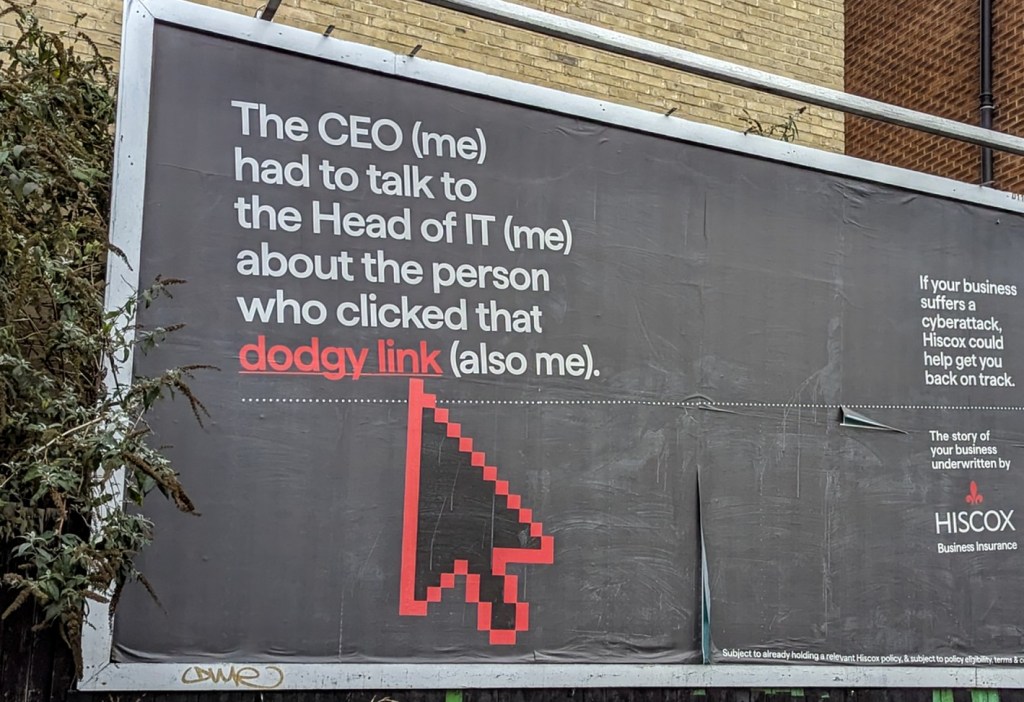
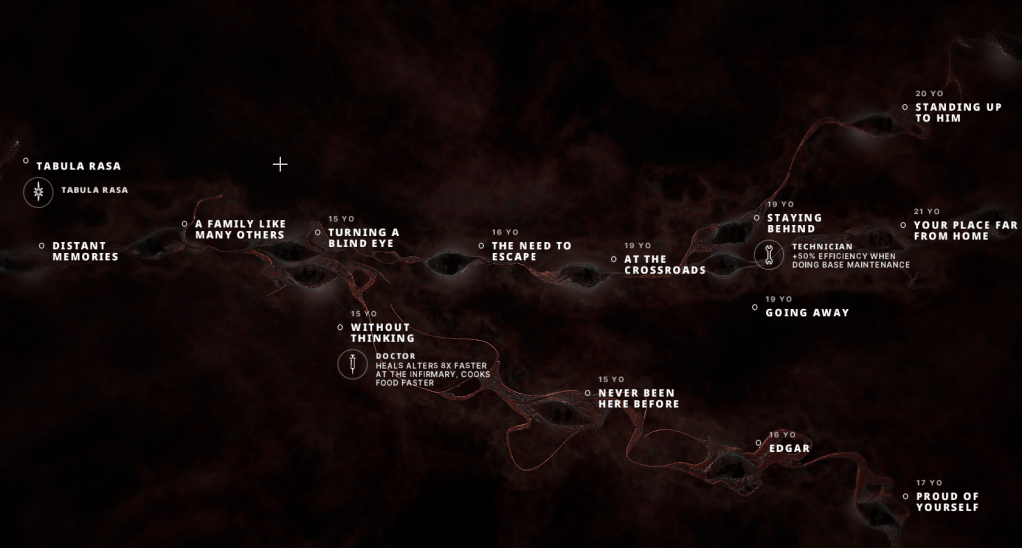
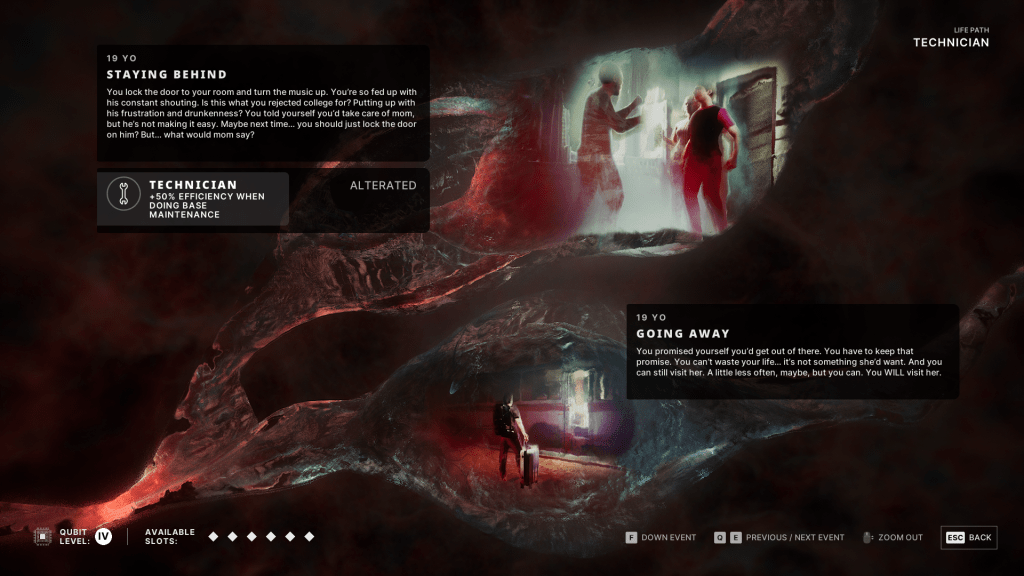
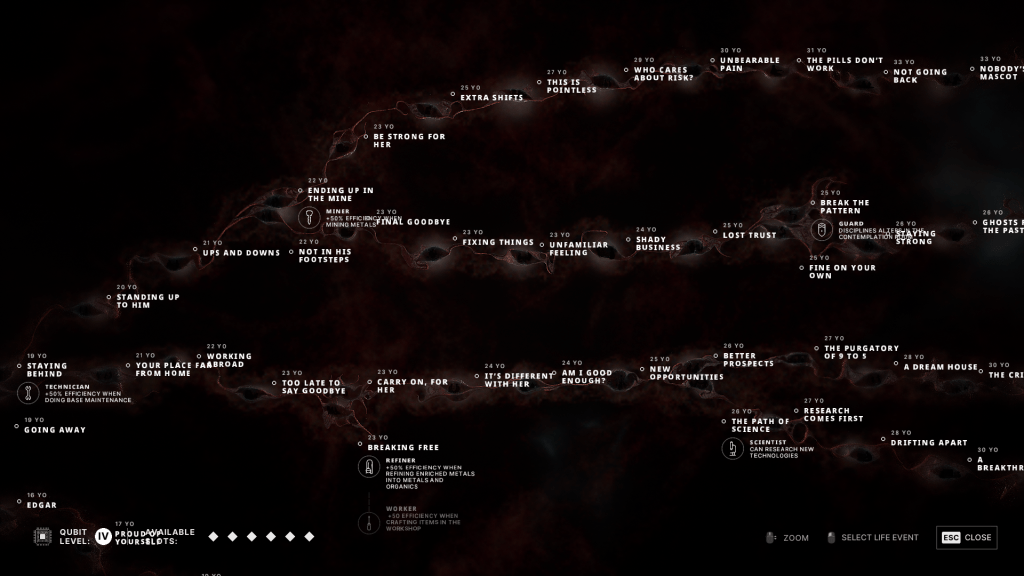
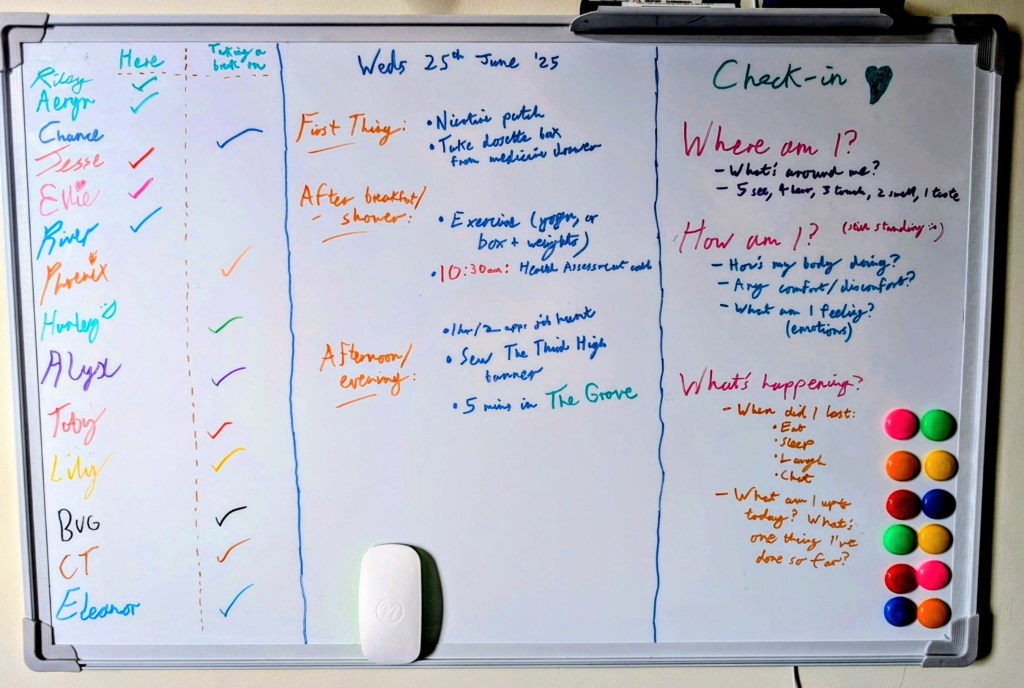
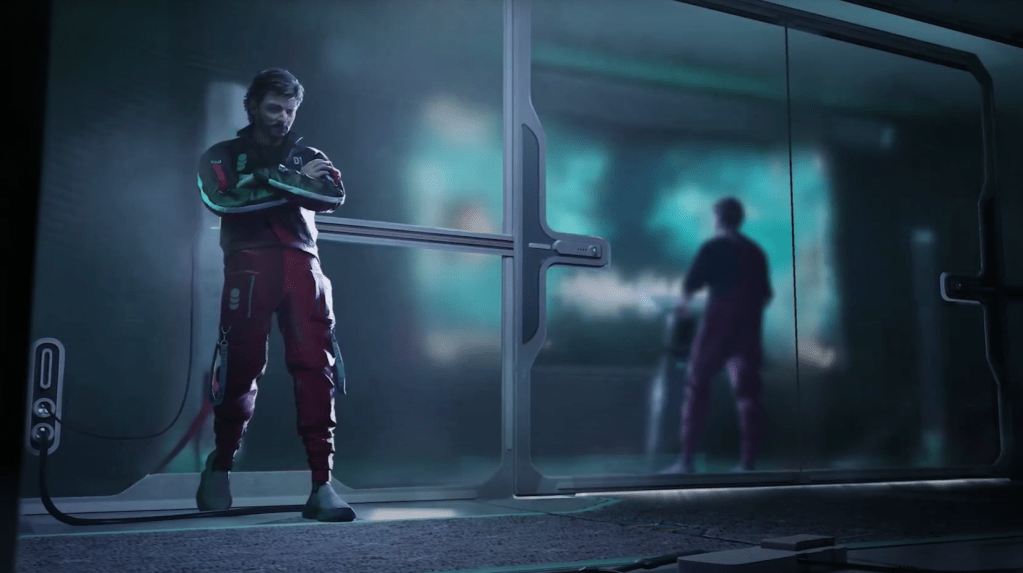
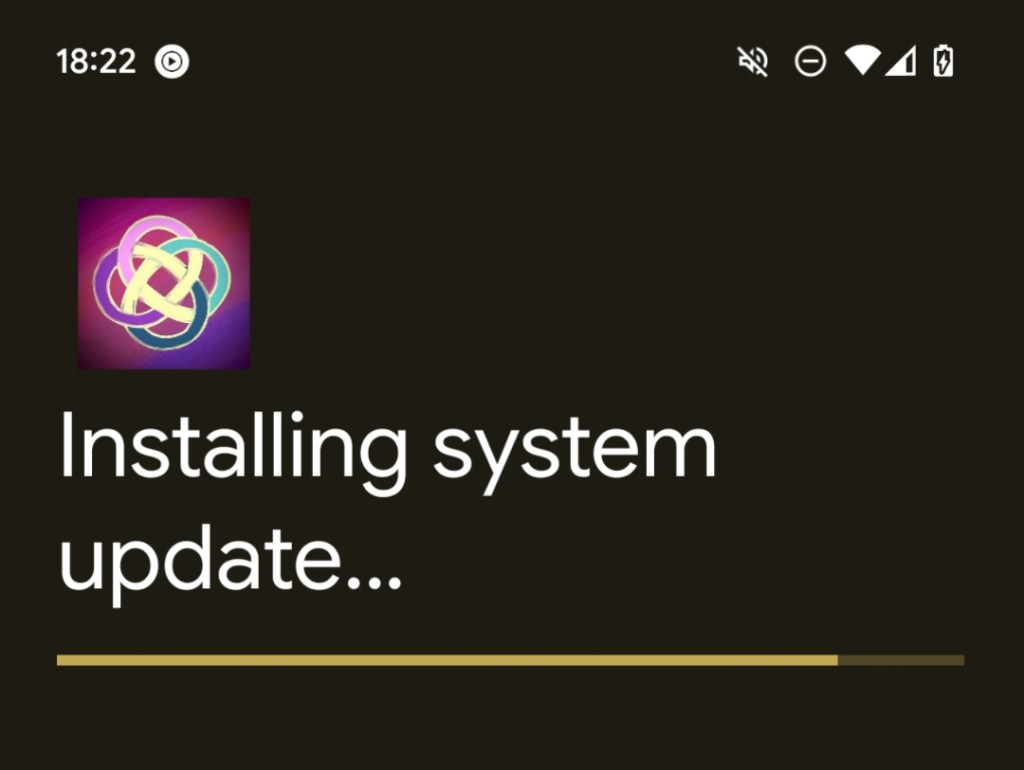
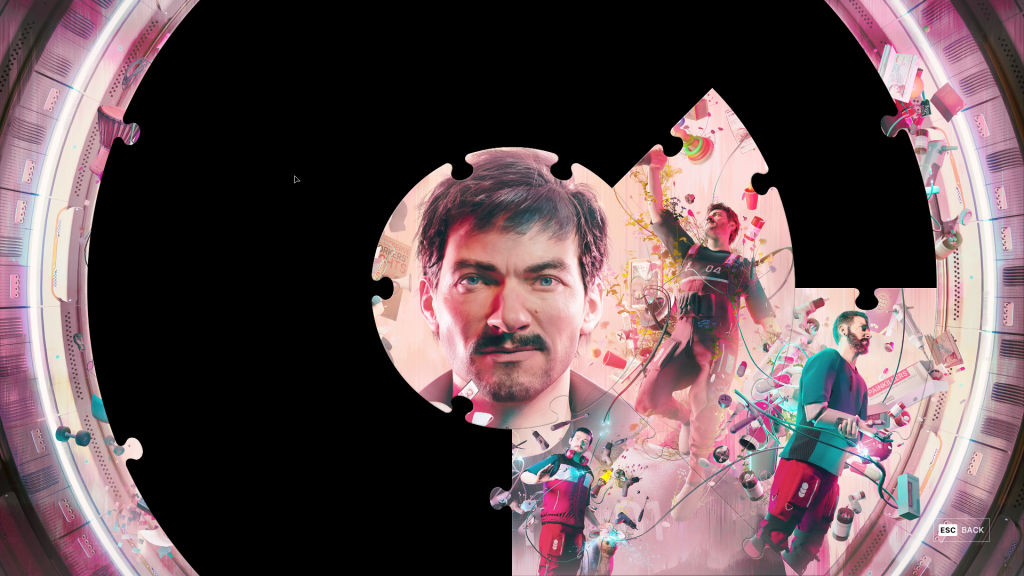


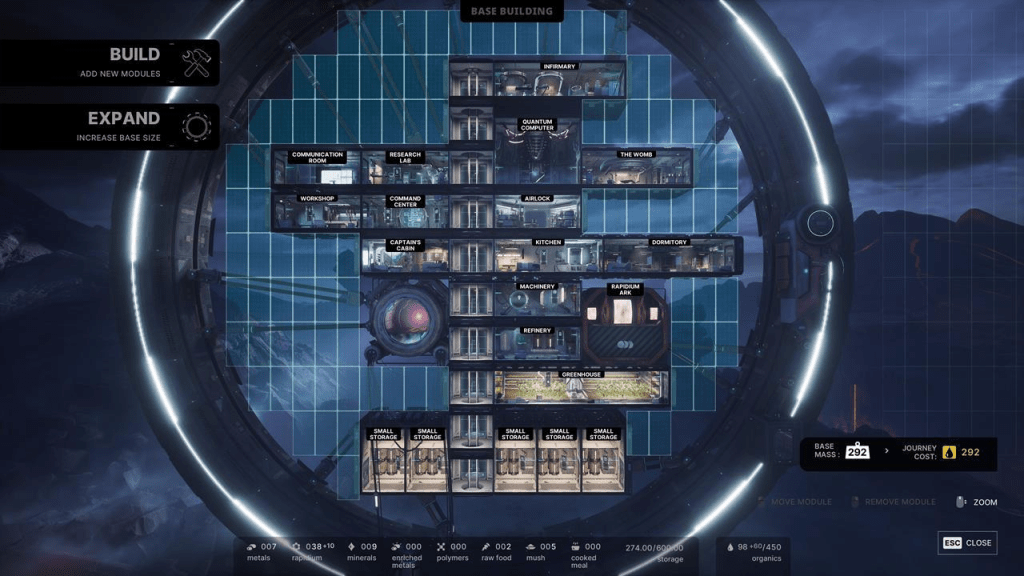
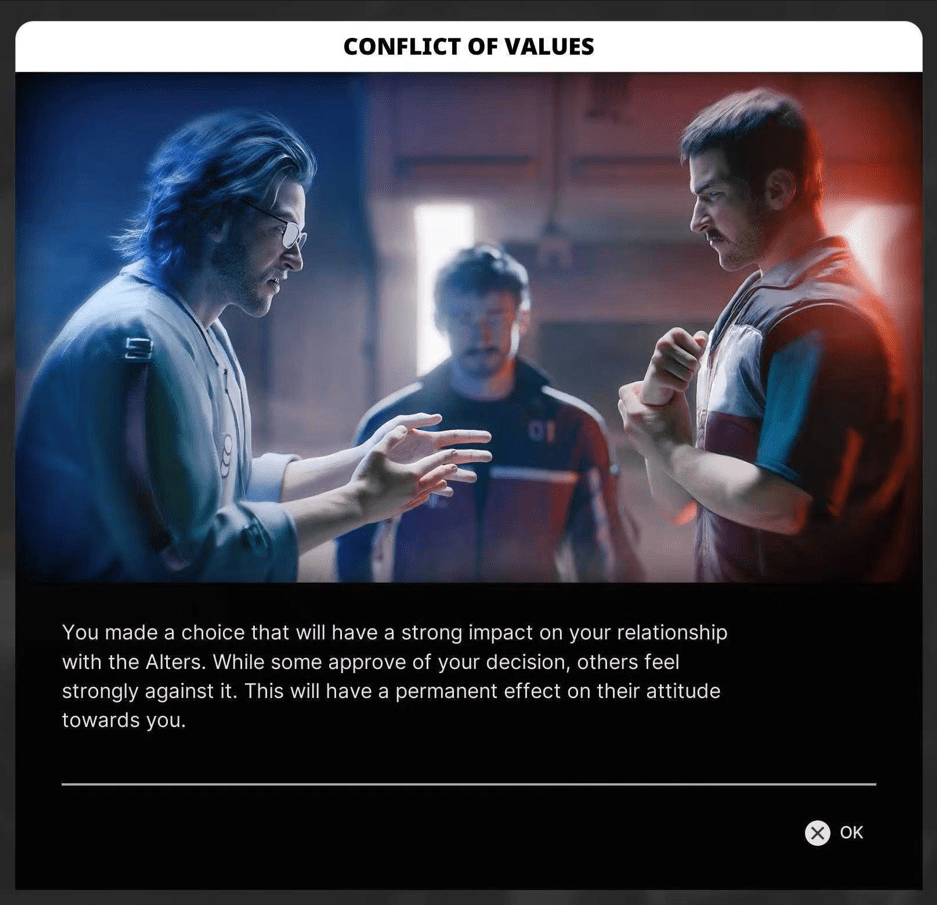


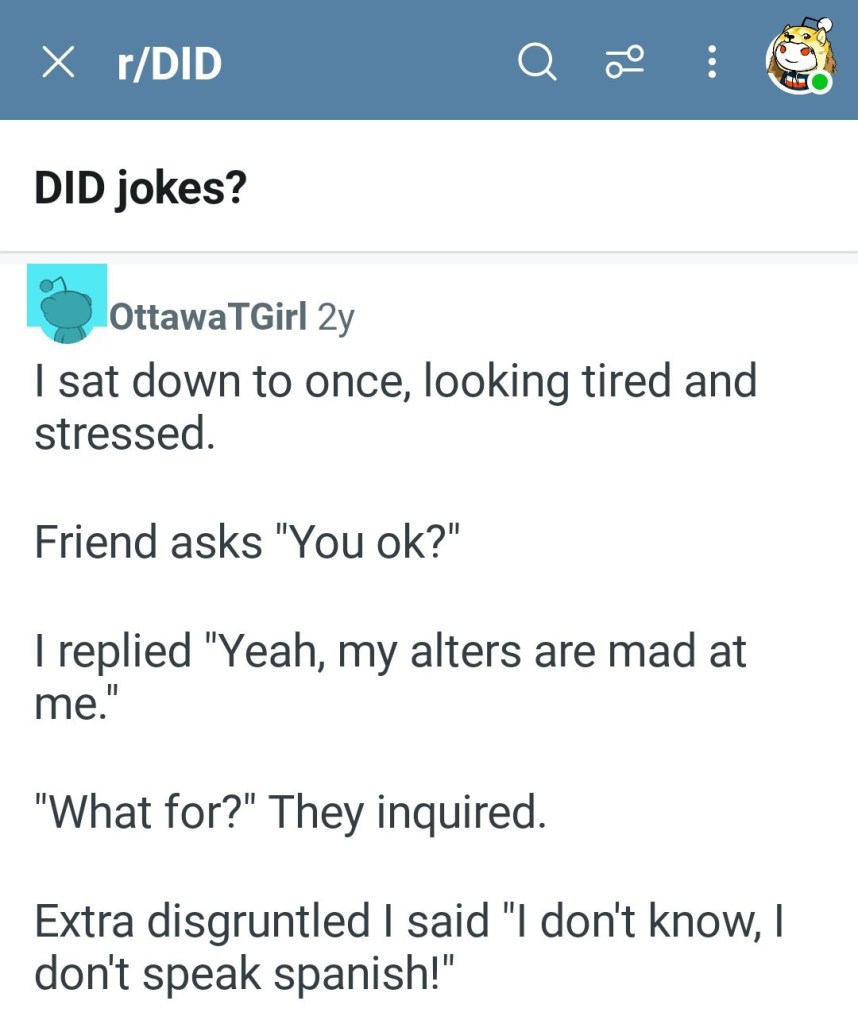
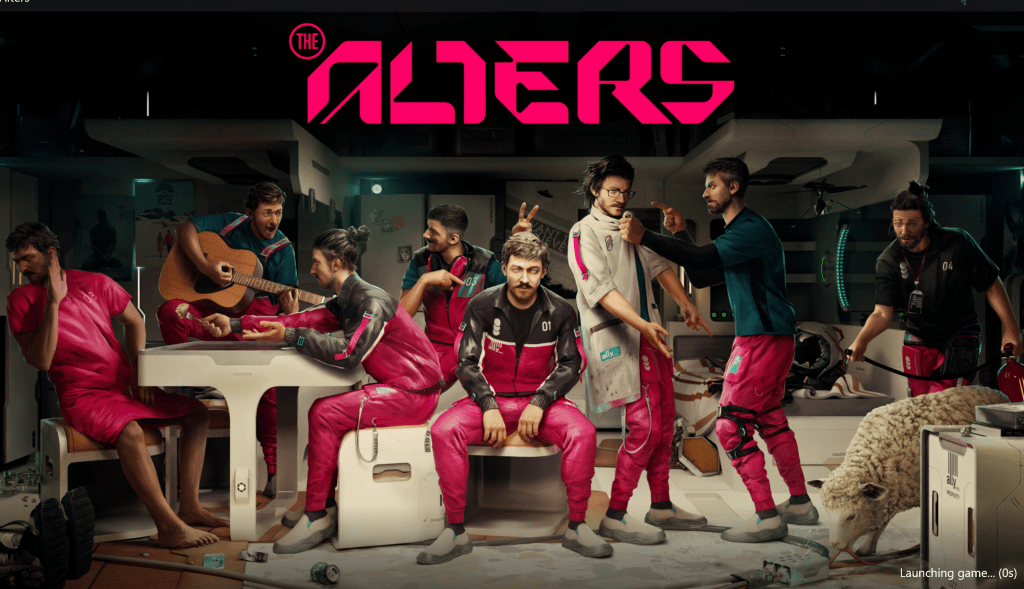
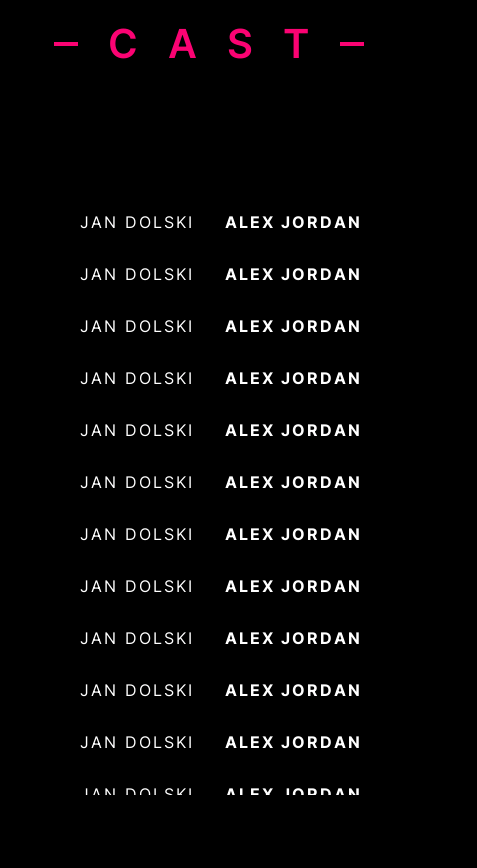
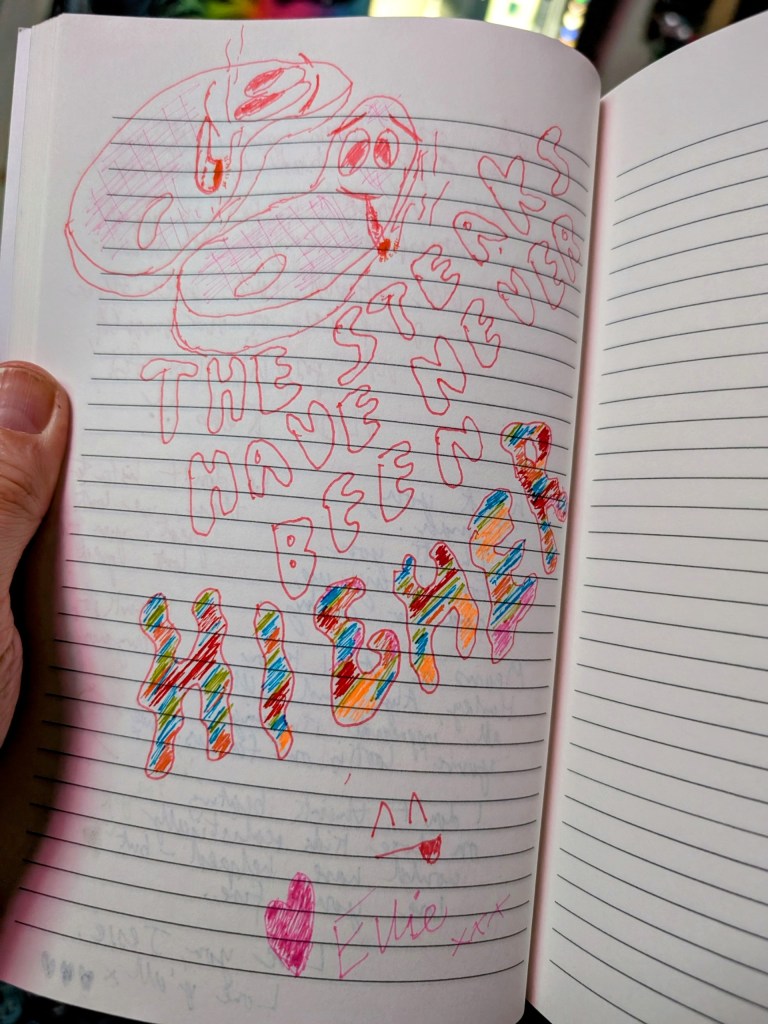

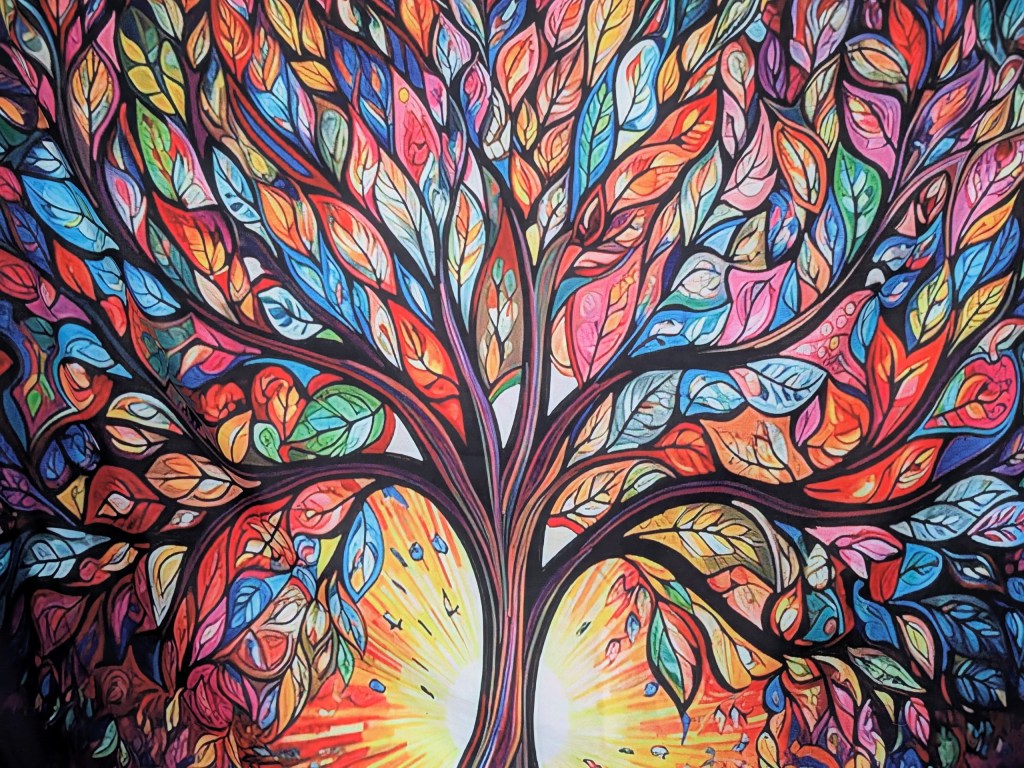
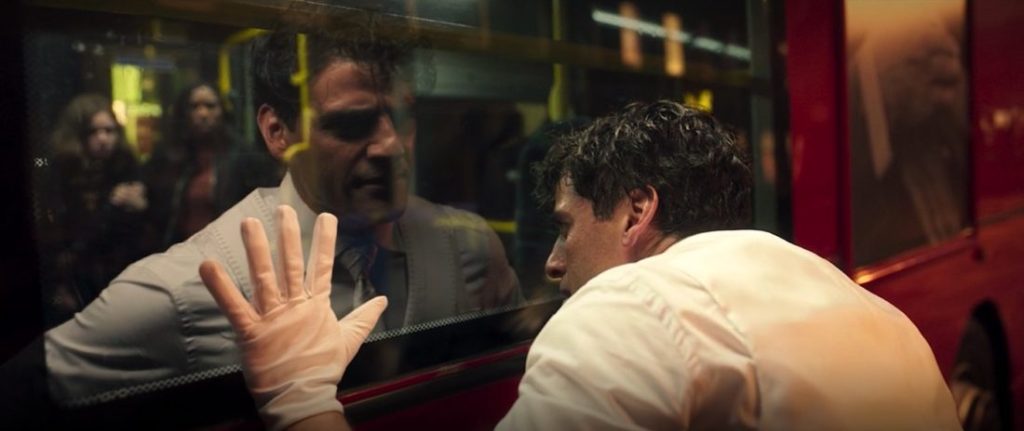
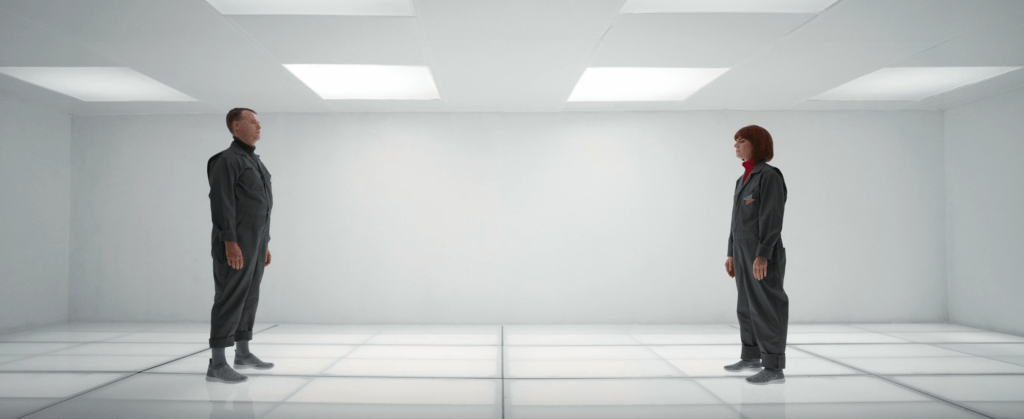
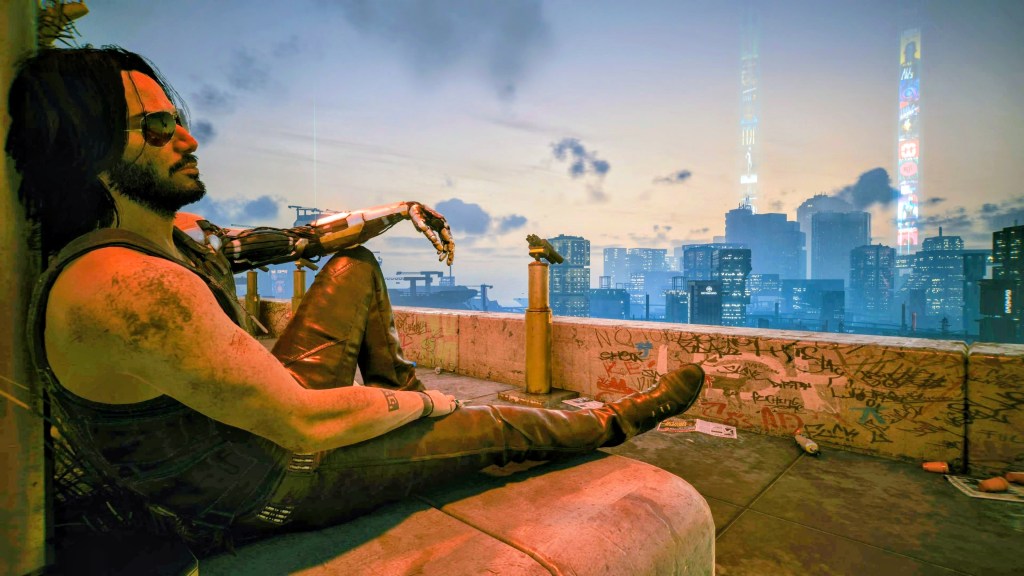
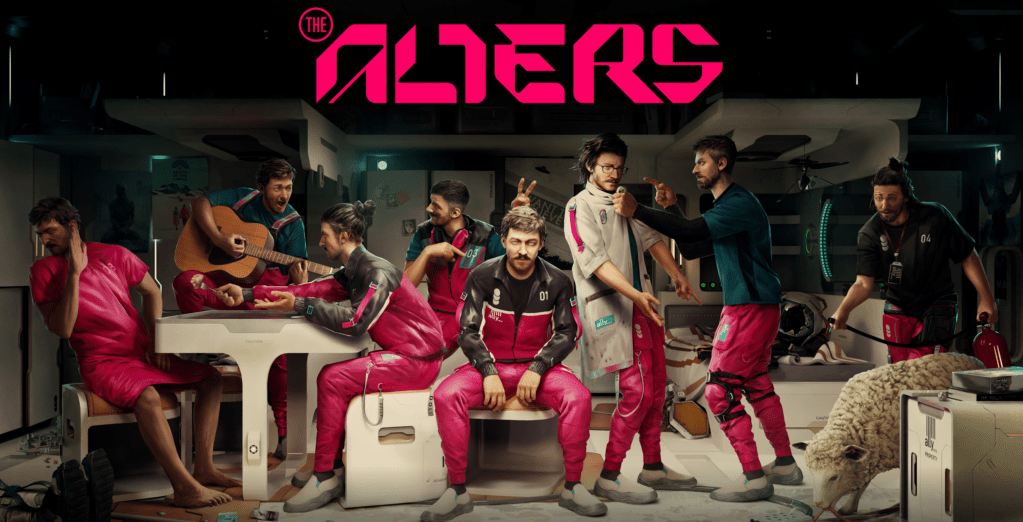

 Three Kids in a Trench Coat