
Learning to navigate life with DID when you feel like…

Three Kids in a Trench Coat


Our experiences living with dissociative identities (DID), and reflections on navigating life as ‘we’ & ‘me’


  • People with DID, more often than not, have difficulty sleeping.

    Not necessarily all the time – we, for example, have periods where we sleep just fine. But find me a person with DID who hasn’t had periods in their life where they just weren’t sleeping and I’ll…. I dunno, eat a hat. A pillow? No, we need that for all the sleep we’re… not getting…

    It’s a thing, and it’s a Big Thing for a lot of systems at times.

    We’re not talking, “Yeah I only got 6 hours last night & I’ve felt tired all day”… I’ve had 6 months go by where 6 hours of sleep is like… woah… I didn’t know people could sleep that long. We’ve had whole weeks at a time (many, many of them) where the average sleep a night was about 30 minutes.

    Four days in a row can go by with literally no sleep – sometimes because we don’t even try to, we just stay awake on purpose because whoever’s up front is worried they’re not going to still be in charge when we wake up… which, often… yeah, that happens.

    It struck me just how relatable the openings to both Moon Knight & Fight Club are when it comes to disrupted sleep & dissociative identities.

    Self-restraint (literally) in Moon Knight

    Steven to human statue: “Yeah, it’s like my body just wants to get up & wander, like it’s trying to get those 10,000 steps in or whatever. I’ve no idea it’s happened until I wake up god knows where having done god knows what. It’s why I try and stay awake all night. Of course, if I’m gonna have a girlfriend, I can’t go having ankle restraints on the bed. It’s like, the definition of a red flag, innit?”

    (Steven, let me tell you – I’d love you either way, but ankle restraints on your bed is most certainly the opposite of a red flag for us… *gestures to similar setup on their own bed* BUT WE DIGRESS ^^;)

    Steven is so innocent & I love him so much.

    “Hello, and welcome to Staying Awake… let’s start with a puzzle… remember, you’ll need about 5 hours to keep your natural self”

    I assume they mean 5 hours sleep here, but what do I know?

    Steven wakes up in a field in the Swiss Alps, with a dislocated jaw, no idea how he got there, before immediately being chased by men with guns.

    Which, honestly – that’s kinda what happens when you try to stay awake forever.

    We’ve all been there, right?

    Right?

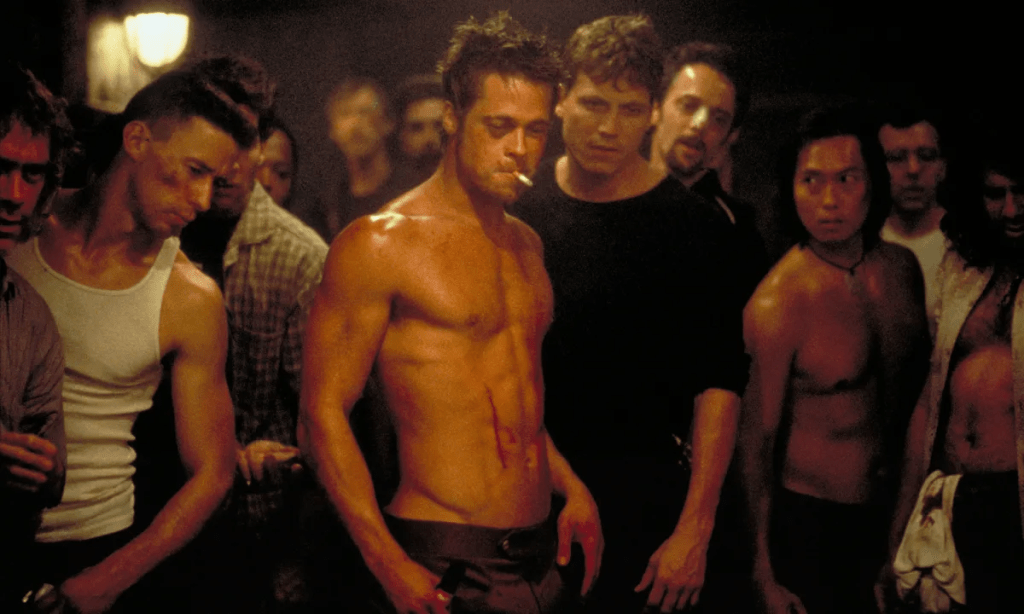
    Waking up in strange places in Fight Club

    Doctor: “No, you can’t die from insomnia…”

    The Narrator: “Well, what about narcolepsy? I nod off, I wake up in strange places with no idea of how I got there…”

    And, shortly after – The Narrator wakes up on a plane, next to… Tyler Durden.

    Soap… I make, and sell, soap…

    After they start Fight Club together, The Narrator then meets Bob (Robert Paulson, played by Meatloaf) from earlier in the film, who says he’s in Fight Club, and he’s heard the guy who founded it only sleeps an hour a night…

    Well, doesn’t that feel relatable?

    There are some alters who seem to most easily have access to the body when we’re really sleep deprived (not all, by any means), and it’s like… sleep deprivation is a path to them being able to get the time outside that they want. It seems to particularly be the case for parts that are most dissociated & most likely to be met with a flat-out, “No” to suggestions made while we’re well rested.

    It checks out with the brain science of sleep deprivation – one of the first things to suffer as sleep dips further & further below a healthy level is impulse control. And when the impulses don’t feel like your impulses, you shut them down…. unless you can’t.

    Which is why it feels very fitting that Tyler Durden, a somewhat ‘extreme alter’ (if we’re looking at the totality of his actions across the film…) first manifests during this period of extreme sleep deprivation.

    I should say, our alters that we view as more ‘extreme’ have never, to our knowledge, bombed financial institution skyscrapers across 50 US cities.

    That we’re aware of.

    Obviously ‘extreme alters’ is a Hollywood trope that most systems can only relate to at a much more personal level. They’re usually only extreme in terms of disruption to the system’s own life… but this is a Hollywood film, and a damn fun one at that – it gets a pass from us. If you’re gonna make things extreme, at least do it like this, do it with style.

    It’s also quite fitting that when The Narrator meets & talks to Tyler Durden, he’s very much hallucinating him as another person. Ok, ok, that’s not actually how it works, for most people with DID – and ‘hallucinating another physical person’ is a trope also used by e.g. The Crowded Room to preserve mystery so they can have the big, “… but they were the same person the whole time!” reveal…

    But I will say, the more sleep deprived you are, the more it can feel like another person is literally in the room with you & become more hallucination-like in nature. Also, the visual style could just be thought of as a visually compelling way of portraying the, “Watching yourself in third person” aspect of it all.

    As Tyler (Brad Pitt’s depiction of him) puts it, “You’re clearly having a hard time accepting it… so sometimes, you’re still you… other times you imagine yourself watching me…”

    Note on the video title: The Narrator’s name is never revealed in the film, and in the later books it’s revealed to be Sebastian. I am Jack’s shaking head.

    You’ll notice, if you watch again, no-one ever actually interacts with Ed Norton’s Narrator & Brad Pitt’s Tyler in the same scene – it’s always one or the other (and most of the time when they’re both on screen, everyone is looking at The Narrator). The world is never treating him like two physical people.

    Also, again, this film pulls off what it’s trying to do narratively so well, making such a compelling story, while also not claiming to be about DID, that it doesn’t bother us one bit. YMMV.

    Make sleep a system wellbeing priority

    Which is all to say… it’s worth getting enough sleep, or at least some sleep.

    It really is one of the most important things for having the capacity to navigate a life with more of what you want & less of what you don’t want.

    And if things are rough right now, getting enough sleep can be one of the best things you can do to get back on track if you ever find yourself careening off the rails of your life.

    We’ve been sleeping a lot better for a while now, and we’re feeling a lot more grounded, there’s a lot less switching, and a lot more internal collaboration, and that’s a good thing.

    Hardly sleeping at all can lead to some of the most pronounced & dramatic switching, which, when it feels like the chips are really down, can feel empowering, like a more “complete” form of escape for the parts that are exhausted and want to hand the reins to their system’s Tyler Durden or Jake Lockley (who I will remind you, in the real world are not violent psychopaths….)

    But it’s not a sustainable strategy to just try and disappear from your own life, and sooner or later you & the rest of your system will have to take responsibility for your actions – with each other, and anyone you’ve hurt or neglected in that time.

    And while you may feel like there aren’t enough hours in the day for everyone to get their needs met, a handful fewer hours awake each day is actually a small price to pay for being more awake, present, and active the rest of the time.

    Sleep makes both system-wide fulfilment & system responsibility easier – so at least try and make it a priority in the ways you can… and be gentle with yourselves when it’s hard to come by. Look for small steps in the right direction, celebrate your wins together, and you will find more harmony again.

    Until next time – take care of yourselves, kiddos x

    Riley & fam ❤

  • Ok that’s probably the most ‘clickbait’ sounding title I think I’ve ever written, but bear with me.

    My god… it’s full of stars

    Reflecting on DID with researchers at KCL

    While we were doing the EEG session at KCL the other day, we had some really interesting chats with the lead researcher.

    She asked if we feel like everyone with DID reaches a point where everything, “spills over”, and I knew what she meant (we were talking about unemployment & rebuilding our life at the time).

    Obviously we agreed I could only speak for myself, but it sure is something I’ve heard a lot of systems (but not all) say they’ve struggled with for a period of time, once everything starts coming to light for them (and possibly the people around them) – especially if they’re finding out in their 30s, 40s, 50s or beyond.

    We did the first couple of EEG tasks (I won’t say what they are), but the follow-up questions apparently showed that I don’t have psychosis, which – well, I didn’t know we were looking at that, but cool, I guess!

    I did learn that apparently in people with psychosis there’s a ‘dissolving’ of the boundary between ‘self’ and ‘other’, while in DID there are often very strong boundaries between self & other (and between selves inside) – and that made a lot of sense to me, and was a validating thing to learn, that I’m finding support in the places that are right for us. Misdiagnosis is a big problem with DID, albeit most often it’s DID being diagnosed as something else, not the other way around.

    The Default Mode Network & self-reflection

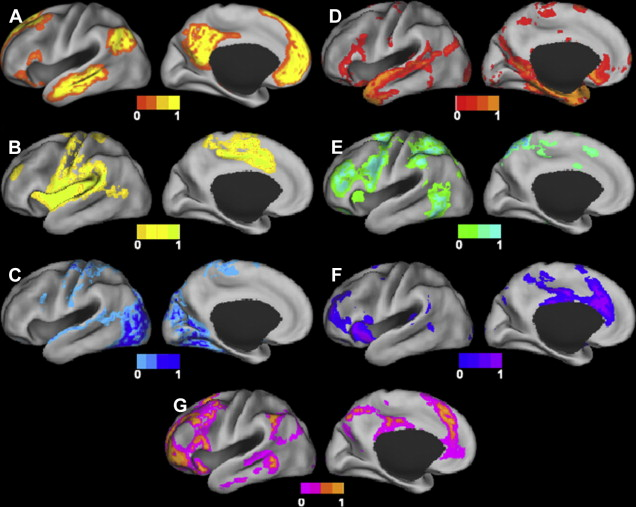
    The default mode network, apparently. What does it all mean? Don’t know! Looks pretty, though ❤

    After the EEG tasks were done, and we were doing the debrief, we got to talking about the default mode network (the brain’s idle state that usually involves a lot of self-reflection), and how in DID its activity is often suppressed when doing nothing (but can be hyperactive when engaged in tasks – I think) – I thought that was really interesting.

    In fact, I think it’s one of the reasons why focusing on the external world & idly self-reflecting less can be very helpful in DID (and is what many systems tend towards when they’re trying to stay well under stress – keeping busy feels like self-care) – instead allowing most self-reflection to happen while creating art, or journaling, or talking with a therapist, can be helpful – it reduces the reliance on the DMN & the disrupted brain systems that interact with it.

    In DID idle self-reflection, that can be a fairly healthy part of processing, often has a tendency to become fearful in nature, rather than calm & rational – so things like holding family meetings between your parts, and giving them space to write in a journal, or to draw what they’re feeling, can really help when it comes to then reflecting in therapy.

    I’ve seen the results first hand many times – that having these things in place can make a big difference when it comes to being able to remember things we’ve done, & allowing parts to express things during therapy while you stay present. It’s a really helpful thing when compared with when you’re getting lost in fearful rumination where you can’t quite put the pieces of you together because, well – that’s just not how your brain works.

    Over time, internal, calm self-reflection is a skill that can be built up – but it takes practice & doing the work to get there.

    Does understanding your own neurophysiology help?

    Personally – I don’t think so, not really?

    Knowing about the brain regions and what they do and how they tend to be different in DID doesn’t really help much – most of what I’ve just talked about, I know from experience – from trying things, seeing what happens, what helps, reflecting on things with a therapist we trust. The brain science is a nice extra story, as far as I’m concerned – but functionally there’s not much I can do with it.

    But, and I think this is important – some people do find a certain amount of validation in knowing that you can literally see the differences in what happens in the brain activity of people with DID versus ‘normal population’ control participants or ‘DID simulators’ control participants (people who are specifically asked, for the purpose of a study, to try and act like they have DID during neuroimaging tasks).

    Consistently, the DID simulators get results that look like the ‘normal control’ participants, while the DID participants brains are clearly, reliably, working in a different way.

    When you consider that many people with DID are worried that they’re faking it (something that, unfortunately, some people who know nothing about the condition will also sometimes accuse people of), it can be another source of validation that… no… we’re not.

    Just like ADHD, or Autism, life with dissociative identities can be thought of as a form of neurodivergence – a different way of being in the world, and just as valid as any of those, or any other way of being, for that matter.

    I still think listening to people’s experiences, and believing people when they tell you what life is like for them, is where we should put our faith in the vast majority of situations – but it’s all part of developing our understanding of the science of the weird, wonderful spectrum of the human condition.

    I’m proud to have been doing my bit with this study – we’ve got our last session in a couple of weeks, and it’s been a really positive experience.

    Until next time – take care of yourselves, kiddos x

    Riley & fam ❤

  • Best. Damn. Show. Ever.

    A few recent experiences of watching / reading things, and talking about life as a system with the DID researchers at the Institute of Psychiatry, Psychology & Neuroscience at King’s College London have got me appreciating anew just how much the 6-episode TV series of Moon Knight (starring Oscar Isaac) gets right about DID.

    I’ve given it a shoutout in the past, but I just wanted to do a thread of a few things that come to mind, from memory, about relatable ways it portrays living with dissociative identities (I’ve also included some relevant links to clinical perspectives on real life complex dissociation):

    Before you get to know the other(s):

    The confusion: When we first meet Steven, he’s loosing time, things are changing about his world around him that must have been done by him, but he can’t remember them…. Like replacing his pet fish, then going to the pet store and asking how it grew a new fin (we kinda know by this point that the fish died & Marc replaced it…)

    The loneliness: … Steven then notices the time, and rushes to a restraurant to make it to a date with a woman from work he likes, who doesn’t show up… only to phone her, ask where she is and be told, “You’ve got some nerve calling me, we were supposed to meet 2 days ago…”, and Steven realises that, once again, he’s lost time & it’s cost him another promising relationship with another (seemingly decent) human being… and he has just no relatable way of reconnecting with them because he just can’t explain what happened (because he doesn’t understand himself).

    When he talks to the human statue who never responds, it’s such a relatable thing. Heck, I think that’s a little bit of what this blog is – there are just so many experiences that you just feel like you can’t (or don’t want to) talk about with friends, colleagues or family members in normal conversation because so much of it doesn’t make sense to you yet.

    The sense of chaos: When the villain, Harrow, takes Steven’s hands & “judges” him, the magical tattoo of a pair of scales shifting as they weigh his soul, and they don’t balance, seemingly the first time Harrow’s seen anything like this, and he looks in shock at Steven, saying, “There’s chaos in you…”

    I think this is where a lot of people with dissociative identities feel like they’re at when they know things are going sideways in their life, but they don’t yet understand exactly how or why – that point where you frequently find yourself in situations like someone asking how you’ve been, and all you can think is, “Well, I woke up, and I’m here…. that’s about as much as I know right now…”

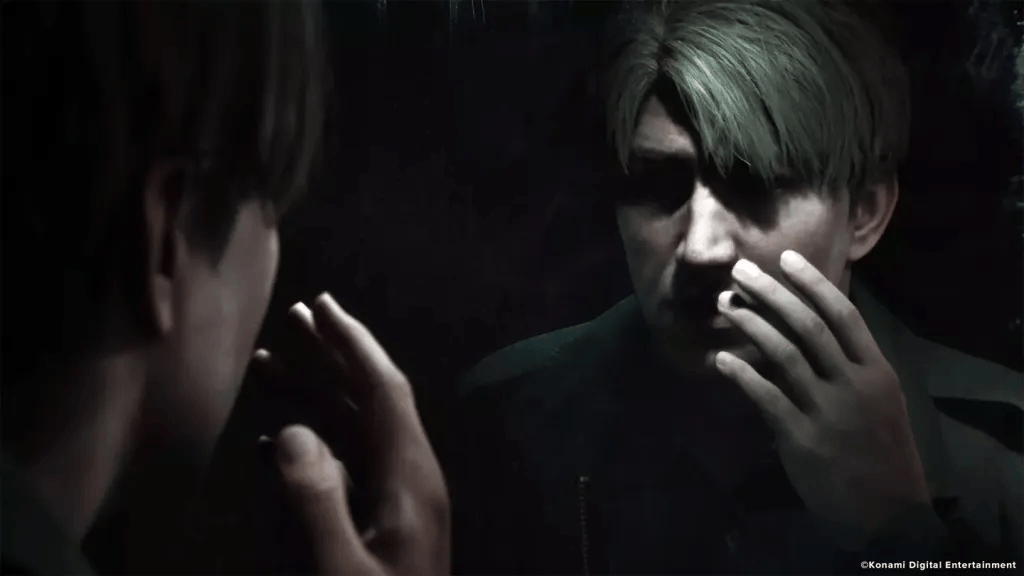
    F*ckin’ Mirrors: When Steven looks in mirrors & doesn’t recognise his reflection as him, but as Marc, and Marc starts speaking to him… we’d been experiencing that for a whiiile when we saw first saw the Cinema Therapy episode on “What Moon Knight got right about DID”, & it’s one of the first things that made me sit up and go, “Err…. this? It’s this….? I should email my therapist….”

    The lack of self-trust: In the show, Steven puts tape over the door latch, surrounds his bed with sand, and straps himself into bed with restraints to try and tell if he’s gotten up & done things in the night he doesn’t remember. It feels a lot like how I used to leave a webcam running in my room when I was worried about switching.

    In the show, Marc clearly just runs the same setup as Steven again when he comes out then eventually returns to bed, because he’s not an idiot and he doesn’t want Steven to know he’s been out, and… yeah, many parts will just do that if you try and ‘spy on’ them. If you can set this stuff up, so can they (or, say, stop you from ever actually watching the videos….).

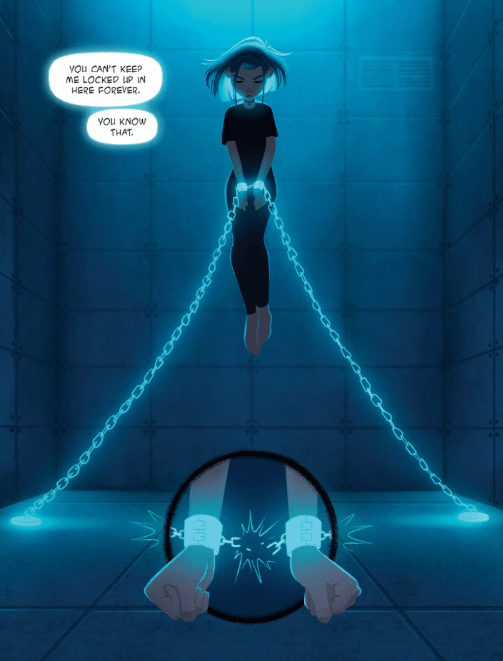
    You build trust by getting to know one another and helping each other get what you each need, not by trying to put each other in prison.

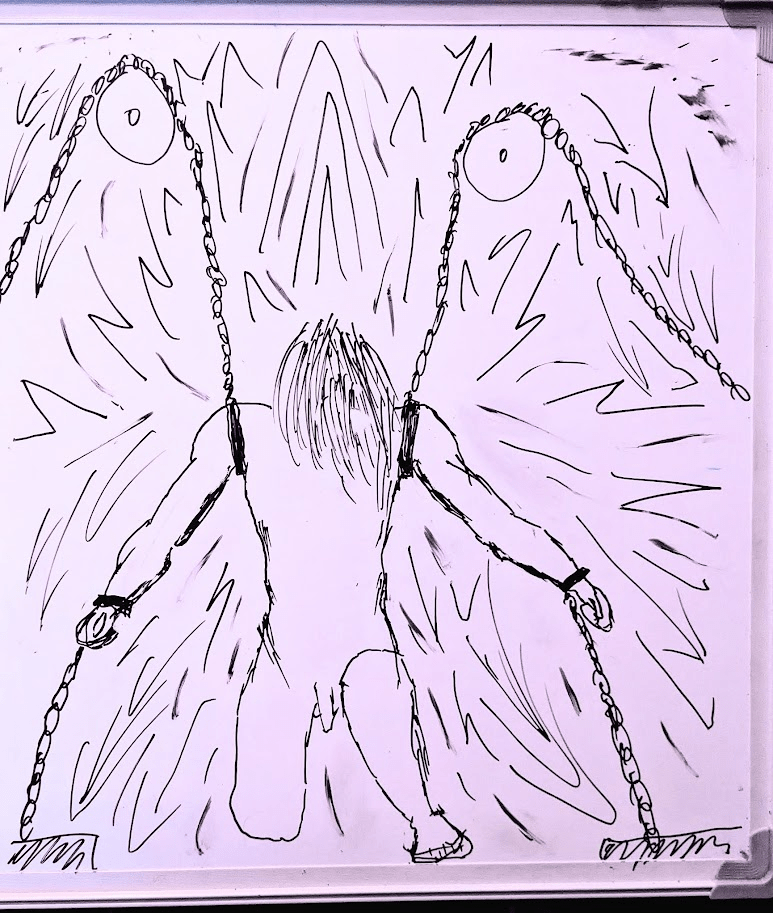
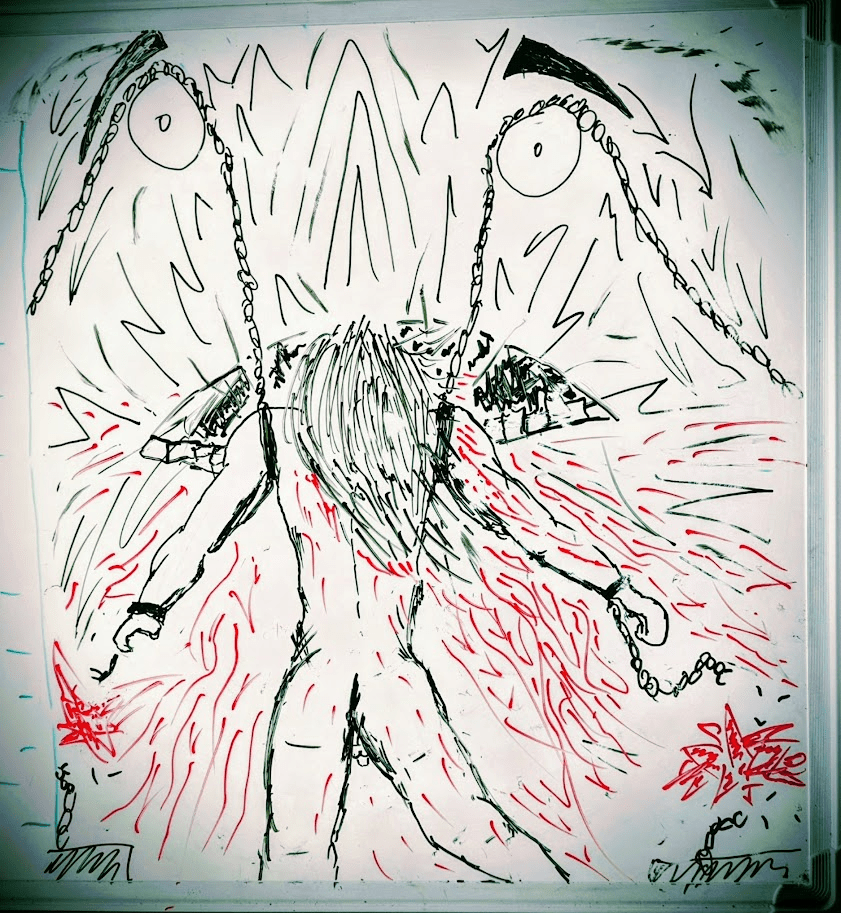
    Some of our whiteboard drawings from last year…
    … and an opening panel from, “Elles”, a recently released graphic novel about a teenage girl & (essentially) her alters. Parts prison doesn’t work, people!

    When you’re first starting to get to know the other(s):

    The lack of trust between each other: Marc doesn’t trust Steven. Steven doesn’t trust Marc. They fight over who gets to control the body. The one that isn’t in control feels, “stuck” inside, watching, and we get to see glimpses of them in the mirror, reminding the other that they’re still in there and they’re looking to come out so they can stop the other fucking everything up & they can do things their way… boy howdy. This show knows.

    Supporting one another & starting to build empathy: As they start to spend more time together, influence one another, and learn more about the things the other is going through (through co-consciousness, a really important step in DID therapy), they start to bond over what they have common, and little by little, understand & care about each other.

    When they get separated in episode 5 (the ‘inner mental institution’ episode), and they find each other again and are both like, “Thank god I’m so glad to see you!” – I’ve had times when the others have gone quiet for a bit, and I did not like it – but I’m grateful for every (often joyful) reunion.

    A lot of DID specialists will tell you this – that when people first come into therapy they’re like, “I want everyone gone, this is chaos, please take them away I want it to just be me….”, but once they get to know each other better, they’re like, “Err, actually, we’ve changed our mind – they’re my friends, my family… and I don’t want to live without them“.

    I guess at that particular moment early in E5, it’s more, “Thank god, I’m so glad to see you because I felt scared & alone” – the real transformation for Marc & Steven continues to unfold as they start…

    Accepting one another & finding love in a system:

    Facing & overcoming the trauma together: In that same episode, when Steven sees everything Marc couldn’t cope with, and that he didn’t know until Marc shows him – the loss of his brother, the abuse from their mother and her being unable to forgive her after she dies… and he sees the role he’s playing in keeping Marc from being consumed by all that pain, by being convinced they have a loving mother who is still alive…

    When Steven is able to make sense of what happened, and why things are the way they are… he’s able to be with Marc, see him, and know that he’s not some boogie-man sent to haunt him – he’s able to instead look at him with compassion & love, and say, from the heart – “It wasn’t your fault – you were just a child, and you did the best you could.”

    There isn’t necessarily, “The real one” and, “The made-up one(s)”: A sort of ‘plot tiwst’ in the show comes when Steven, who we’ve been with from the beginning, the one who, “gets on with normal life” (while Marc comes out when there’s a threat to do superhero stuff) is, in fact, what’s sometimes called, “a fictive” in origin – Marc was ‘there first’, and Steven was based on Steven Grant, a character from one of Marc’s favourite childhood movies.

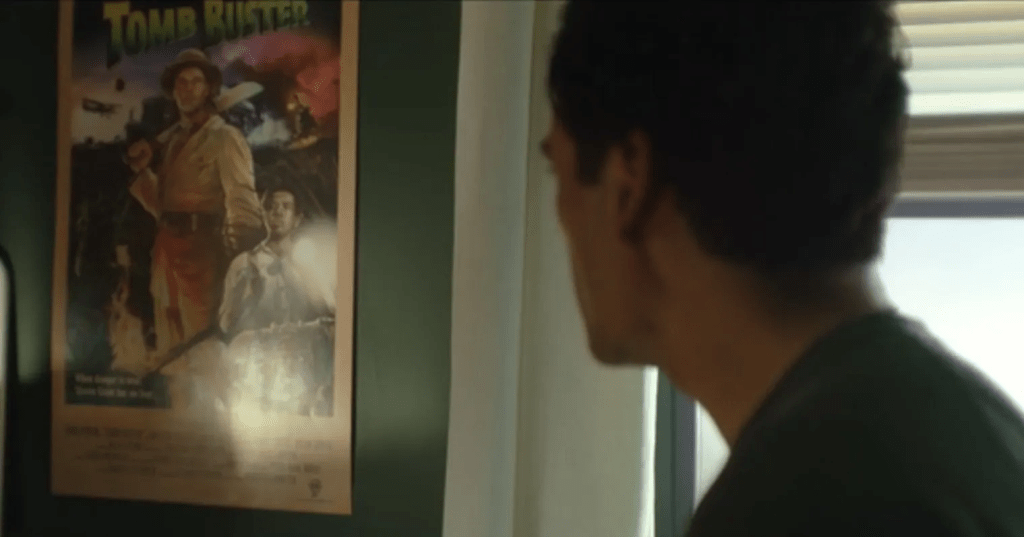
    The bedroom poster for young Marc’s favourite film, Tomb Buster: “When danger is near, Steven Grant has no fear”

    It’s a kind of switcharoo of expectations – Steven was ‘created’ to keep Marc’s mind from breaking under the weight of the trauma, not the other way round. But we also learn it doesn’t matter – wherever Steven ‘came from’ at first, he has been living life as real, living, breathing human being with his own wants, needs, fears, hopes, dreams and feelings for basically their whole life – and so has Marc.

    While Marc Spector may be their birth name, both identities are just as valid as each other, and there isn’t a “real one” and a, “fake one”. They both deserve to live, and they both deserve to be loved.

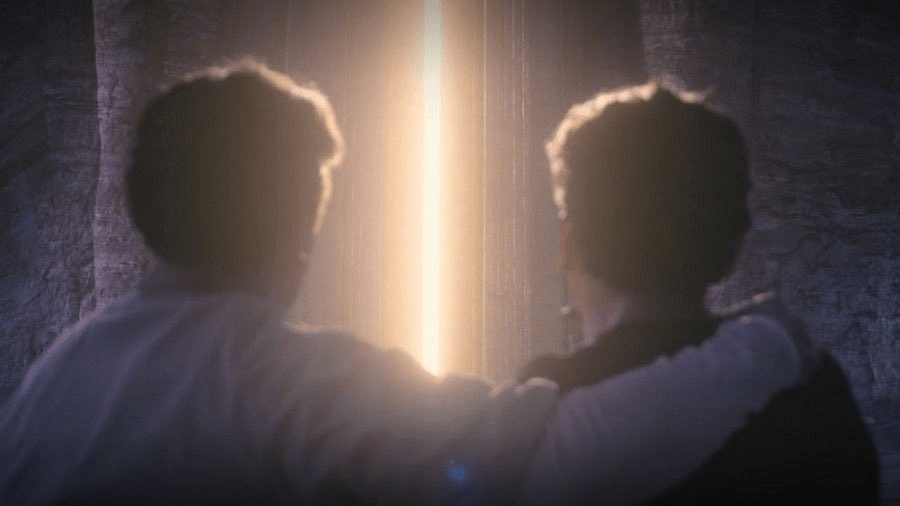
    “You are the only real superpower I’ve ever had”: When Steven is stranded & turning to stone in the desert of lost souls, and Marc is facing eternity in paradise in the field of reeds without him, and he’s like, “I can’t leave him. I won’t”, and this scene happens…

    This is what being a system is like when you get it. When you’ve made sense of why there’s more than one of you. When you understand how you’ve all been doing your best, all this time. When you understand the pain each other have been through, and how much you all mean to each other… well, Cinema Therapy nailed it:

    This. It’s this.

    I cry every time.

    As I commented on the CT video recently:

    “I don’t know if you’ll ever read this, Jono, Alan, and anyone else involved in the creation of this episode (a few years on!), but…

    I just wanted to say thank you. We saw this episode before we saw the show (we’ve since gone back & it’s now our favourite) – and regardless, this episode is what helped me first start making sense of what was going on with me, with us.

    And it showed us a blueprint for how things could be, helped us face the possibility of living life in a new way, together, knowing that there were people out there who could help us without trying to make anyone, “go away”. We were lucky enough to be with a therapist specialising in trauma & dissociation at the time who was open to exactly that, once we started sharing this aspect of our experiences… and we’ve come a long way since.

    It’s one of the biggest gifts a 30 minute YouTube video could have ever given us.

    So thank you <3″

    So yeah, Moon Knight. If you’ve ever wondered why so many systems reject the “disorder” in “Dissociative Identity Disorder” and choose to use terms like, “dissociative identities”, “plural”, “multiple”, “system” or perhaps, “inner fam” instead – this show (and the CT episode) can give you a damn good idea of why.

    It also does a beautiful job of showing the importance of making sense of your past, present, and potential futures in learning to overcome the legacy of trauma, what developing understanding & compassion for each other can look like, & how to live as a system that looks out for each other.

    Until next time, take care of yourselves, kiddos ❤

    Riley & fam x

    P.S. I didn’t even mention Jake Lockley – man I wish they’d made season 2, because you can make a lot of progress and still have some parts that choose to live in the shadows until they see that it’s safe to make their presence known to the rest of you… and that could have been such a good storyline about the next step (and most systems have more than two parts, which is when the internal dynamics become more like family systems, with some parts being closer to each other than others…). Ah well – I’m just happy for what we got ❤

  • I’m a very logical, rational person, or at least I so often try to be. Even when I’m letting go of those kinds of self-labelling, I tend to try and think my way through my problems. I’m very, “in my head”.

    But so much healing, getting to know yourself, learning to live with more calm & intention etc, is full of the counter-intuitive – resistant to the brute force approach of consciously directed thinking, at least until you start learning to listen to what the rest of your nervous system is trying to tell you, whether you think it’s “being rational” or not.

    Deciding how to move forward when you feel stuck in a war between your head, your heart, and every other part of you & and your life, is the topic of so many social media articles, videos, bestselling books… and many trade based on the omission of an uncomfortable truth; there’s rarely one right way to be.

    Rarely is there one answer to life’s problems, & or a universal set of magic techniques to engender self-development that are universally true & useful for everyone.

    Social media & self-help books are full of claims that assume the opposite – that all your problems would be fixed if you just… learn to let go / find attachment & connection / become more disciplined & persevere through adversity / stop trying to force things and go with the flow / have a better routine / plan less & be more spontaneous / work towards long term goals / learn to just sit still with yourself / stop wasting your time doing nothing… you get the idea.

    That’s, I guess, part of where religion comes from – the desire, no matter how old you are, for there to be some kind of cosmic parent figure who can just tell you the damn answer when you feel helpless & stuck – what should I do?

    Whether you believe in some version of god, or the divine, or not – here on earth, in the here & now, the reality either way is: We’re all different – and advice that helps one person with one set of tendencies may be terrible advice for someone who already leans too hard into that world view & struggles to engage with the wisdom available in getting to know their own shadow.

    Because, if we’re just clicking on the article / video / kindle recommendation that feels right to us, when we’re feeling from a place of desperation & helplessness – often we’re going to be choosing to listen to the advice that already sounds good to us because it’s what we already think the solution should be, even if we’ve been doing it for years & it hasn’t been helping.

    That’s just how trauma works.

    Pain – what is it good for?

    Let’s take an example.

    Pain.

    What should we do with it when it finds its way into our lives?

    Should we listen to it more? Should we embrace it full on, and not allow ourselves to be stopped by it when there could be rewards on the other side of striving through it? Should we be kind to ourselves & avoid it whenever we can? Is it a kindness to yourself to avoid it?

    The truth is a messy one that anyone looking for an easy answer isn’t going to like; it depends.

    Pain is a sensation in our bodies & our experience of the world. It’s almost always trying to tell us something. There are exceptions even there, in the case of neurological diseases & injury, but generally – the only way to know what it’s telling us is to be with it.

    But, it can also be too much for our nervous systems sometimes, particularly in the case of trauma. Sometimes we just don’t have the capacity to go straight towards it without burning out, having a panic attack, switching… we need to look after ourselves to create the capacity, the space, to be able to welcome the pain in & listen to it calmly & with curiosity.

    If the answer is, “it depends”, then how do you know which to do when?

    Well… you have to be there & decide for yourself. No-one can give you a magic algorithm that’s going to trump your own experience & trusting yourself.

    There are wonderful ways to practice both welcoming experience, and learning to cope when you don’t have the spoons to do so right now… with DID, we tend to be very prone to leaning hard into the latter. Change is possible – but you don’t find a new balancing point overnight – and learning to stay is a process.

    Being there” with DID

    This search for that new balancing point is, I’ve found, where DID can make things a lot more complicated than I get the impression it would otherwise be, at times.

    Because living your life in the sense of doing, being in motion, being functional; compared to being present in the moment, are often extremely dissociable for us, as it were.

    Heck, I’d even say that once things start to shift in a positive direction, there’s something about showing up calmer in the world that can feel very unnerving if you’re used to your parts taking the wheel most of the time.

    It can feel good for a while, feeling more in touch with your body & your feelings – but you may realise there’s this thing you need to do, and oh shoot, this part or that part normally handles that stuff, and you feel like you don’t have them on speed-dial right now and oh no, you’re doing the thing you know is gonna help bring them forward while you step out, even though it often comes at a cost

    As my therapist put it recently, “As things start to feel more connected again, and as you try and connect more with the world around you… it’s like that game Operation… we can do our best, but sometimes you’re gonna get that “BZZZT!”… you’re going to hit the sides, dissociation will happen…. and that’s ok – you’re still headed in the right direction.”

    And he’s right – the more in touch we get with pleasant & even neutral experiences again, the more we’re opening up our capacity to feel pain again. And this is where learning to sit with experiences as they are, rather than as we’d like them to be, becomes so important. Learning to manage our capacity so we can feel pain rather than shutting it out again & leaving parts to deal with it alone, is so important – we really are stronger together than we are alone.

    When we can do that, and be with feelings – they start to move again.

    Not because we force them to, but because change is part of life – and feelings move, flow, get bigger, fade, get wider, thinner, thicker, resolve, dissolve, climb, and flow into a new experience each moment – it’s just what they naturally do.

    Feeling mixed emotions for the first time in a long time is a heck of a thing – and most feelings aren’t simple or one dimensional. Learning to listening to the little feelings can be as important as listening to the big ones when it comes to learning to live a life not dictated by your survival protocols.

    And when your system’s no longer constantly bouncing between 95 – 100% of the way to overload anymore, as that inner doomsday clock eases up & we have more space for whatever comes up – that’s when room for friendship, joy, love, start to make appearances again.

    And whatever may come, it’s important to make those experiences available to everyone inside who wants them, too – our parts have spent a long time in darkness, and they deserve to live in the light where we can find it together x

    Until next time, take care of yourselves, kiddos x

    Riley & fam ❤

  • There’s something that I think a lot of systems can identify with when it comes to time & energy management, and that’s fitting everything in.

    When one of you is a dancer, and one likes walks in the woods, one runs, one lifts weights… well, that’s a lot to do with one body day in day out.

    Then there’s all the different types of video games we like, and choosing between those (one likes crazy hard games, one likes kids games, another strategy, one emotional narratives, while some of us are like, “Ugh, emotions!”….)…

    … then there’s the art, and the whole being a psychologist thing, and a creative writer, tabletop roleplaying fan, recently a festival organiser, etc etc…

    …. then there’s sex stuff, which in a system, well… we’re still kind of working some of that out, there are some ways it becomes extra fun, while being a few ways a bit of extra care is warranted…

    …. not to mention needing kiddo time where we can just hug plushies, stomp around and marvel at the fact we have legs, make pancakes with silly faces on them….

    …. it’s a lot, and sometimes, we just go into 404 error mode and end up doing nothing.

    In fact, it’s a pretty big role of some of the more connected, responsible parts of a system to try and fairly dish out the time & energy we have between different parts. And boy does it take a lot of trial and error.

    Well, currently I’m finding it hard to even decide between things to write about here, so I’m gonna do a super brief run-down of what’s bouncing around our brain – and if anything jumps out as something you’d like to know more about, leave a comment or DM me through another channel if you know me irl (WordPress can be a bit of a weird closed-loop system sometimes, where you can see but not interact… I’m thinking of changing providers for that reason).

    Anyway… in no particular order:

    Fight Club

    Mike’s CTAD Clinic video on the 3 most influential movies about DID is what brought my attention back to this for the first time since I watched it on release in 1999.

    Boy am I glad it did, because this movie, while not claiming to be about DID (or mentioning it once) nails the experience of DID so incredibly well, from the opening jumbled jumping around the chronology of the story, to,:

    Doctor: “No, you can’t die of insomnia…”

    The Narrator (Ed Norton): “Well, what about narcolepsy? I nod off, wake up in strange places with no idea how I got there…”

    Man, I just want to watch it again. Maybe I will.

    Oh, btw, I took up solo boxing training (complete with a heavy bag that lives in my bedroom) a couple of years ago, and I’ve just registered for a local LGBTQIA+ boxing club – so I’ll be joining some (admittedly far less brutal) fight club action of my own, soon.

    We used to train tae kwon do & several types of kung fu, so we’re no strangers to full contact sparring – our body was a temple before drugs happened & it became a playground. x

    Anyway. Yeah. You wanna know what DID is like, watch Fight Club (is my 2 cents, anyway – some people won’t like the association with violence, but it’s never bothered me, especially not my physical protector parts, who love it x).


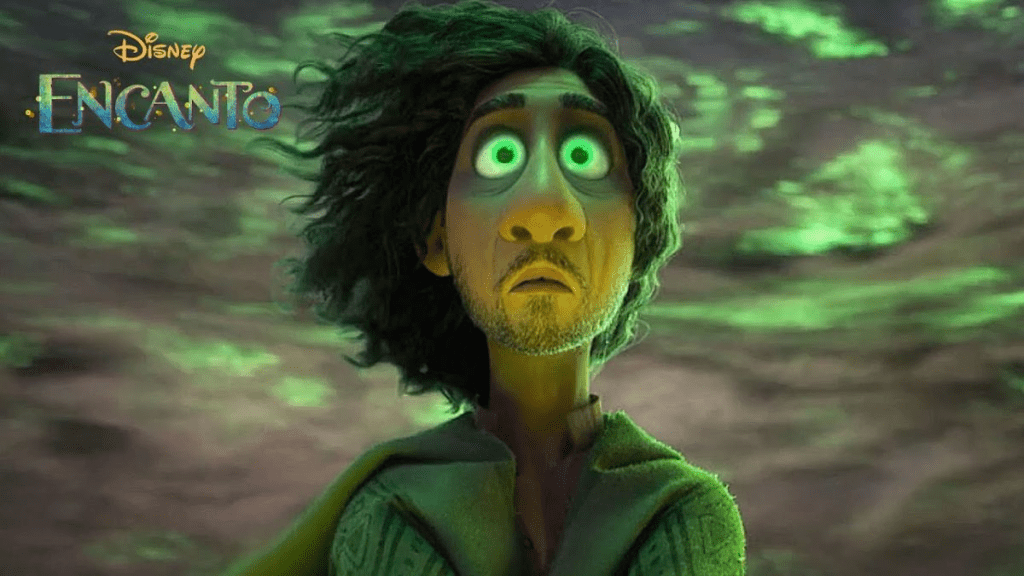
    We don’t talk about Bruno… (Encanto)

    In family systems theory, there’s the idea of the ‘identified patient’ or the ‘problem child’ (also sometimes called the “black sheep” of the family).

    Well, I was that child in my family. In other words, all of the anxiety, stress, resentment, fear, & pain that mom & dad felt ended up bottled up in me, the gay genderqueer youngest of 3 brothers with really overt & serious OCD from like 8 years old (that I still had to wait until 20 to get any actual answers about), with very Christian parents… yeah, I didn’t stand a chance of flying under the radar no matter how hard I tried. I was the lightning rod for all their fears about not being good enough as a family, not being pious enough, what will the neighbours say, my parents own childhood traumas, dissociation, and repressed / suppressed emotions of their own…

    Bruno is, obviously, the black sheep of the family in Encanto, and I was the Bruno of my family (which is why it makes me laugh that Bruno shows really obvious signs of OCD & DID in the film – he’s very, very relatable xD)

    If you’re wondering, a big part of how family systems theory came about, was the realisation that helping ‘the identified patient’ often only helped the individual so much, and the system very little… as systems are usually geared towards self-sustaining & adapting – if one part changes, either the other parts pressure that part into changing back, or the pressure just moves to another part in the system.

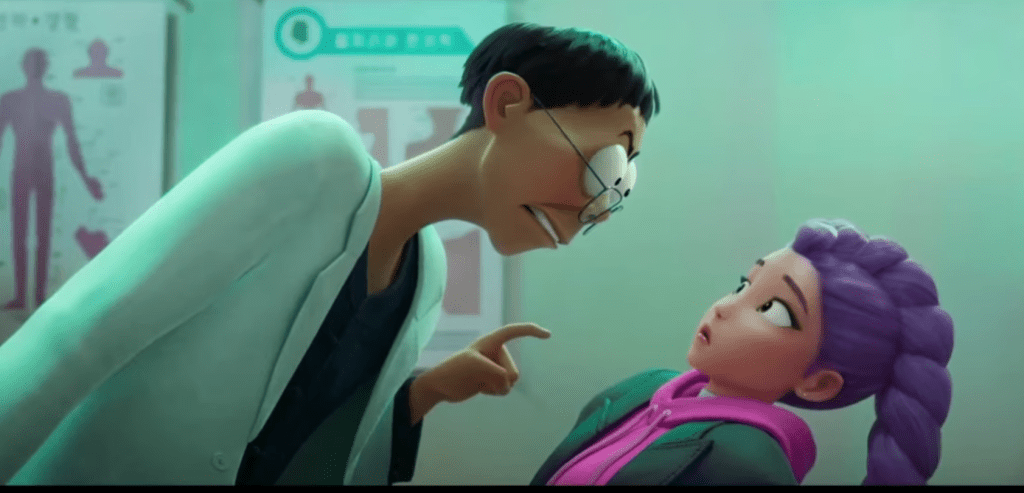
    It’s like the crazy quack doctor Healer Han (who actually makes a lot of good points) in K-pop Demon Hunters about treating the part by first seeing the whole.

    I seeeeeeee…..

    It’s weird how being the black sheep can affect how you see yourself later in life. When I got my PhD, I just cried & felt like a total failure anyway, because I’d so deeply internalised the idea that I’d never be good enough, that it had taken on a life of it’s own… my parents could say they were proud of me, but I no longer cared – I was no longer good enough for me. That’s one I’m still trying to unravel these days.

    One of the things I love about Encanto though, is that every time we watch it, I feel really strongly identified with a different character… depending on who’s around inside… because the part of me that has experienced family life from Bruno’s PoV is there, but we’ve also had the Isabella & Luisa experience of being that perfect child that’s held up as a model of, “We’re so proud of you & look how great & perfect our family is”, and more recently, the Mirabelle experience of, “I’m going to live my truth & I’m not going to leave because I’m inconvenient…” and finding it helps the family be more understanding & have a wider view on the world…

    It’s so strange how many different lenses I’ve experienced the toxic perfectionism family trope through.

    That’s part of life with DID for you, I guess – those different perspectives were kind of the birthplace of, well, some of us.

    (my family are wonderful & loving btw – intergenerational trauma is bitch x)


    And the rest….

    We’d really like to cover:

    • Two parts-y video games that have a lot in common, Disco Elysium & Esoteric Ebb (which serve as, depending on how you play them & interpret things, great illustrations of IFS, OSDD, and/or DID).
    • Night in the Woods: An incredible narrative video game featuring one heavily dissociative cat as a protagonist (<3 Mae)
    • Inception: A movie that contains some touchstone reference points for my therapist & I around the parts on every layer of the (waking) dream watching the top & waiting to see if it falls…

    And so many more.

    We’ll get to some of these soon, we’ve got a lot going on in the real world right now, which is a good place for our focus while it feels safe enough to be out here x

    Oh, & we did the last in-person session for the PREDICTSELF study, which was the EEG session – we’ll have to write a little about that, soon, too!

    Until next time, take care of yourselves, kiddos

    Riley & fam ❤

  • It’s been one of those weeks

    There’s a weird thing that happens with DID (in our experience, anyway – but I’ve heard other systems talk about similar) where you can mentally accept everything that’s going on with clarity & clear thinking…. but you’re not feeling it. In fact, your not feeling anything. You’re still in that dissociated, frozen state, while your parts go on living & making sure you don’t die of inaction.

    Your mind has wandered so many miles, while your body is still bracing from something you were avoiding feeling 6 months ago, 2 years ago, 40 years ago…

    It’s hard to describe where I’m at. I think the best place to start is:

    I’ve been wanting to feel. To feel emotions again. I’ve been very cut off from them while I’ve been in survival mode – and our periods of survival mode tend to last a loooong time… like, weeks, months, years….

    My body is a mess of impulses, cravings, bracing, pining, weight, sadness, anger, loss, joy, frustration… it can be so difficult to tune into anything when opening the tap all the way still feels like it’s not enough to get the blockage moving, while other times opening it just a smidge sends a torrent of everything everywhere all at once.

    It’s a lot to navigate.

    And it’s not so simple as, “Just feel your feelings.”

    Joe Hudson, YT therapist / coach, does this exercise a lot, “I want you to try and stop your emotions, right now, just stop them…” and he gives it a second, and says, “See how uncomfortable that was? You have to physically tense up your muscles to stop them moving….” … and I’m there like, “Dude, wtf are you actually talking about…. literally no change, there was nothing to change xD”

    And so often, nothing does move until I get in touch with my inner fam. Literally, we just end up stuck in a brace position, waiting for something awful that – leaves us stuck indefinitely if it doesn’t happen

    And that’s probably why some parts sometimes try to accelerate us towards the awful, because it keeps things moving, while others prepare for the fallout… it’s a whole thing.

    Systems generally seek a state of stability, survival, and purpose. Lately for me, the priority order has been 1) Survival 2) Stability 3) Purpose. I’m really missing 3).

    Denial of your system as part of the system

    I live in this perpetual state of half dis-believing myself about having parts, a system, an inner fam, taking on these imagined judgements from other people, “Oh, Riley’s just making it all up to be different”, “It’s for attention”, “She’s just indecisive”, “Her therapist must have put this all there”

    Most of those, no-one has ever said or even implied to me… they’re just self-judgements based on being treated as “the identified patient” or “the problem child” as a kid in a family system with a lot of repression & virtually non-existent relationship with open expression of emotions.

    That last judgement, though – an ex has actually expressed to me many times, and she forgets every time (she has her own struggles with amnesia) I explain that… no… I found a therapist that helps with this stuff precisely because I had already recognised this stuff myself… it’d be a bit weird to specifically seek out a trauma & dissociation specialist for no reason xD

    The thing is, this doubt is something I come back to from time to time quite naturally. Partly because it’s normal to question what sometimes seems ‘extraordinary’ in a society that tells you people ‘work’ a certain way – and that way is that people are basically one whole messy blancmange, rather than separated layers like a trifle (are we hungry? I could totally go for some trifle & ice cream rn x – Aer) .

    But moreover, because internally denying your own experience, for many with DID, ourselves included – is how you learned to survive. Because being yourself wasn’t safe, it got you rejected or harmed by the people who were supposed to love you & teach you you’re ok, from long before you had any agency in the world & all you could do was freeze.

    So you learned that “whatever I’m feeling, thinking, experiencing – no I’m not”.

    So much of this process of trying to live with with each other now is learning to make space for feeling things that might seem inconvenient, or like it doesn’t make sense… and to get out of this space of putting thinking before feeling.

    As much as anything – because so often, until you’ve felt the feeling, thinking clearly just isn’t going to happen.

    Accepting your selves

    It’s always so strange coming back to a place where you try, honestly, with curiosity & a certain amount of calm, to do things that consistently seem to work for non-systems, and find yourself coming up empty until you get in touch with everyone inside first.

    Trying to write down what you’re feeling is one of them… when you want to give it a go, chide yourself for not having done it, and open your journal to seeing 10 pages of new entries, all in different colours & handwriting, some talking to each other, some talking to you, some about you…

    Or your open your sketchbook to new art, when there are so many different styles & themes & you still aren’t sure how to draw anything more than a stick person…

    Yeah, acceptance is hard when society’s taught you one body = one self your whole life. But when I was younger it also taught me that boys only fall in love with girls, that assigned boy at birth = always a boy, etc etc.

    Society taught me a lot of things that have turned out to be incorrect, and this is just another thing where we’re having to learn through experience that our own truth is more important than society’s misunderstandings & shortcomings.

    Acceptance is important, because denial is really just a way of not dealing with things.

    And we have to deal with each other in here, even if it’s sometimes inconvenient & hard to get along.

    Still.

    Work in progress x

    Until next take, take care of yourselves, kiddos

    Riley & fam ❤

  • Hard therapy session today.

    I was a bit of a mess. I had to stop and cry. A lot. Most of the rest of the time I had my head in hands with just this heavy feeling of dejection, not saying anything.

    At one point my therapist commented on what a big achievement something I’d done that week was, and I just broke down, had to just stop & sit with myself, shut the conversation down for 5 minutes & go inside while I felt this huge well of pain, sadness, and shame about someone saying something good about me & all of the inner fallout that created.

    We carried on, hard terrain the whole way. We tried doing some grounding a bit further on. I got as far as naming a couple of things in my room, then had to ask if we could just stop – I was done, my body was a lead weight. We were exhausted, physically and emotionally.

    So we stopped. It was near the end of the session – and my therapist said, “You’ve done incredibly well today – it’s been a long time since you’ve sat with everyone for that long & held all those feelings at once…”

    Weirdly, it didn’t come as a surprise. I felt it. Present through the pain, the mopiness, sadness, fear, anger, disgust…. aware, listening, and still in the driver’s seat.

    I guess, in a way, this doesn’t feel worse per se – just different. I’m just more aware of what big loads we’re each carrying (stop snickering, Jesse!).

    But it’s a place we can build from. A stable foundation.

    Work in progress.

    ‘Til next time – take care of yourselves, kiddos x

    Riley & fam ❤

  • Most people are familiar with the idea of déjà vu – that sense where you feel like you’ve seen something before, but in fact have not.

    Well, or someone’s changed something in The Matrix.

    There’s a term we’ve come across a lot less often – “jamais vu” – “never seen”. It’s sort of the opposite of déjà vu – feeling like something is completely new and alien to you, despite the fact that the something in question is your house, your spouse, your favourite mouse… (Harley sweetie, please give mommy back the keyboard… thank you x)

    It’s a common thing to experience alongside depersonalisation / derealisation – that odd sense of, “familiar but strange” is a big part of what makes them unsettling. However, the thing about dissociation is that feeling of “I know I should recognise this but I don’t” is what happens some of the time.

    Other times, you straight up get amnesia for a thing and don’t even register as being something you should recognise.

    Like the book on chronic pain I’ve read three or four times in two years. And have just got halfway through, only to find a highlight from the last time I read it ‘for the first time’…

    I asked my therapist the other week if he’s ever read the book (it’s The Way Out, by Alan Gordon – good book, just difficult material for us). He said, “No, but I know people who have”. He didn’t seem very encouraging about me reading it. We discussed some very specific sounding tips about how to approach the content. I thought it was all a bit weird.

    He says that about things we do. “Some people keep a whiteboard and use it for rollcall…”, “Some people keep a journal and use it like this…”

    Obviously those things could be true of other people. But in those situations, there’s almost always a moment later on (sometimes later that day, sometimes a month later…) where I realise, “Oh, shit – by ‘some people’, he meant me…”

    Sometimes the advice sounds very specific & you intellectually know what you’re talking about should sound familiar but it just doesn’t. Jamais vu. Sometimes it feels familiar, but you can’t put your finger on why on earth that might be. Déjà vu. Sometimes it’s both. WTF – how can it be both?

    Well, funny things happen when you dissociate a lot, and a lot of memories get coded weird. That’s my understanding, and it’s good enough for now (I went down a biiiig rabbit hole on this one, too – and that’s why I don’t remember reading The Haunted Self the first couple of times).

    So anyway, I don’t think reading the book went very well last time – so no wonder my therapist wasn’t jumping for joy when I was like,

    “So I’ve found this book…”


    The thing that’ll really bake your noodle is…

    The Matrix Reloaded was good, actually.

    “Ok, who changed all our inside avatars to 16 y/o Riley again?”

    I love the whole architect reveal about the repeating loop of the rise & fall of Zion, where each uprising believes it is the first… gods that always felt so familiar to me & I couldn’t put my finger on why.

    Yes he’s a wordy bastard – and it fits his character perfectly. The Merovingian too – the computer programs in that series love to construct reality through words, codifying, signifying, quantifying – creating & restricting, controlling, through language. To quote Morpheus, “That sounds like the thinking of a machine to me.”

    So yeah, The Matrix Reloaded is actually one of my favourite films – I know it’s not always a popular choice, but as a teenage Hong Kong cinema fan (the martial arts & HKBO gunplay in Reloaded is sensational) & avid reader of philosophy when the first two films released, along with how applicable a lot of the themes are to feeling disconnected from your life, your world, yourself (and trying to understand those, “amnestic loops” we sometimes find ourselves in…)…

    …. I should re-watch The Matrix 1 & 2 (not 3, that one actually does suck).

    “You’ve got the sight, kiddo – but none of us can see past the choices we don’t yet understand…”

  • … by Ella Everett, foreword by Dr Adrian Fletcher.

    ==

    A Brilliant Adaptation: How DID and the power of the therapeutic bond saved me, by Sally Maslansky, sounds like a great book, from what we’ve heard. Well, this post isn’t about A Brilliant Adaptation, because we read the first chapter and honestly, were finding it too intense.

    We’re looking forward to going back to it when we’re ready, but it includes some very intense and prolonged descriptions of trauma & therapy (both of which can be a lot when it comes to DID!)

    So, in the meantime, we picked up this book – The DID and OSDD Handbook: Understanding & Navigating Life With Dissociative Identity Disorder. Published late last year, and written by someone with lived experience of DID, it’s less of a first hand account of the emotional intensity of complex dissociation, rather, an overview of a wide variety of topics relevant to living & healing with those conditions.

    It contains a lot of good stuff on what I imagine are the questions almost every DID / OSDD system has once the genie starts coming out of the bottle (so to speak). Things that I know I wish I had a good starting “handbook” for early on – every system may be unique, but I imagine most of us go through trying to figure out things like, “Am I a we?… no… are we an I? “… wait… what about the fact we’re different genders?!” (etc etc) at some point, for example!

    It’s a lot of the kind of stuff that I ended up trawling through psychiatric journal articles, clinical textbooks (like The Haunted Self), and various blog posts and YouTube videos to find. Things like:

    • Pronouns, both in terms of gender, and singular v plural
    • System communication, including helpful journaling techniques
    • System birthdays!
    • Alters and system dynamics, names, interests
    • ‘Coming out’ as a system…

    … and much more besides.

    I’d definitely say it goes wide & ‘shallow’ (in the sense that it doesn’t go into any one topic in a lot of depth), but when you have lots of questions and you can’t find anything without trawling the internet & still coming up blank half the time, I think there’s a lot of value in just knowing:

    You’re not alone in having these questions… and yeah, finding what works for you might not be easy – but other people are finding their way with life as a system… & you can too

    Digging through The Haunted Self trying to figure out how on earth to do something useful with all that info on action systems, APs, EPs, and the like… when what I really wanted to know was stuff like, “How do I handle the fact that everyone feels like they have different birthdays? I just want everyone to feel included!“…. it’s a very different angle to come at things!

    It rarely presents, “This is the one correct answer” and instead, “Here’s what some systems do & what you could try” along with boxed-out sections on what the author personally finds works for them, and, “Tips for supporting people with DID and OSDD”, which is really lovely to see.

    So if that sounds interesting to you, give it a read, and maybe consider recommending it to someone in your life who’d like to learn a little more!

    It’s highlighted for us just how far we’ve come, as we’ve been reading – feeling like we’re among those finding their way through a lot of this stuff, piecing together whatever we can. It’s a nice feeling, and being given this chance to stop and reflect on that for a moment is welcome, too.

    Until next time,

    Take care of yourselves kiddos

    Riley & fam ❤

  • … Two’s in the middle, carrying Three…

    … Three’s pretending not to be three kobolds in a trenchcoat

    A friend linked me to this earlier – we instantly loved it, although I can already tell it’s going to be stuck in my head for weeks.

    Enjoy!