
There’s something that I think a lot of systems can identify with when it comes to time & energy management, and that’s fitting everything in.
When one of you is a dancer, and one likes walks in the woods, one runs, one lifts weights… well, that’s a lot to do with one body day in day out.
Then there’s all the different types of video games we like, and choosing between those (one likes crazy hard games, one likes kids games, another strategy, one emotional narratives, while some of us are like, “Ugh, emotions!”….)…
… then there’s the art, and the whole being a psychologist thing, and a creative writer, tabletop roleplaying fan, recently a festival organiser, etc etc…
…. then there’s sex stuff, which in a system, well… we’re still kind of working some of that out, there are some ways it becomes extra fun, while being a few ways a bit of extra care is warranted…
…. not to mention needing kiddo time where we can just hug plushies, stomp around and marvel at the fact we have legs, make pancakes with silly faces on them….
…. it’s a lot, and sometimes, we just go into 404 error mode and end up doing nothing.
In fact, it’s a pretty big role of some of the more connected, responsible parts of a system to try and fairly dish out the time & energy we have between different parts. And boy does it take a lot of trial and error.
Well, currently I’m finding it hard to even decide between things to write about here, so I’m gonna do a super brief run-down of what’s bouncing around our brain – and if anything jumps out as something you’d like to know more about, leave a comment or DM me through another channel if you know me irl (WordPress can be a bit of a weird closed-loop system sometimes, where you can see but not interact… I’m thinking of changing providers for that reason).
Anyway… in no particular order:
Fight Club
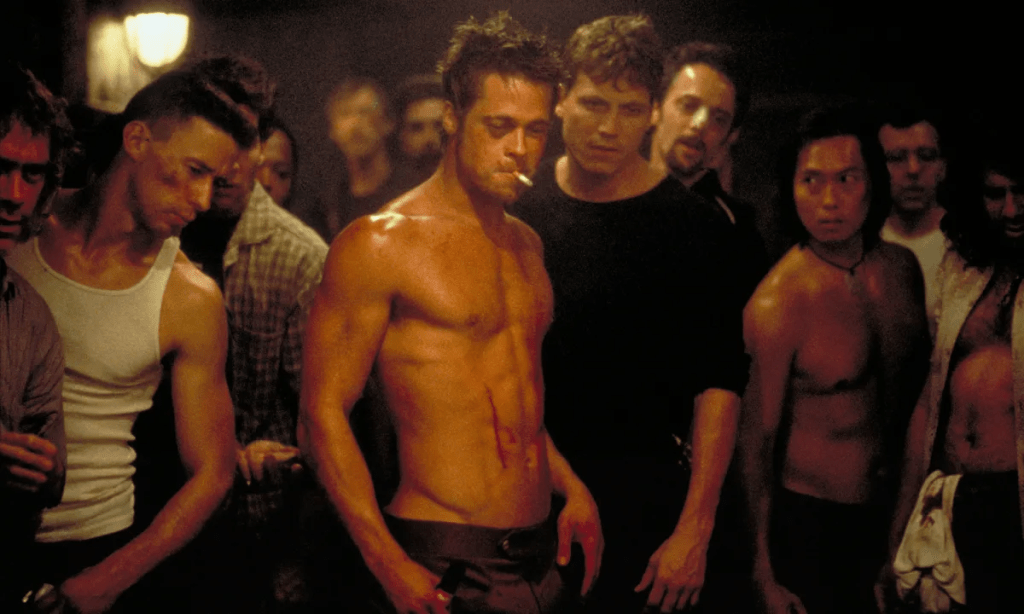
Mike’s CTAD Clinic video on the 3 most influential movies about DID is what brought my attention back to this for the first time since I watched it on release in 1999.
Boy am I glad it did, because this movie, while not claiming to be about DID (or mentioning it once) nails the experience of DID so incredibly well, from the opening jumbled jumping around the chronology of the story, to,:
Doctor: “No, you can’t die of insomnia…”
The Narrator (Ed Norton): “Well, what about narcolepsy? I nod off, wake up in strange places with no idea how I got there…”
Man, I just want to watch it again. Maybe I will.
Oh, btw, I took up solo boxing training (complete with a heavy bag that lives in my bedroom) a couple of years ago, and I’ve just registered for a local LGBTQIA+ boxing club – so I’ll be joining some (admittedly far less brutal) fight club action of my own, soon.
We used to train tae kwon do & several types of kung fu, so we’re no strangers to full contact sparring – our body was a temple before drugs happened & it became a playground. x
Anyway. Yeah. You wanna know what DID is like, watch Fight Club (is my 2 cents, anyway – some people won’t like the association with violence, but it’s never bothered me, especially not my physical protector parts, who love it x).
We don’t talk about Bruno… (Encanto)
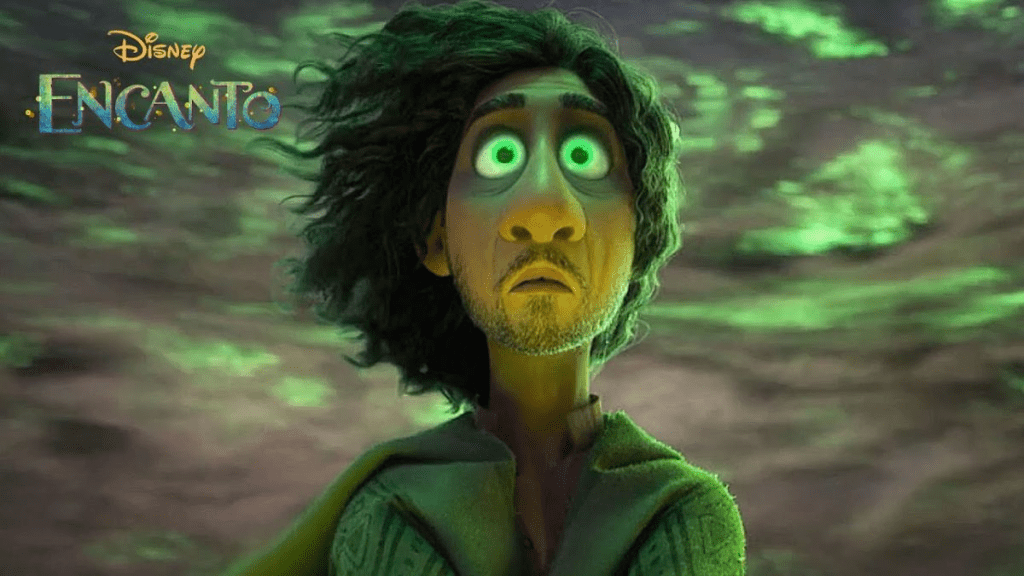
In family systems theory, there’s the idea of the ‘identified patient’ or the ‘problem child’ (also sometimes called the “black sheep” of the family).
Well, I was that child in my family. In other words, all of the anxiety, stress, resentment, fear, & pain that mom & dad felt ended up bottled up in me, the gay genderqueer youngest of 3 brothers with really overt & serious OCD from like 8 years old (that I still had to wait until 20 to get any actual answers about), with very Christian parents… yeah, I didn’t stand a chance of flying under the radar no matter how hard I tried. I was the lightning rod for all their fears about not being good enough as a family, not being pious enough, what will the neighbours say, my parents own childhood traumas, dissociation, and repressed / suppressed emotions of their own…
Bruno is, obviously, the black sheep of the family in Encanto, and I was the Bruno of my family (which is why it makes me laugh that Bruno shows really obvious signs of OCD & DID in the film – he’s very, very relatable xD)

If you’re wondering, a big part of how family systems theory came about, was the realisation that helping ‘the identified patient’ often only helped the individual so much, and the system very little… as systems are usually geared towards self-sustaining & adapting – if one part changes, either the other parts pressure that part into changing back, or the pressure just moves to another part in the system.
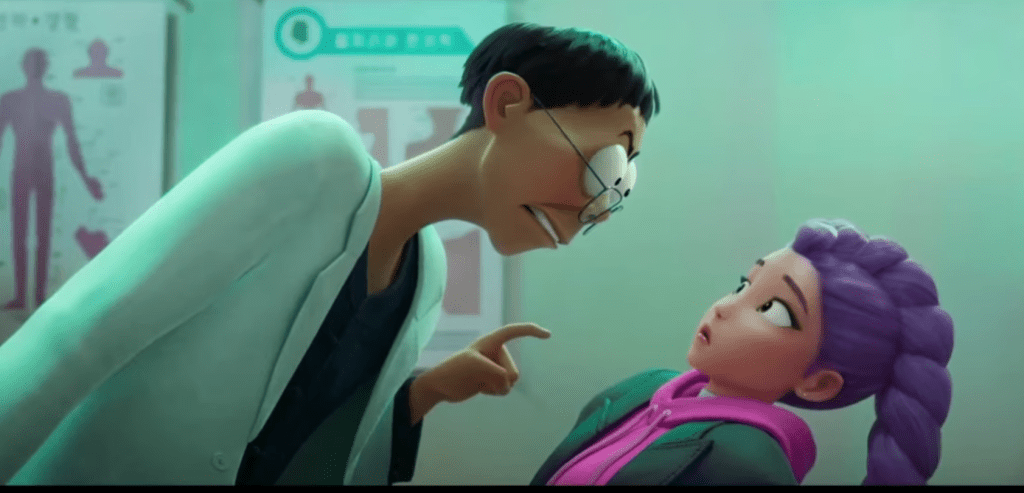
It’s like the crazy quack doctor Healer Han (who actually makes a lot of good points) in K-pop Demon Hunters about treating the part by first seeing the whole.
It’s weird how being the black sheep can affect how you see yourself later in life. When I got my PhD, I just cried & felt like a total failure anyway, because I’d so deeply internalised the idea that I’d never be good enough, that it had taken on a life of it’s own… my parents could say they were proud of me, but I no longer cared – I was no longer good enough for me. That’s one I’m still trying to unravel these days.
One of the things I love about Encanto though, is that every time we watch it, I feel really strongly identified with a different character… depending on who’s around inside… because the part of me that has experienced family life from Bruno’s PoV is there, but we’ve also had the Isabella & Luisa experience of being that perfect child that’s held up as a model of, “We’re so proud of you & look how great & perfect our family is”, and more recently, the Mirabelle experience of, “I’m going to live my truth & I’m not going to leave because I’m inconvenient…” and finding it helps the family be more understanding & have a wider view on the world…
It’s so strange how many different lenses I’ve experienced the toxic perfectionism family trope through.
That’s part of life with DID for you, I guess – those different perspectives were kind of the birthplace of, well, some of us.
(my family are wonderful & loving btw – intergenerational trauma is bitch x)
And the rest….
We’d really like to cover:
- Two parts-y video games that have a lot in common, Disco Elysium & Esoteric Ebb (which serve as, depending on how you play them & interpret things, great illustrations of IFS, OSDD, and/or DID).
- Night in the Woods: An incredible narrative video game featuring one heavily dissociative cat as a protagonist (<3 Mae)
- Inception: A movie that contains some touchstone reference points for my therapist & I around the parts on every layer of the (waking) dream watching the top & waiting to see if it falls…
And so many more.
We’ll get to some of these soon, we’ve got a lot going on in the real world right now, which is a good place for our focus while it feels safe enough to be out here x
Oh, & we did the last in-person session for the PREDICTSELF study, which was the EEG session – we’ll have to write a little about that, soon, too!
Until next time, take care of yourselves, kiddos
Riley & fam ❤
 Three Kids in a Trench Coat
Leave a comment