
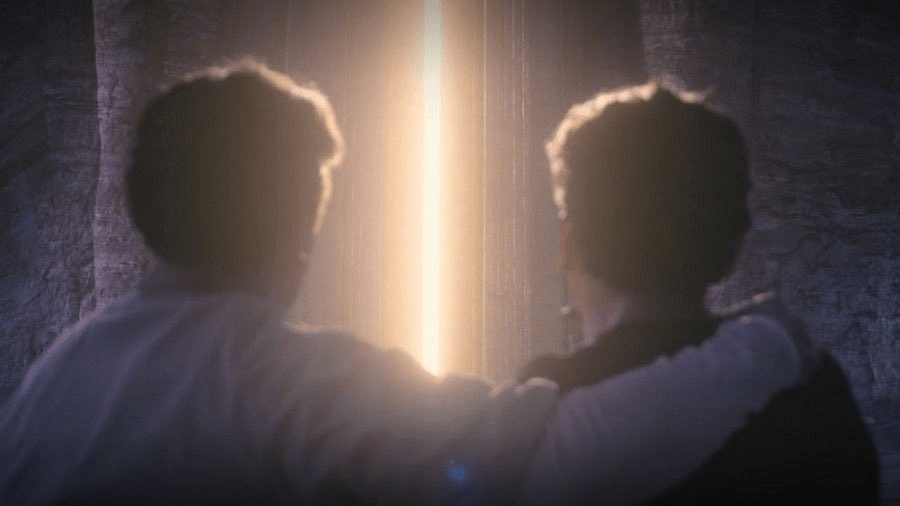
A few recent experiences of watching / reading things, and talking about life as a system with the DID researchers at the Institute of Psychiatry, Psychology & Neuroscience at King’s College London have got me appreciating anew just how much the 6-episode TV series of Moon Knight (starring Oscar Isaac) gets right about DID.
I’ve given it a shoutout in the past, but I just wanted to do a thread of a few things that come to mind, from memory, about relatable ways it portrays living with dissociative identities (I’ve also included some relevant links to clinical perspectives on real life complex dissociation):
Before you get to know the other(s):
The confusion: When we first meet Steven, he’s loosing time, things are changing about his world around him that must have been done by him, but he can’t remember them…. Like replacing his pet fish, then going to the pet store and asking how it grew a new fin (we kinda know by this point that the fish died & Marc replaced it…)
The loneliness: … Steven then notices the time, and rushes to a restraurant to make it to a date with a woman from work he likes, who doesn’t show up… only to phone her, ask where she is and be told, “You’ve got some nerve calling me, we were supposed to meet 2 days ago…”, and Steven realises that, once again, he’s lost time & it’s cost him another promising relationship with another (seemingly decent) human being… and he has just no relatable way of reconnecting with them because he just can’t explain what happened (because he doesn’t understand himself).
When he talks to the human statue who never responds, it’s such a relatable thing. Heck, I think that’s a little bit of what this blog is – there are just so many experiences that you just feel like you can’t (or don’t want to) talk about with friends, colleagues or family members in normal conversation because so much of it doesn’t make sense to you yet.
The sense of chaos: When the villain, Harrow, takes Steven’s hands & “judges” him, the magical tattoo of a pair of scales shifting as they weigh his soul, and they don’t balance, seemingly the first time Harrow’s seen anything like this, and he looks in shock at Steven, saying, “There’s chaos in you…”
I think this is where a lot of people with dissociative identities feel like they’re at when they know things are going sideways in their life, but they don’t yet understand exactly how or why – that point where you frequently find yourself in situations like someone asking how you’ve been, and all you can think is, “Well, I woke up, and I’m here…. that’s about as much as I know right now…”
F*ckin’ Mirrors: When Steven looks in mirrors & doesn’t recognise his reflection as him, but as Marc, and Marc starts speaking to him… we’d been experiencing that for a whiiile when we saw first saw the Cinema Therapy episode on “What Moon Knight got right about DID”, & it’s one of the first things that made me sit up and go, “Err…. this? It’s this….? I should email my therapist….”
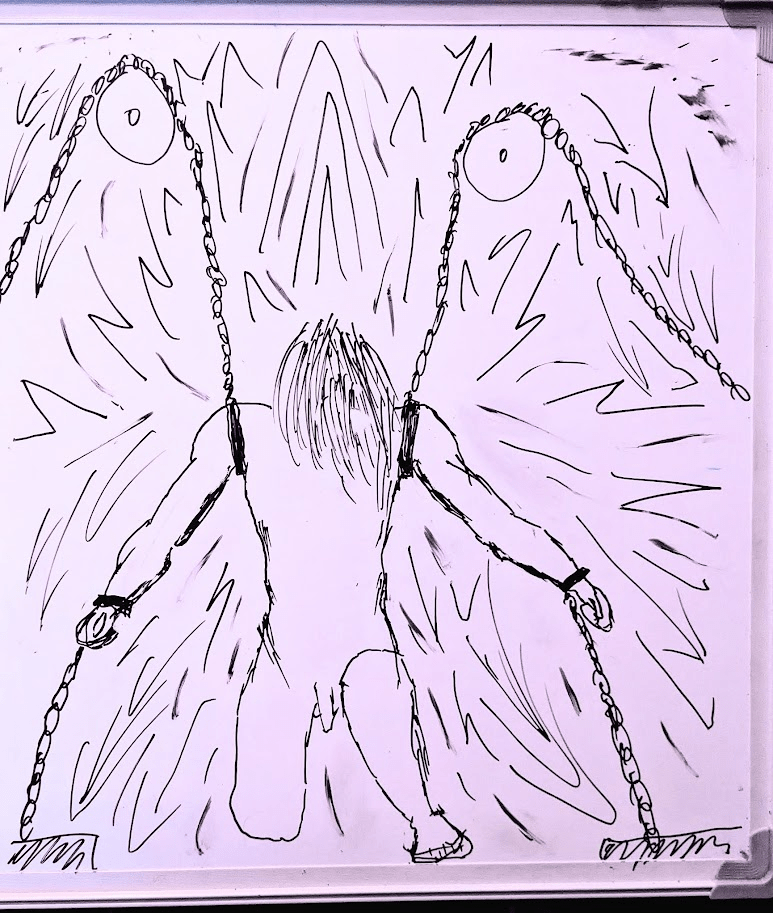
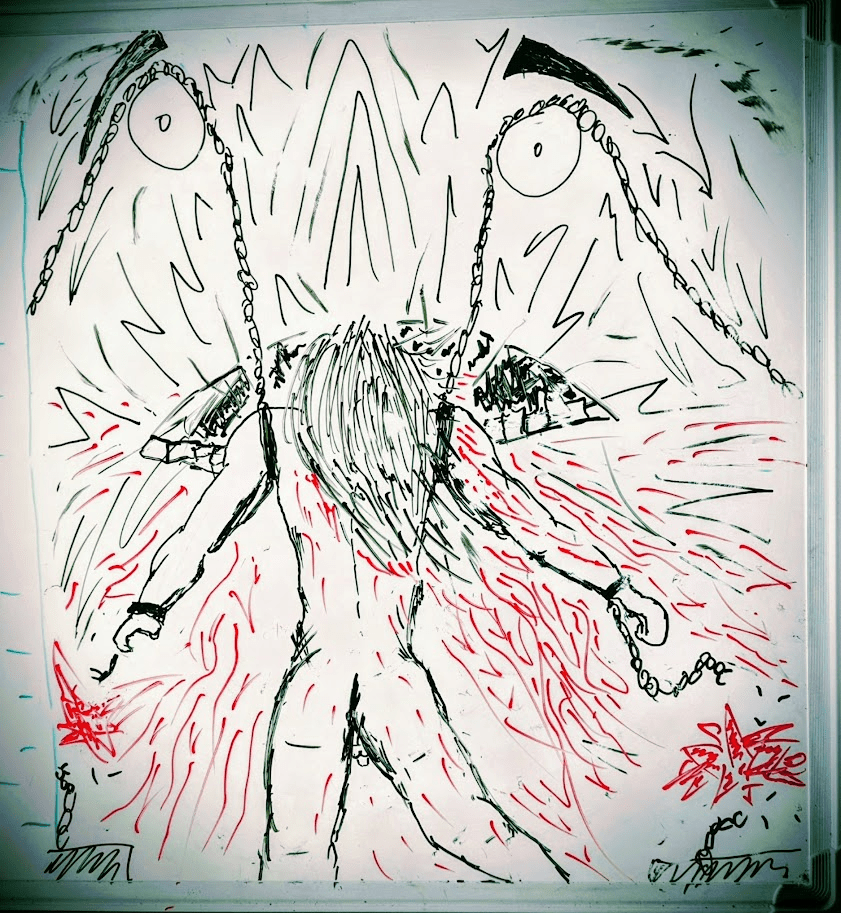
The lack of self-trust: In the show, Steven puts tape over the door latch, surrounds his bed with sand, and straps himself into bed with restraints to try and tell if he’s gotten up & done things in the night he doesn’t remember. It feels a lot like how I used to leave a webcam running in my room when I was worried about switching.
In the show, Marc clearly just runs the same setup as Steven again when he comes out then eventually returns to bed, because he’s not an idiot and he doesn’t want Steven to know he’s been out, and… yeah, many parts will just do that if you try and ‘spy on’ them. If you can set this stuff up, so can they (or, say, stop you from ever actually watching the videos….).
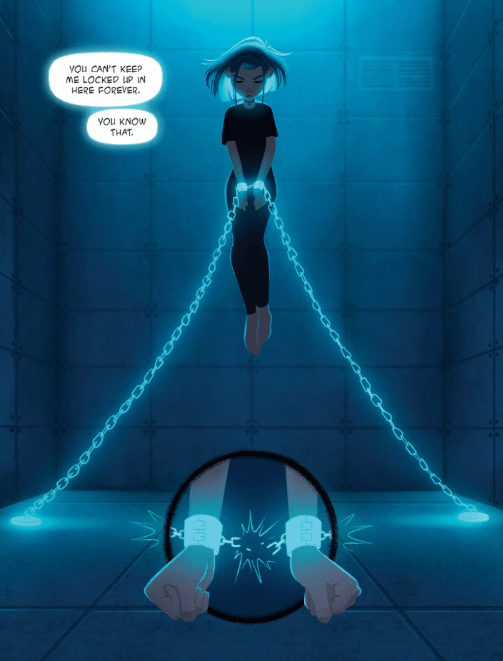
You build trust by getting to know one another and helping each other get what you each need, not by trying to put each other in prison.
When you’re first starting to get to know the other(s):
The lack of trust between each other: Marc doesn’t trust Steven. Steven doesn’t trust Marc. They fight over who gets to control the body. The one that isn’t in control feels, “stuck” inside, watching, and we get to see glimpses of them in the mirror, reminding the other that they’re still in there and they’re looking to come out so they can stop the other fucking everything up & they can do things their way… boy howdy. This show knows.
Supporting one another & starting to build empathy: As they start to spend more time together, influence one another, and learn more about the things the other is going through (through co-consciousness, a really important step in DID therapy), they start to bond over what they have common, and little by little, understand & care about each other.
When they get separated in episode 5 (the ‘inner mental institution’ episode), and they find each other again and are both like, “Thank god I’m so glad to see you!” – I’ve had times when the others have gone quiet for a bit, and I did not like it – but I’m grateful for every (often joyful) reunion.
A lot of DID specialists will tell you this – that when people first come into therapy they’re like, “I want everyone gone, this is chaos, please take them away I want it to just be me….”, but once they get to know each other better, they’re like, “Err, actually, we’ve changed our mind – they’re my friends, my family… and I don’t want to live without them“.
I guess at that particular moment early in E5, it’s more, “Thank god, I’m so glad to see you because I felt scared & alone” – the real transformation for Marc & Steven continues to unfold as they start…
Accepting one another & finding love in a system:
Facing & overcoming the trauma together: In that same episode, when Steven sees everything Marc couldn’t cope with, and that he didn’t know until Marc shows him – the loss of his brother, the abuse from their mother and her being unable to forgive her after she dies… and he sees the role he’s playing in keeping Marc from being consumed by all that pain, by being convinced they have a loving mother who is still alive…
When Steven is able to make sense of what happened, and why things are the way they are… he’s able to be with Marc, see him, and know that he’s not some boogie-man sent to haunt him – he’s able to instead look at him with compassion & love, and say, from the heart – “It wasn’t your fault – you were just a child, and you did the best you could.”
There isn’t necessarily, “The real one” and, “The made-up one(s)”: A sort of ‘plot tiwst’ in the show comes when Steven, who we’ve been with from the beginning, the one who, “gets on with normal life” (while Marc comes out when there’s a threat to do superhero stuff) is, in fact, what’s sometimes called, “a fictive” in origin – Marc was ‘there first’, and Steven was based on Steven Grant, a character from one of Marc’s favourite childhood movies.
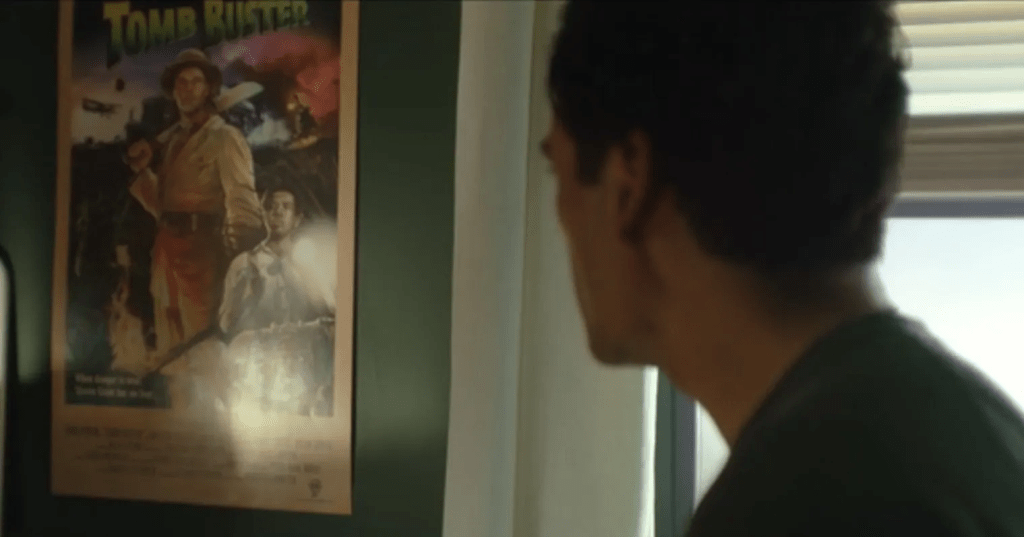
It’s a kind of switcharoo of expectations – Steven was ‘created’ to keep Marc’s mind from breaking under the weight of the trauma, not the other way round. But we also learn it doesn’t matter – wherever Steven ‘came from’ at first, he has been living life as real, living, breathing human being with his own wants, needs, fears, hopes, dreams and feelings for basically their whole life – and so has Marc.
While Marc Spector may be their birth name, both identities are just as valid as each other, and there isn’t a “real one” and a, “fake one”. They both deserve to live, and they both deserve to be loved.
“You are the only real superpower I’ve ever had”: When Steven is stranded & turning to stone in the desert of lost souls, and Marc is facing eternity in paradise in the field of reeds without him, and he’s like, “I can’t leave him. I won’t”, and this scene happens…
This is what being a system is like when you get it. When you’ve made sense of why there’s more than one of you. When you understand how you’ve all been doing your best, all this time. When you understand the pain each other have been through, and how much you all mean to each other… well, Cinema Therapy nailed it:
This. It’s this.
I cry every time.
As I commented on the CT video recently:
“I don’t know if you’ll ever read this, Jono, Alan, and anyone else involved in the creation of this episode (a few years on!), but…
I just wanted to say thank you. We saw this episode before we saw the show (we’ve since gone back & it’s now our favourite) – and regardless, this episode is what helped me first start making sense of what was going on with me, with us.
And it showed us a blueprint for how things could be, helped us face the possibility of living life in a new way, together, knowing that there were people out there who could help us without trying to make anyone, “go away”. We were lucky enough to be with a therapist specialising in trauma & dissociation at the time who was open to exactly that, once we started sharing this aspect of our experiences… and we’ve come a long way since.
It’s one of the biggest gifts a 30 minute YouTube video could have ever given us.
So thank you <3″
So yeah, Moon Knight. If you’ve ever wondered why so many systems reject the “disorder” in “Dissociative Identity Disorder” and choose to use terms like, “dissociative identities”, “plural”, “multiple”, “system” or perhaps, “inner fam” instead – this show (and the CT episode) can give you a damn good idea of why.
It also does a beautiful job of showing the importance of making sense of your past, present, and potential futures in learning to overcome the legacy of trauma, what developing understanding & compassion for each other can look like, & how to live as a system that looks out for each other.
Until next time, take care of yourselves, kiddos ❤
Riley & fam x
P.S. I didn’t even mention Jake Lockley – man I wish they’d made season 2, because you can make a lot of progress and still have some parts that choose to live in the shadows until they see that it’s safe to make their presence known to the rest of you… and that could have been such a good storyline about the next step (and most systems have more than two parts, which is when the internal dynamics become more like family systems, with some parts being closer to each other than others…). Ah well – I’m just happy for what we got ❤


Leave a Reply